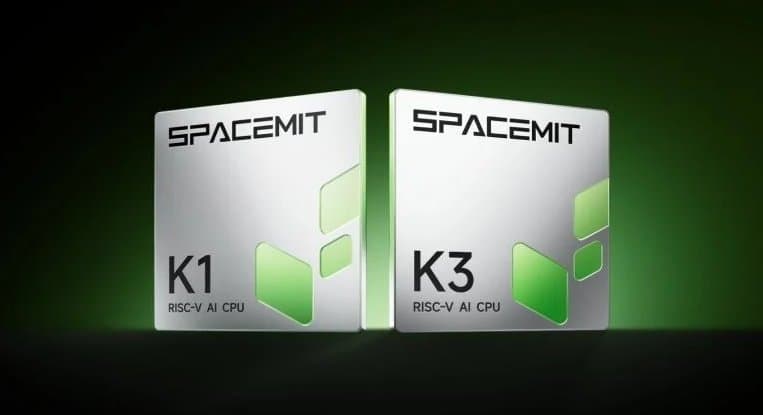
Canonical is partnering with SpacemiT to bring Ubuntu support to the company's K1 and K3 RISC-V processors, with the K3 being one of the first to comply with the new RVA23 standard required for Ubuntu 25.10 and beyond.
Chinese RISC-V chip maker SpacemiT is partnering with Canonical to bring Ubuntu to computers powered by two of the company's processors. The SpacemiT K1 is an 8-core RISC-V processor that's been around for a little while, but the SpacemiT K3 is a newer, higher-performance chip that's one of the first to comply with the new RVA23 standard.
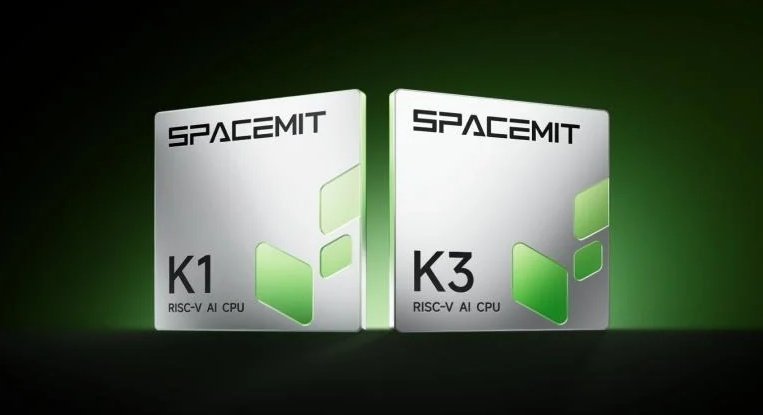
That's important because starting with Ubuntu 25.10, the only RISC-V processors that Ubuntu supports are those that are RVA23-compliant. Canonical says that's because it includes "a mandatory set of hardware features for 64-bit processors to help facilitate a consistent software-to-hardware interface" including a vector extension for AI, cryptography, compression, and other math-heavy workloads, as well as a hypervisor extension for virtualization.
So when Ubuntu 26.04 LTS is released in April, SpacemiT's K3 processor may be one of the only RISC-V chips to support the next long-term support version of the popular GNU/Linux distribution.
The SpacemiT K3 is an 8-core RISC-V processor with support for CPU frequencies up to 2.4 GHz, support for up to 60 TOPS of general-purpose AI and the ability to run 30 billion parameter AI models. It also supports up to 32GB of RAM, "including LPDDR5."
When CNX Software's Jean-Luc Aufranc ran some benchmarks of this processor recently, he found that it was described as a 16-core processor, but only 8 CPU cores were actually used. So it's interesting to see that SpacemiT and Canonical say it is an 8-core processor.
Meanwhile the SpacemiT K1 also features 8 RISC-V CPU cores and 256-bit RVV 1.0 vector processing, but it only supports up to 2 TOPS of AI performance and 16GB of memory. And since it's not an RVA23-compliant processor, it won't support recent or upcoming versions of Ubuntu.
Instead, Canonical and SpacemiT "collaborated to enable Ubuntu 24.04 LTS across the broader SpacemiT lineup," which includes single-board computers like the Banana Pi BPI-F3, Milk-V Jupiter, and Sipeed Lichee Pi 3A as well as laptops and tablets including the MUSE Book and DC Roma II and DC-ROMA RISC-V Pad II.
This partnership represents a significant milestone for the RISC-V ecosystem, as Ubuntu is one of the most popular Linux distributions for both desktop and server applications. The RVA23 compliance requirement means that SpacemiT's K3 processor is positioned to be one of the few RISC-V chips that will receive long-term support from Canonical.
The K3's specifications are particularly impressive for a RISC-V processor. With 8 cores running at up to 2.4 GHz, 60 TOPS of AI performance, and support for 32GB of RAM, it's positioning itself as a serious contender in the embedded and edge computing markets. The ability to run 30 billion parameter AI models is especially noteworthy, as this opens up possibilities for running large language models and other sophisticated AI applications directly on the device without relying on cloud services.
The vector processing capabilities with 256-bit RVV 1.0 support on both the K1 and K3 processors provide hardware acceleration for machine learning workloads, though the K3's 60 TOPS far exceeds the K1's 2 TOPS. This makes the K3 suitable for more demanding AI applications while the K1 might be better suited for less intensive tasks.
For developers and users interested in RISC-V, this partnership provides a clear path forward. While the K1 will continue to be supported with Ubuntu 24.04 LTS, those looking for the latest features and long-term support will need to move to RVA23-compliant processors like the K3. This creates a natural upgrade path within the SpacemiT ecosystem while ensuring that users have access to the latest Ubuntu features and security updates.
The support for various single-board computers, laptops, and tablets means that developers will have multiple form factors to choose from when working with SpacemiT processors and Ubuntu. This flexibility is crucial for the adoption of RISC-V technology across different use cases, from embedded systems to desktop computing.
As the RISC-V ecosystem continues to mature, partnerships like this one between Canonical and SpacemiT will be crucial for driving adoption. By ensuring that popular software like Ubuntu runs well on RISC-V hardware, these collaborations help create a more robust and attractive platform for developers and users alike.
Comments
Please log in or register to join the discussion