While Apple skips CES, this year's show revealed several compelling accessories for iPhone and Mac users, from MagSafe keyboards to high-speed Thunderbolt storage solutions.
Every January, the tech industry descends on Las Vegas for CES. Apple's absence from the show floor is well-documented, but that doesn't mean the event lacks relevance for Mac and iPhone users. The ecosystem of third-party accessories and complementary hardware continues to thrive, and CES 2026 brought several announcements that address real-world mobile and desktop computing needs.
The announcements this year cluster around three themes: mobile productivity, storage performance, and intelligent charging. Each category reflects how iPhone and Mac workflows have evolved, particularly as users demand more from their portable setups.
Clicks Power Keyboard: Addressing the iPhone's Input Gap
Clicks gained attention last year with their iPhone case that integrated a physical keyboard. The concept was sound, but it suffered from a fundamental limitation: it was tied to a specific iPhone model. When you upgraded your phone, the keyboard case became e-waste.
The new Clicks Power Keyboard solves this with a MagSafe-attached design that works across different iPhone and Android models. Since it connects via Bluetooth rather than the Lightning/USB-C port, it's not tied to a specific connector. The Qi2/MagSafe compatibility means it snaps onto any modern iPhone securely.
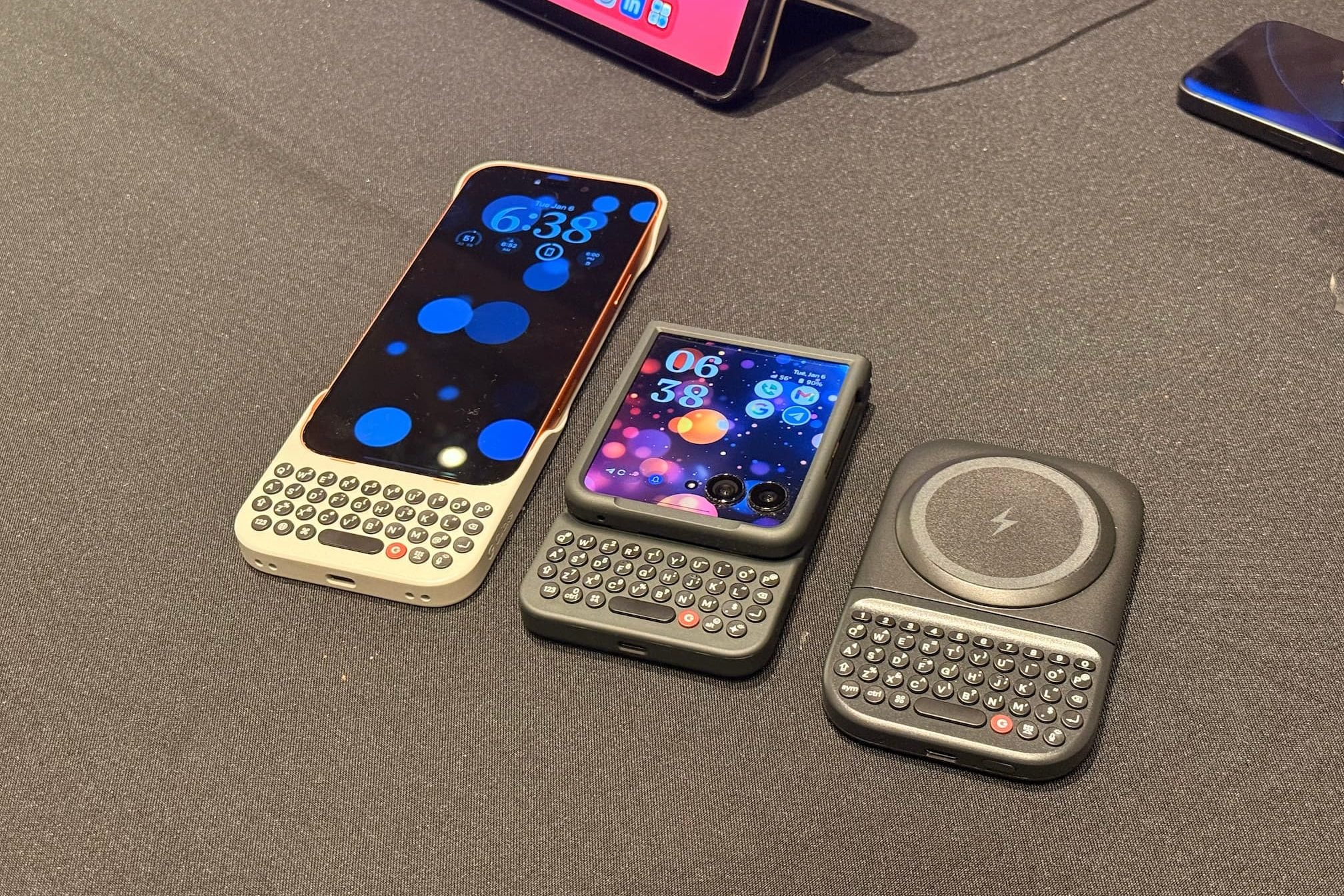
More importantly, it adds a 5,000mAh battery bank. The original Clicks case drained your iPhone's battery while using the keyboard; this one actively recharges it. For iPhone Pro Max users, the weight distribution can feel top-heavy, but on standard or Pro models, the balance works well.
The real potential here extends beyond the iPhone. Apple Vision Pro users currently rely on eye tracking and hand gestures for text input, which can be fatiguing during extended sessions. A physical Bluetooth keyboard that works with visionOS could significantly improve productivity in immersive environments. Clicks plans to ship these in spring 2026 for $79.99.
Keychron Q Ultra: Mechanical Keyboards Push Wireless Boundaries
Keychron has long been the default recommendation for Mac users wanting mechanical keyboards without premium pricing. The Q Ultra lineup announced at CES takes a different approach: it prioritizes polling rate and battery life simultaneously.
Most wireless mechanical keyboards poll at 125Hz or 1000Hz. The Q Ultra series pushes this to 8KHz (8000Hz) in wireless mode. While this sounds like marketing overkill, it matters for specific workflows. Fast typists and gamers notice input latency below 1ms. At 8KHz polling, the keyboard reports its position every 0.125ms, effectively eliminating wireless latency as a bottleneck.
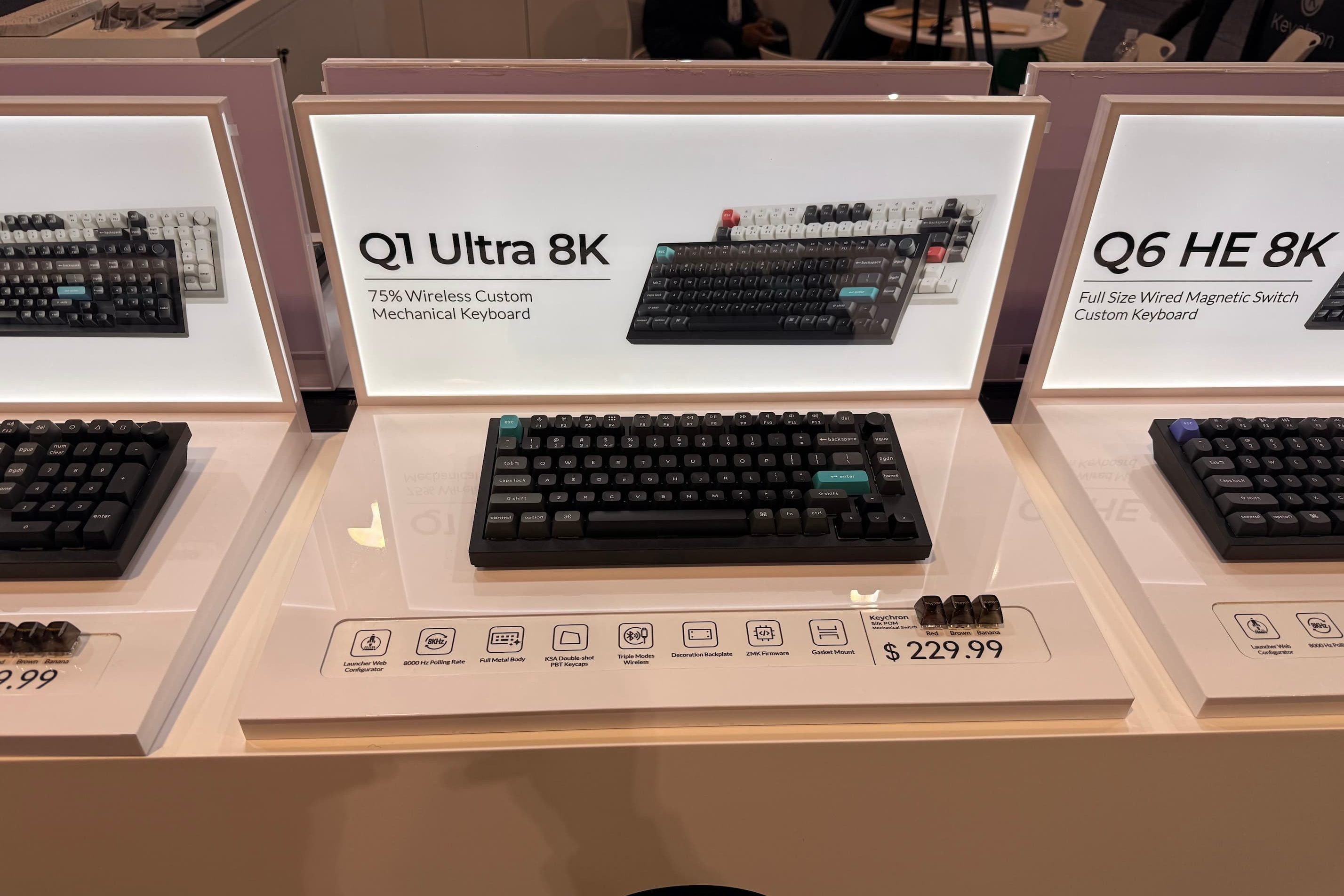
Battery life is where this becomes practical. Keychron claims 660 hours in 8K mode, which translates to months of daily use without charging. This is achieved through efficient ARM processors and optimized wireless protocols, not just larger batteries.
The Silk POM switches are new, using polyoxymethylene housings for smoother actuation. Combined with the aluminum body and hot-swappable sockets, these keyboards offer a premium typing experience that's rare at the $229 starting price. The three configurations (75%, TKL, 100%) cover most layout preferences.
HyperDrive Next: Modular Thunderbolt 4 Storage
Thunderbolt 4 enclosures aren't new, but most are fixed-function devices. HyperDrive Next introduces modularity: the same enclosure supports NVMe SSDs, AI accelerators, and network cards.
This matters because Thunderbolt 4 and USB4 provide 40Gbps of bandwidth (80Gbps on newer implementations). Most users only use this for storage, but the standard supports PCIe tunneling for any PCIe device. By creating a modular enclosure, HyperDrive lets you repurpose the Thunderbolt connection.
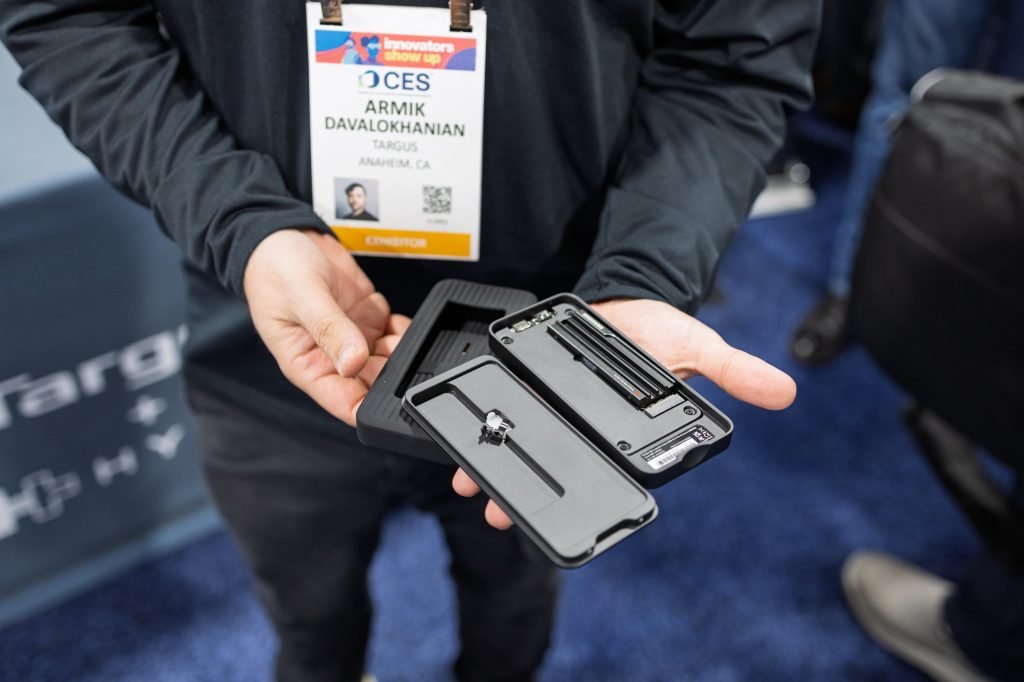
For storage, it supports PCIe Gen 4×4 SSDs, delivering up to 64Gbps transfer speeds. That's fast enough to edit 8K video directly from the drive without caching. But if you need a 10GbE network adapter or a specialized AI accelerator card, you can swap the module rather than buying a separate enclosure.
This approach reflects how Mac users (especially on Apple Silicon) have embraced external hardware. The Mac Studio and Mac Pro have limited internal expansion, making Thunderbolt the primary upgrade path. A modular enclosure reduces clutter and cost. The HyperDrive Next is available now for $199.99 on Amazon.
Anker Nano 45W: Smart Charging with Display
GaN chargers have become commoditized, but Anker's new 45W brick adds something genuinely useful: a small OLED display that shows charging status and device identification.
When you plug in an iPhone, the display shows the connected device type, current charging speed, and allows manual adjustment of power delivery. This isn't just informational—it's diagnostic. If your iPhone is charging slowly, you can immediately see whether it's the cable, the charger, or the phone's battery health.
The prongs fold 180 degrees, providing two angle options for wall outlets. This small detail matters in tight spaces like airport outlets or power strips. Available in four colors (white, black, blue, orange), it launches at $39.99 with a $10 pre-order discount.
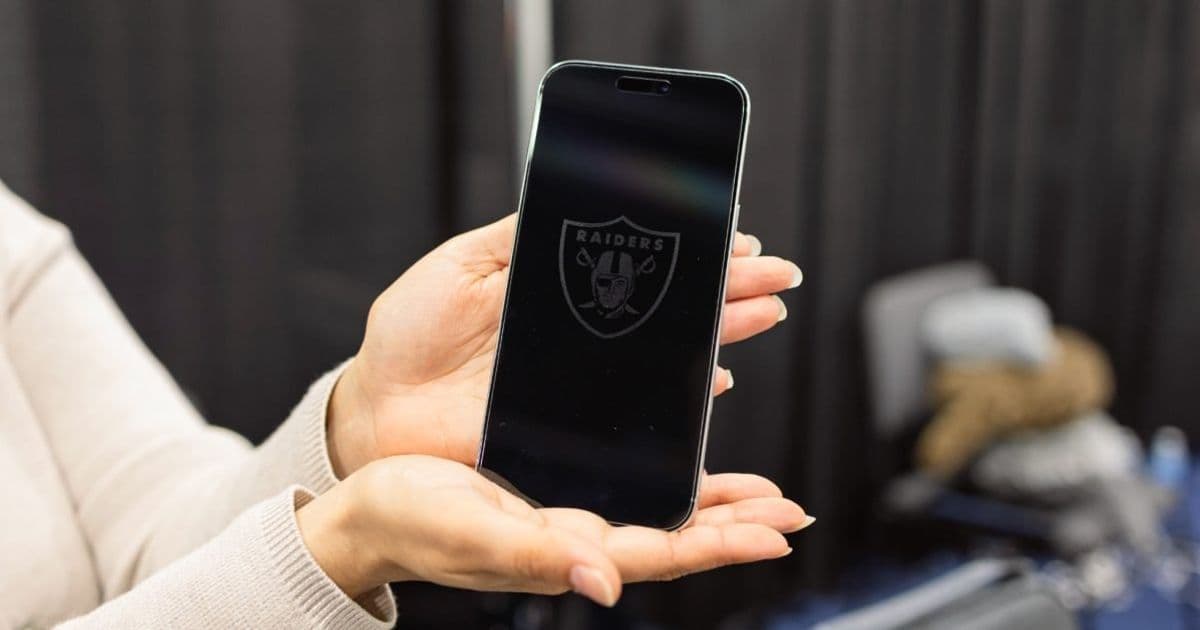
Belkin Custom Screen Protectors: Personalization Without Compromise
Belkin partnered with ScreenSkinz to offer screen protectors with custom engravings. The etching is only visible when the screen is off; once the display is active, the artwork disappears.
This solves the aesthetic problem of screen protectors. They're functional but visually intrusive. Customization could make them more appealing for users who want personal flair without compromising display clarity. The technology uses micro-etching that doesn't affect touch sensitivity or optical clarity.
While not yet available, you'll be able to upload designs on Belkin.com in the coming weeks. This could be particularly interesting for enterprise deployments where companies want branded devices without affecting usability.
The Broader Context
These products share a common thread: they address specific pain points in Apple-centric workflows without requiring Apple to build the solutions. The Clicks keyboard acknowledges that iOS still lacks efficient physical text input for power users. Keychron's 8K polling recognizes that wireless peripherals have historically compromised on latency. HyperDrive's modularity reflects the reality that Thunderbolt is the Mac's expansion bus.
CES 2026 also highlighted how the accessory market is maturing. Rather than chasing gimmicks, companies are solving real problems: battery life, input speed, storage performance, and charging diagnostics.
For developers, these announcements matter beyond personal use. Testing apps on devices with these accessories reveals edge cases. How does your iOS app handle a physical keyboard connected via Bluetooth? Does your Mac app optimize for high-refresh-rate input devices? The ecosystem around Apple hardware continues to expand, and understanding these tools is part of building quality software.
The Clicks Power Keyboard ships spring 2026. Keychron Q Ultra is available for pre-order. HyperDrive Next is shipping now. Anker's smart charger launches soon. Belkin's custom protectors are weeks away. Each fills a gap that Apple hasn't addressed, which is exactly what makes the third-party ecosystem valuable.
Comments
Please log in or register to join the discussion