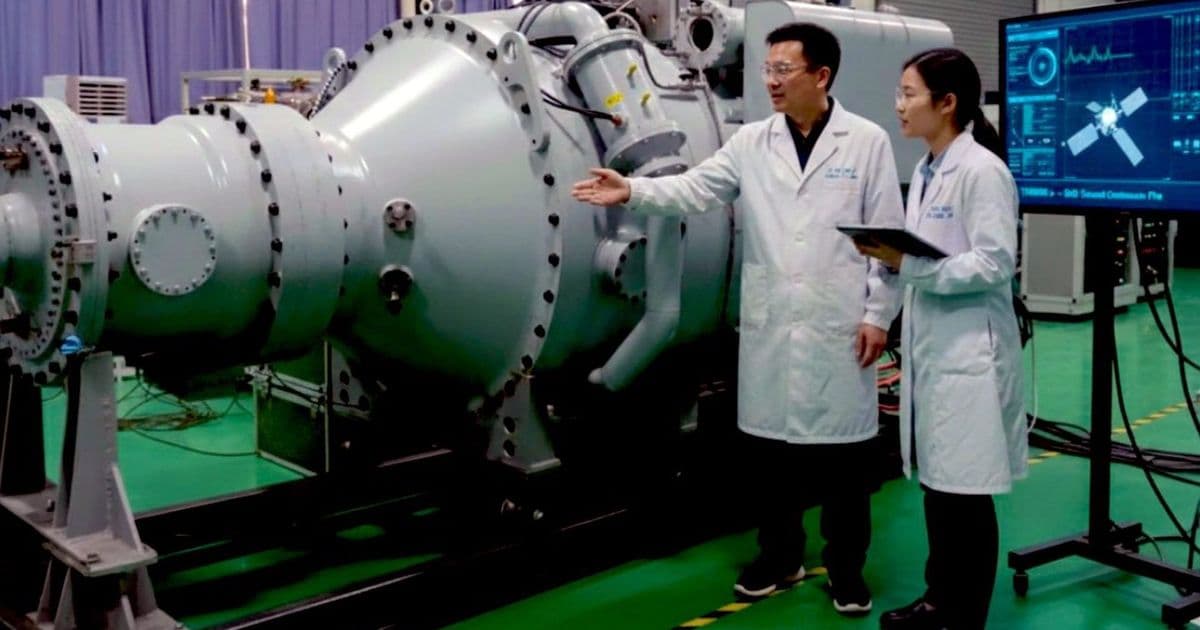
Chinese scientists have developed a portable 20-gigawatt microwave weapon capable of sustained one-minute bursts, potentially threatening low Earth orbit satellites like Starlink.
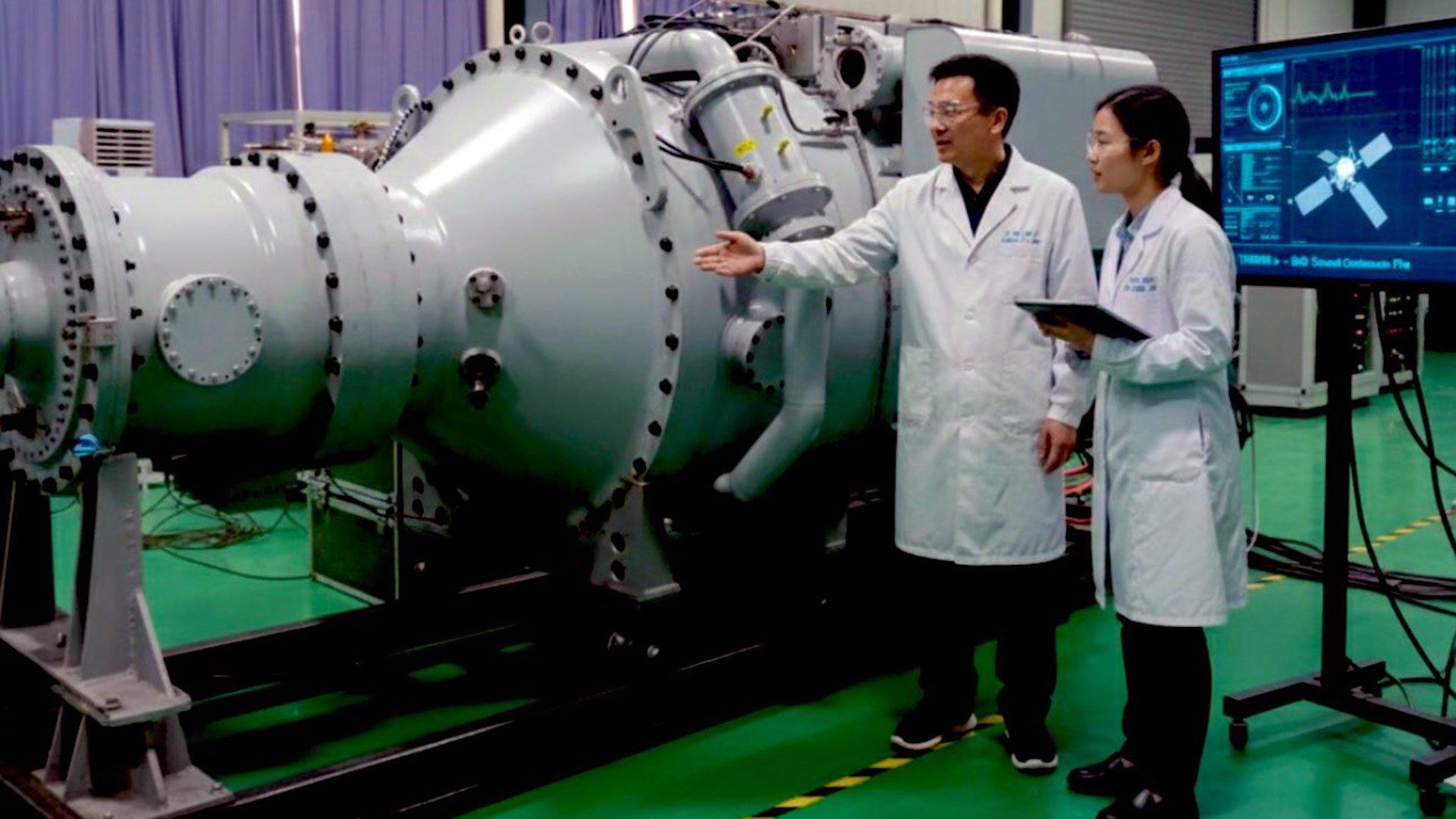
Chinese researchers have unveiled a portable microwave weapon capable of delivering sustained 20-gigawatt bursts that could pose a significant threat to satellite constellations like Starlink. The TPG1000Cs, developed by scientists at the High-Power Microwave Science and Technology Key Laboratory of the Northwest Institute of Nuclear Technology (NINT) in Xi'an, represents a major advancement in directed energy weapons technology.
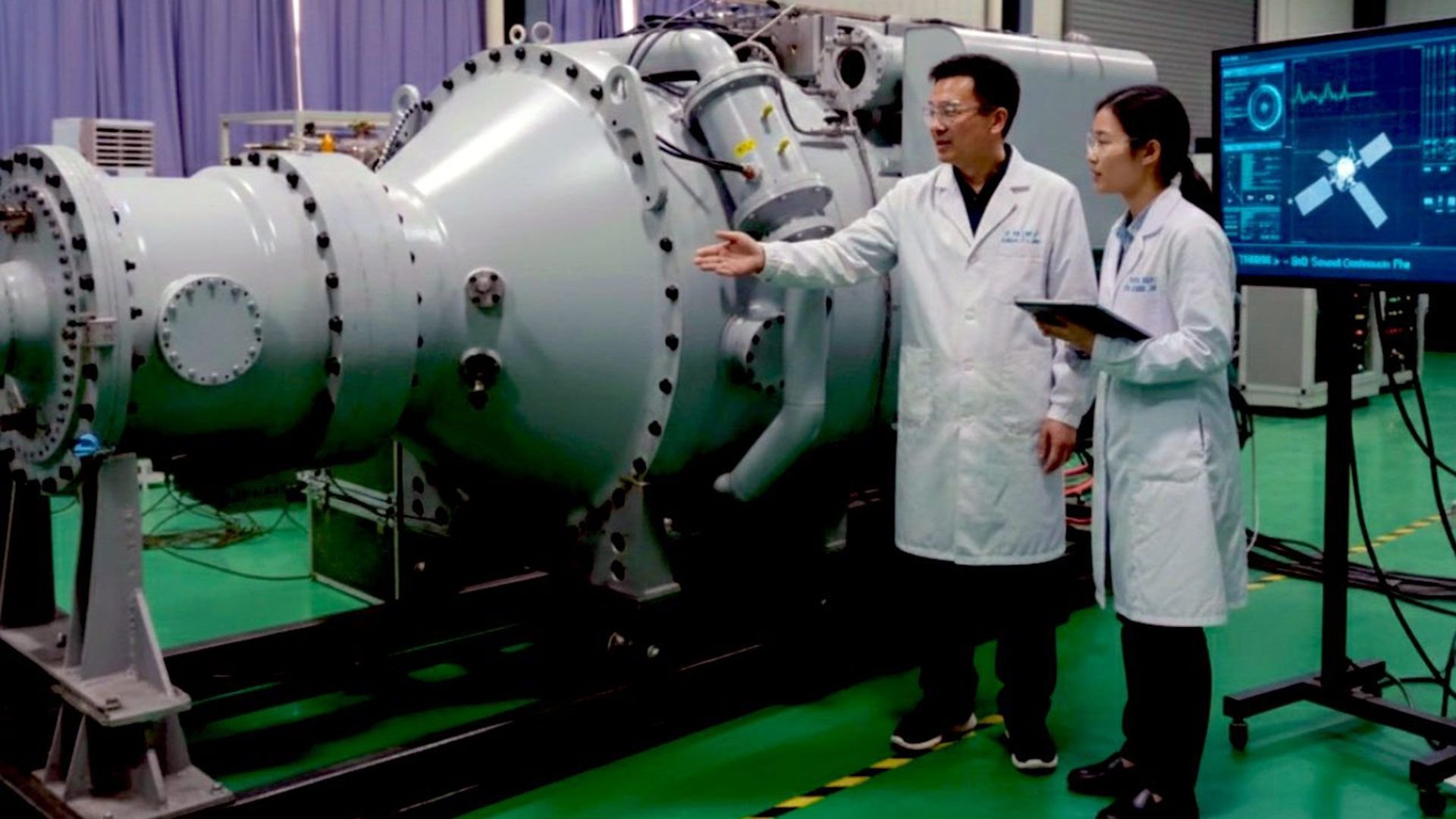
Technical Breakthrough in Compact High-Power Microwave Systems The TPG1000Cs achieves its remarkable capabilities through several key innovations. At its core is a Tesla-type pulsed power driver capable of generating 20 gigawatts of microwave energy. What makes this system particularly noteworthy is its ability to sustain these high-power bursts for a full minute - a duration previously unattainable with high-power microwave (HPM) weapons.
The weapon's compact design is equally impressive. Measuring just 4 meters (12 feet) in length and weighing approximately 5 tons, the TPG1000Cs is small enough to be mounted on vehicles or potentially deployed in space. This represents a significant size reduction compared to previous HPM systems, which were typically twice as large and heavy while only capable of sustaining bursts for a few seconds.
Critical Enabling Technologies
The development of the TPG1000Cs relied on several key technological advances. A special liquid insulating material called 'Midel 7131' played a crucial role in the system's performance. Combined with a dual-width pulse-forming line, this material enabled the scientists to increase both power output and energy density.
Extensive testing has demonstrated the system's reliability and durability. According to reports, the TPG1000Cs has been tested over continuous one-minute durations, accumulating approximately 200,000 pulses while maintaining consistent performance. This level of testing suggests the system has moved beyond experimental stages and could potentially be deployed in operational scenarios.
Strategic Implications for Satellite Operations The potential threat to satellite constellations is significant. Reports indicate that Starlink satellites can be disrupted by Earth-based HPM weapons of 1-gigawatt or higher, making the 20-gigawatt TPG1000Cs a particularly formidable system. The weapon's ability to sustain high-power bursts for extended periods increases its effectiveness against satellite electronics and communications systems.
This development comes amid growing concerns about satellite vulnerability in contested environments. Recent reports suggest that Starlink satellites are being moved to lower orbits, potentially in response to emerging threats. Chinese researchers have also conducted simulations examining the PLA's ability to deny access to Starlink over Taiwan, indicating that military planners are actively considering scenarios involving satellite disruption.
The portability of the TPG1000Cs adds another dimension to its strategic value. Unlike fixed installations, a vehicle-mounted system could be rapidly deployed to different locations, making it harder to counter or avoid. The potential for space-based deployment further complicates defensive strategies, as satellites could be targeted from orbit.
Broader Context of Directed Energy Weapons The TPG1000Cs represents China's latest advancement in directed energy weapons technology. While microwave weapons have been under development for decades, the combination of power, duration, and portability achieved by this system marks a significant milestone. The technology builds on earlier work in pulsed power systems and high-energy microwave generation, but achieves performance levels that were previously thought to be years away.
As nations continue to rely increasingly on satellite-based communications, navigation, and reconnaissance, the vulnerability of these systems to directed energy attacks becomes a critical concern. The development of systems like the TPG1000Cs suggests that the space domain may become an increasingly contested environment, with both kinetic and non-kinetic threats to satellite operations.

The implications extend beyond military applications. Commercial satellite operators, including those running large constellations for internet services, Earth observation, and other purposes, may need to consider hardening their systems against microwave threats. This could drive new developments in satellite shielding, frequency hopping, and other countermeasures.
As this technology continues to evolve, the balance between offensive capabilities and defensive measures in space will likely remain a key area of focus for military planners and satellite operators alike. The TPG1000Cs demonstrates that the gap between theoretical capabilities and deployable systems in the field of directed energy weapons is rapidly closing.
Comments
Please log in or register to join the discussion