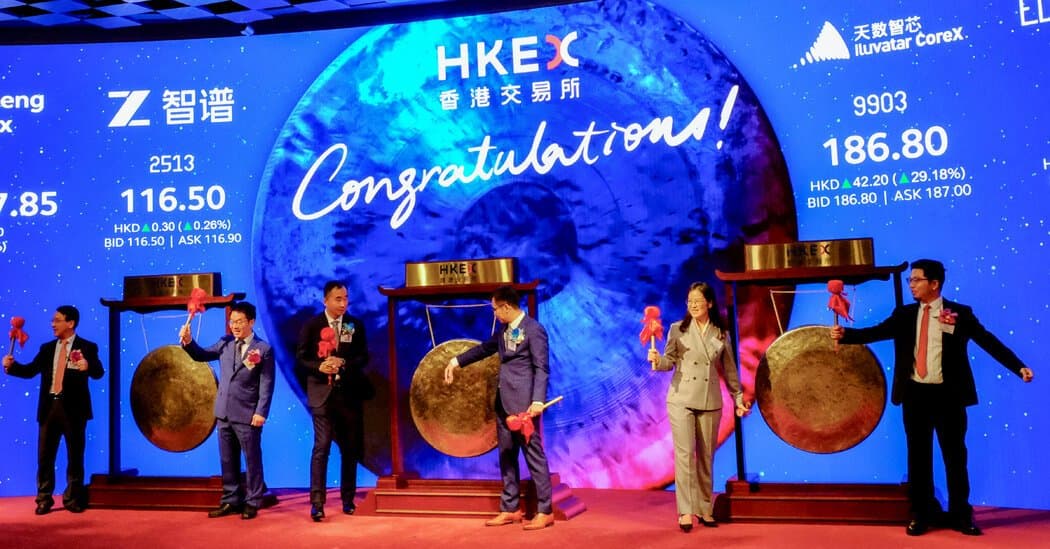
China's push to lead in AI development faces growing tension with its strict regulatory framework, as Zhipu's IPO filing reveals the mounting compliance costs of navigating over six AI-specific regulations.
China's ambition to dominate the global artificial intelligence landscape is running headlong into the reality of its own regulatory apparatus, creating a complex dilemma for the world's second-largest economy. As Chinese AI companies race to develop cutting-edge technologies, they're simultaneously grappling with an increasingly intricate web of government oversight that threatens to slow innovation and increase operational costs.
At the center of this tension is Zhipu AI, one of China's most prominent AI startups, which recently warned potential IPO investors about the substantial burden of complying with more than six separate AI-specific regulations. This disclosure highlights a growing challenge facing Chinese tech companies: how to balance the government's desire for technological leadership with its insistence on maintaining strict control over AI development and deployment.
The regulatory landscape in China has become increasingly complex as the government seeks to establish itself as both an AI superpower and a responsible steward of the technology. Beijing has implemented a series of rules covering everything from data privacy and algorithmic transparency to content moderation and ethical AI development. While these regulations aim to ensure responsible AI deployment, they also create significant compliance costs and operational hurdles for companies trying to innovate quickly.
This regulatory burden comes at a particularly challenging time for Chinese AI companies. The global AI race is intensifying, with competitors in the United States and elsewhere pushing forward with fewer regulatory constraints. Chinese firms must navigate not only domestic regulations but also international scrutiny and potential sanctions, creating a complex operating environment that their global competitors don't face to the same degree.
The situation reflects a broader strategic challenge for China. The country has made clear its intention to lead the world in AI by 2030, investing heavily in research, talent development, and infrastructure. However, this ambition exists alongside the Chinese Communist Party's fundamental need for control over information flows and technological development. The result is a push-pull dynamic where innovation is both encouraged and constrained by the same governing body.
Zhipu's IPO warning is particularly significant because it represents one of the first public acknowledgments from a major Chinese AI company about the real-world impact of regulatory compliance on business operations. The company's candid assessment suggests that the burden of navigating multiple regulatory frameworks is not just a theoretical concern but a practical challenge affecting day-to-day operations and potentially impacting profitability.
This regulatory complexity extends beyond just compliance costs. Chinese AI companies must also consider how regulations might limit their ability to deploy certain technologies or enter specific markets. The government's emphasis on "ethical AI" and content control means that companies may need to build in additional safeguards and review processes that their international competitors don't require, potentially slowing time-to-market for new products and services.
The tension between innovation and control is not unique to China, but the scale and speed of China's AI ambitions make the challenge particularly acute. While Western governments are also grappling with how to regulate AI responsibly, they generally operate within frameworks that allow for more rapid technological development and deployment. China's centralized approach, while potentially more efficient in some ways, creates a different set of challenges when it comes to balancing control with innovation.
Looking ahead, this regulatory tension is likely to remain a defining feature of China's AI landscape. As the government continues to refine its approach to AI governance, companies will need to adapt their strategies accordingly. This may involve increased investment in compliance infrastructure, more conservative approaches to product development, or strategic decisions about which markets to prioritize based on regulatory complexity.
The situation also raises questions about the long-term sustainability of China's AI ambitions. If regulatory burdens continue to grow, they could potentially slow the pace of innovation and make it harder for Chinese companies to compete globally. However, the Chinese government's track record of adapting its approach to support strategic industries suggests that some balance will likely be struck over time.
For now, Zhipu's warning serves as a reminder that even in a system where the government can move quickly to support strategic industries, the desire for control can create its own set of challenges. As China continues its push to lead in AI, finding the right balance between innovation and regulation will be crucial to achieving its ambitious goals.
Comments
Please log in or register to join the discussion