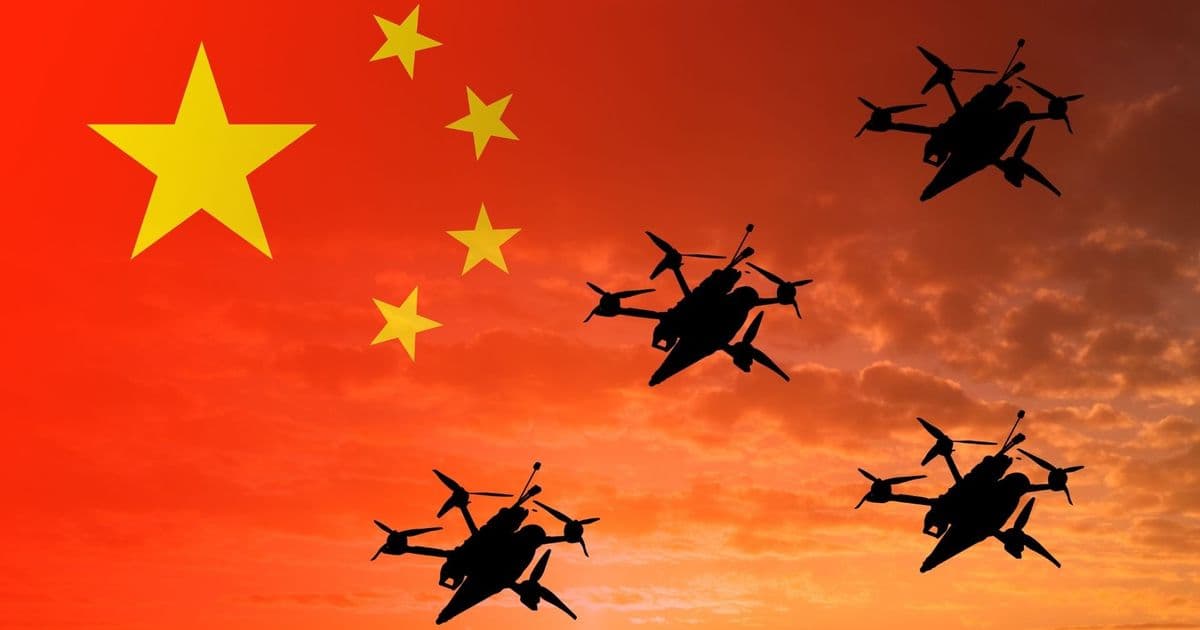
The People's Liberation Army has showcased a swarm of 200 autonomous fixed-wing drones that can be controlled by one soldier, featuring an 'intelligent algorithm' for inter-drone cooperation and anti-jamming capabilities, marking a significant advancement in autonomous swarm warfare technology.
The Chinese People's Liberation Army (PLA) has publicly demonstrated a sophisticated drone swarm system capable of deploying 200 autonomous fixed-wing drones under the control of a single soldier, according to a report from China's state broadcaster CCTV. The system, showcased on state television, represents a notable evolution in autonomous swarm technology, emphasizing cooperative intelligence and resilience against electronic warfare.
The core of the system is the Swarm I land vehicle, also known as the High Mobility Swarm Weapon System, which can launch up to 48 fixed-wing drones simultaneously. Once airborne, the drones operate as a cohesive unit. "Each drone is equipped with an intelligent algorithm," explained Xiang Xiaojia, a research fellow at the National University of Defence Technology’s School of Intelligent Science, in the CCTV interview. "Through interconnection and autonomous negotiation, they can form a powerful, collaborative intelligent swarm."
This autonomous negotiation allows the swarm to divide tasks among its units without continuous human direction. The system can execute complex missions such as multi-target reconnaissance and coordinated strike operations. A key feature highlighted by the PLA is the swarm's ability to maintain operational integrity even when communication with the human operator is lost or jammed. The drones employ an autonomous anti-jamming algorithm to counter electromagnetic interference, ensuring they can continue their mission autonomously.
The technological progression of this system is evident. The PLA first introduced its drone swarm capability at the 2021 Zhuhai Air Show with the original Swarm I, which was designed for wide-area reconnaissance and the ability to saturate multiple targets. An improved version, the Swarm II, was unveiled at the same event in 2024. The Swarm II boasts a higher top speed of 100 kph (62 mph) and an endurance of over one hour. Crucially, it also gained the capability to carry multiple payloads, including reconnaissance pods, munitions, and relay communication devices, significantly expanding its operational versatility.
The integration of this swarm technology extends beyond land-based vehicles. China's first "drone carrier" amphibious assault ship began sea trials in late 2025. This naval platform could provide the PLA with the ability to launch drone strikes far from its territorial borders, enabling strikes on relatively distant targets and extending the strategic reach of its drone swarm capabilities.
This development is part of a global trend in military drone technology. The ongoing conflict between Russia and Ukraine has served as a real-world testing ground for drone warfare, with both sides extensively employing drones for reconnaissance and strikes. In the United States, the Army is exploring 3D printing to build and repair drones on-site, emphasizing logistical flexibility.
However, as drone swarm technology advances, so do countermeasures. Defense startups in the United States are developing AI-driven interceptor jets designed to engage drone swarms in the air. The U.S. military is also testing microwave and laser systems capable of disabling multiple drones with a single shot. The Royal Navy, for instance, is equipping a destroyer with the experimental DragonFire laser system, which is designed to neutralize enemy drones at a reported cost of just $13 per shot.
The PLA's demonstration of a 200-unit swarm controlled by a single operator underscores a shift towards highly automated, resilient, and scalable unmanned systems. The combination of a large swarm size, autonomous cooperation, and anti-jamming capabilities presents a complex challenge for traditional air defense systems. As these technologies mature, the balance between offensive swarm tactics and defensive countermeasures will likely define a critical aspect of future military engagements.
Comments
Please log in or register to join the discussion