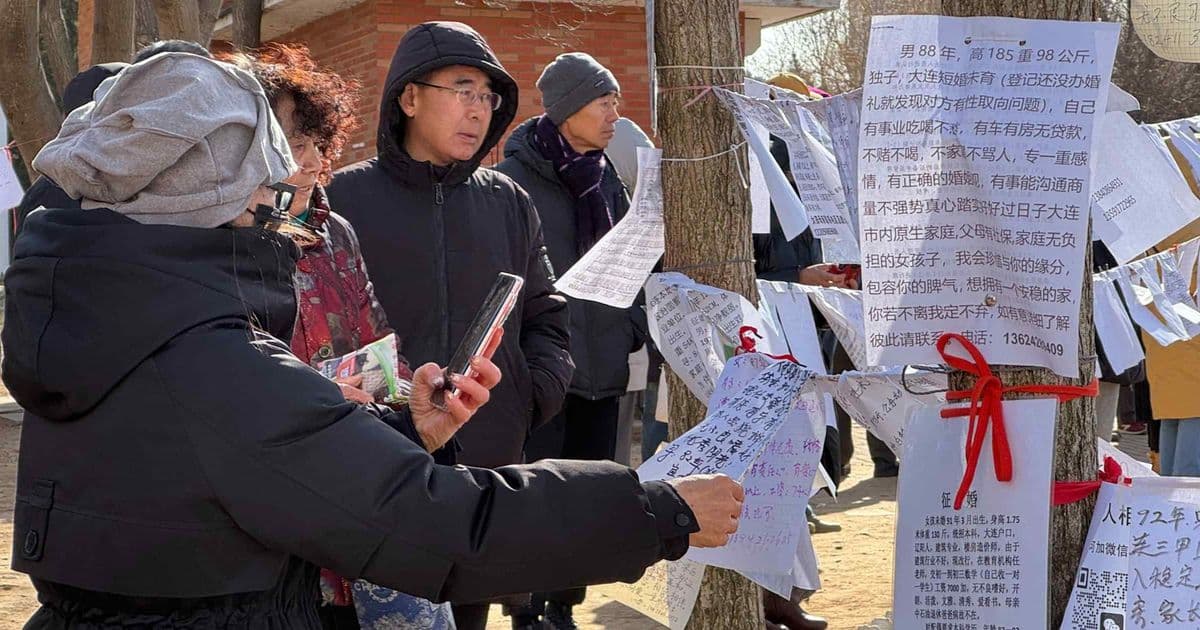
Wanmei Qinjia and similar apps are booming in China as traditional marriage rates decline, with features that let parents search for spouses for their adult children.
Chinese matchmaking apps like Wanmei Qinjia are experiencing explosive growth as marriage rates in China continue to decline. The app, which boasts 50 million users, allows parents to search for potential spouses for their adult children, reflecting changing social dynamics in Chinese society.
The phenomenon highlights a broader trend in China where traditional marriage patterns are shifting. As younger generations delay or forgo marriage entirely, parents are turning to technology to help secure their children's marital futures. Wanmei Qinjia's parent-search feature has become particularly popular, allowing concerned parents to take an active role in the matchmaking process.
This surge in matchmaking app usage comes amid falling marriage rates across China, a trend that has been accelerating in recent years. Economic pressures, changing social attitudes, and demographic shifts have all contributed to young people marrying later or not at all. The apps represent a digital evolution of traditional arranged marriage practices, adapted for the smartphone era.
Industry analysts note that these platforms are filling a unique niche in the Chinese market. Unlike Western dating apps that focus on individual choice and romantic connection, Chinese matchmaking apps often emphasize family involvement and practical considerations like financial stability and social status.
The success of Wanmei Qinjia and similar apps suggests that while marriage rates may be declining, the cultural importance of marriage in Chinese society remains strong. Parents' willingness to use technology to find spouses for their children indicates that marriage is still viewed as a crucial life milestone, even as the path to getting there evolves.
As these apps continue to grow, they may reshape how marriage markets function in China, potentially creating new social dynamics around family involvement in romantic relationships and the role of technology in traditional cultural practices.
Comments
Please log in or register to join the discussion