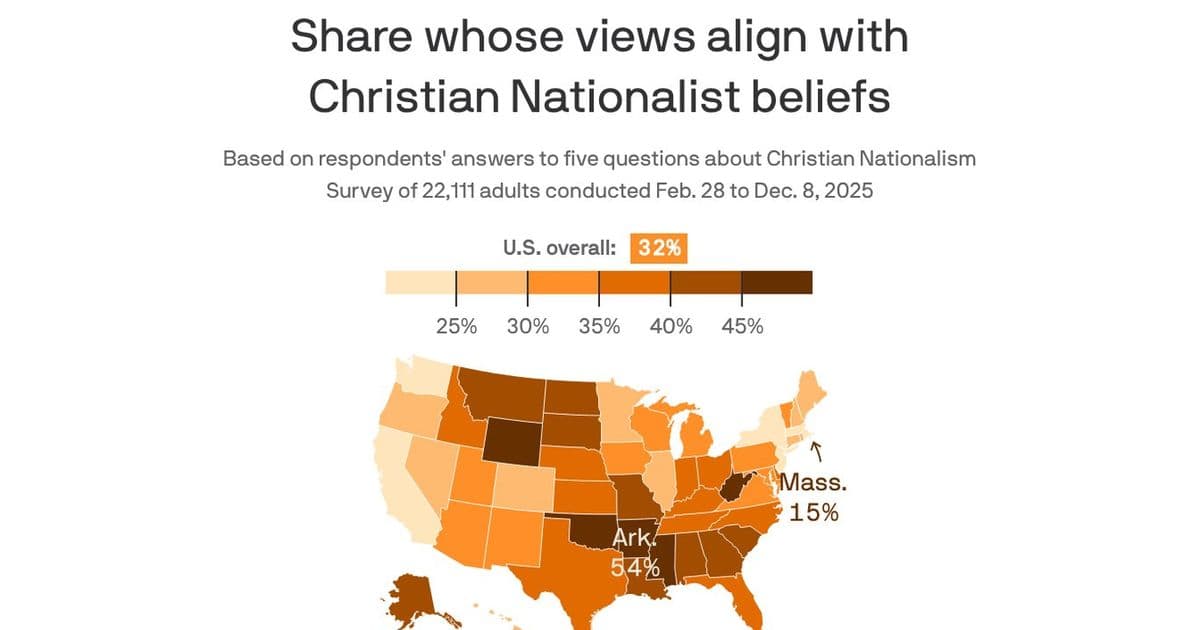
A new analysis reveals where Christian nationalist ideology holds the strongest influence across U.S. states, with implications for political polarization and policy debates.
A recent analysis has mapped the geographic concentration of Christian nationalist ideology across U.S. states, revealing significant regional variations in the prevalence of this political-religious movement.
Key Findings
The study identifies several states where Christian nationalist beliefs are most dominant, typically concentrated in the South and Midwest regions. These areas show higher levels of support for policies that would explicitly favor Christian values in government and public life.
States with the strongest Christian nationalist presence include:
- Alabama
- Mississippi
- Tennessee
- Arkansas
- Oklahoma
Methodology and Metrics
The analysis measured Christian nationalist sentiment through surveys examining attitudes toward:
- The role of Christianity in government
- Support for religious exemptions from civil laws
- Views on America's identity as a "Christian nation"
- Opposition to secular policies in public institutions
Political and Social Implications
This geographic concentration has significant implications for national politics, particularly in areas like:
- Education policy and curriculum decisions
- LGBTQ+ rights legislation
- Reproductive healthcare access
- Religious freedom debates
The concentration of Christian nationalist ideology in certain states creates policy divergence across the country, with some states moving toward more religiously-influenced governance while others maintain strict separation of church and state.
Historical Context
The current distribution reflects historical settlement patterns and the legacy of evangelical Protestantism in certain regions, particularly the Bible Belt. This regional concentration has intensified political polarization on cultural issues between different parts of the country.
Future Trends
Demographic shifts and generational changes may alter these patterns over time, though the current analysis suggests Christian nationalist ideology remains a significant force in shaping state-level politics in many regions.
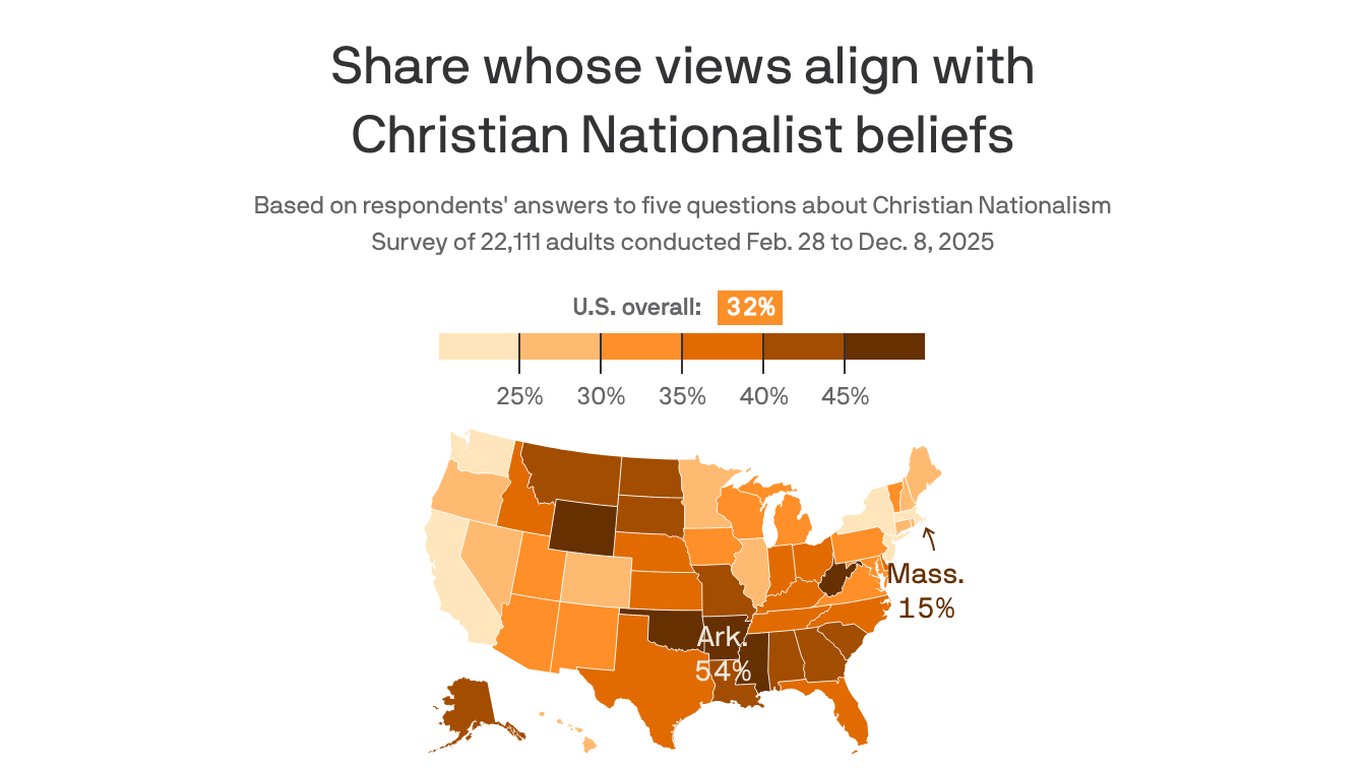
The geographic mapping of Christian nationalist influence provides important context for understanding regional differences in American political culture and the ongoing debates over religion's role in public life.
Comments
Please log in or register to join the discussion