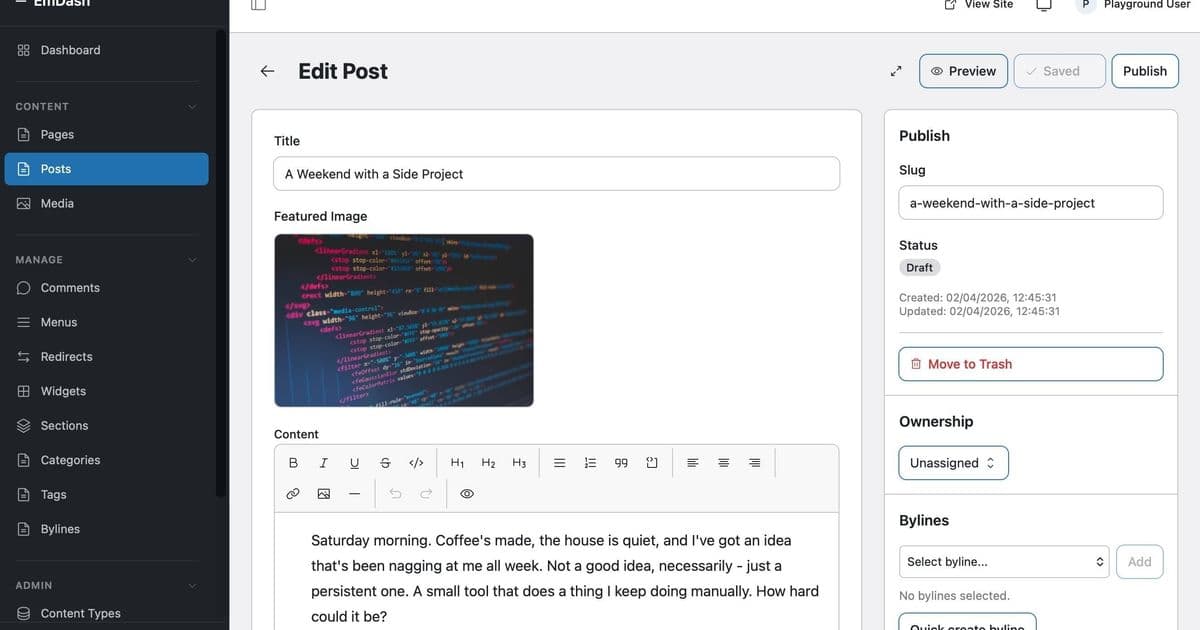
Cloudflare has unveiled EmDash, an AI-driven rebuild of WordPress using TypeScript and Astro, promising enhanced security and scalability while maintaining compatibility with existing WordPress functionality.
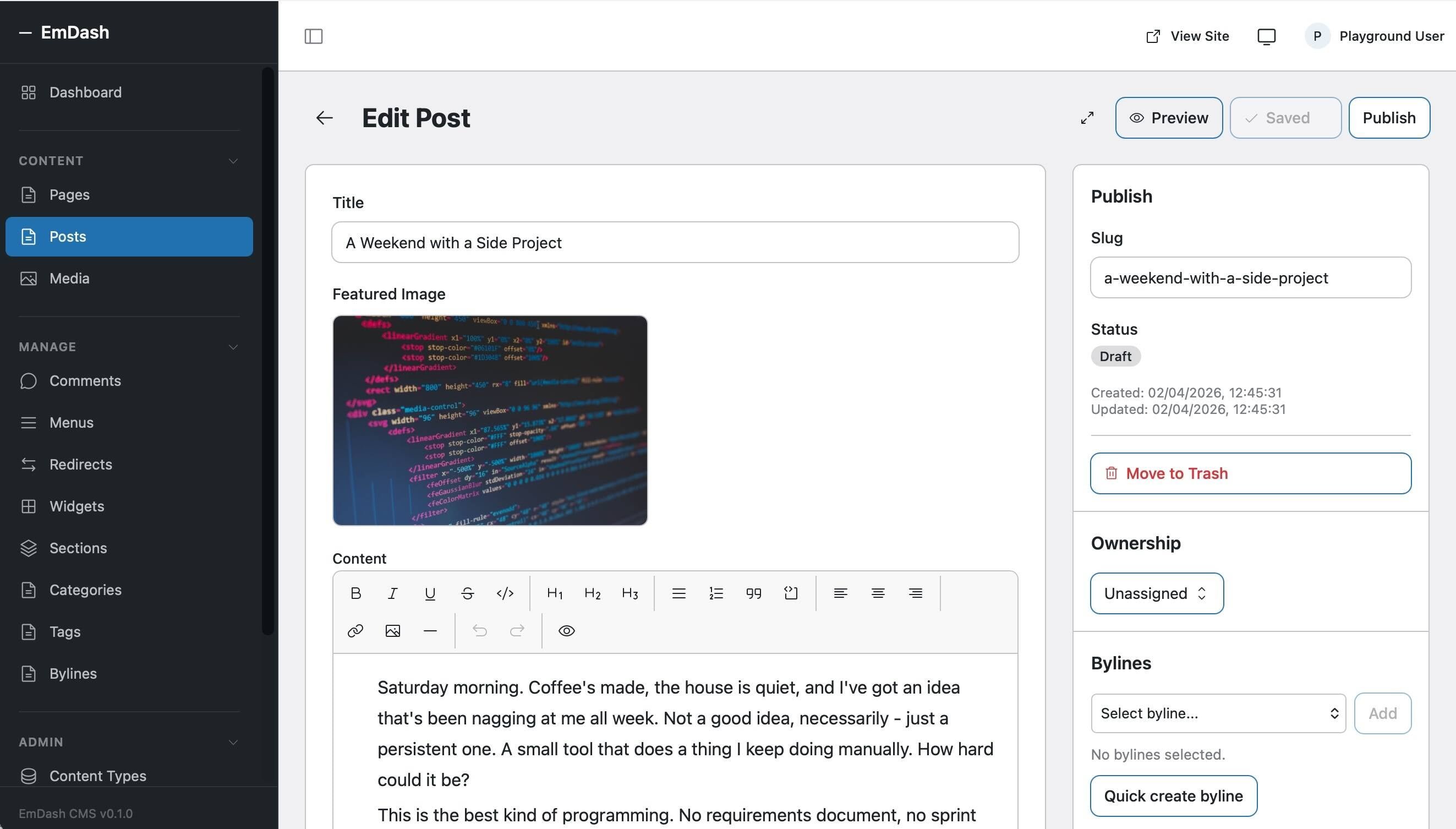
Cloudflare has unveiled EmDash, an ambitious project that reimagines WordPress as a TypeScript-based CMS built with AI assistance. The project, which Cloudflare describes as "AI native," represents a significant departure from WordPress's traditional PHP foundation while maintaining compatibility with existing WordPress functionality.
The Genesis of EmDash
According to Matt Kane, the main engineer behind EmDash and a two-year veteran of the Astro core team, the project took approximately two months to develop. This timeline stands in stark contrast to other AI-driven development efforts, such as the one-week recreation of Next.js using agentic AI. Kane emphasized that despite heavy AI involvement, EmDash is "not a vibe-coded weekend project" but rather a serious undertaking developed full-time since mid-January.
The project leverages Astro, the open-source JavaScript framework that Cloudflare acquired in January 2026. Rather than generating code entirely from scratch, EmDash builds upon Astro's foundation, technically functioning as an Astro integration. This approach allowed the team to focus on WordPress-specific functionality while benefiting from Astro's established architecture.
Technical Architecture and Security Improvements
One of EmDash's most significant departures from WordPress lies in its security model. Traditional WordPress plugins and themes operate with broad access to the system, creating potential vulnerabilities. EmDash addresses this through a sandboxing approach where plugins run in isolated environments with explicitly defined permissions.
For instance, an email plugin might be granted only "read:content" and "email:send" permissions, limiting its ability to access or modify other parts of the system. This granular permission model represents a fundamental shift in how WordPress functionality can be extended and secured.
The authentication system in EmDash also marks a departure from WordPress conventions. By default, the platform uses Passkeys for authentication, with emailed magic links as a fallback option. Notably, EmDash does not support traditional password-based authentication, eliminating one of the most common attack vectors in web applications.
AI Integration and Agent Skills
EmDash's "AI native" designation goes beyond mere marketing terminology. The platform includes a built-in MCP (Model Context Protocol) server that provides full administrative access. More intriguingly, EmDash introduces "Agent Skills" configuration files designed to facilitate the conversion of WordPress themes and plugins using agentic AI.
These skills are pre-configured to handle common WordPress development tasks, potentially streamlining the migration process for existing WordPress sites. The approach suggests a future where AI agents could play a more active role in web development, particularly for content management system customization and extension.
Migration and Compatibility Considerations
While EmDash aims for WordPress compatibility, the migration path presents challenges. The current WordPress migration tool only imports content, leaving plugin and theme functionality unaddressed. Since most WordPress sites rely heavily on plugins and themes coded in PHP, migrating an existing site to EmDash would require significant redevelopment work.
However, the AI-friendly design of EmDash may make this process more manageable. Joost de Valk, creator of the popular Yoast SEO plugin for WordPress, noted that "every architectural decision in EmDash seems to have been made with the same question: what if an AI agent needs to do this?"
This design philosophy extends to documentation structured "for machine consumption," potentially making it easier for AI agents to understand and work with the platform. For developers building new sites with EmDash, this could translate to faster development cycles and reduced complexity.
Business Model and Platform Strategy
Cloudflare's motivation for EmDash extends beyond technical innovation. With WordPress powering 42.5 percent of all websites and 59.8 percent of all CMS systems, according to W3Techs statistics, it represents a massive target market. Cloudflare's strategy appears to be attracting WordPress users to its Workers platform.
Workers, based on V8 isolates (the JavaScript engine used by Google Chrome), offer serverless scalability that WordPress cannot match. EmDash sites can scale to zero when idle or scale up to millions of instances during traffic spikes, providing performance characteristics that traditional WordPress hosting cannot achieve.
Open Source and Licensing
The decision to license EmDash under the MIT license was deliberate and strategic. Kane noted that "the effort needed to be certain it was safe to MIT license EmDash really drove home why it was important to MIT license it. For a lot of enterprises, GPL software is free only if your lawyers are free."
This licensing choice may make EmDash more attractive to enterprise users who might be hesitant to adopt GPL-licensed software due to legal and compliance concerns.
Challenges and Limitations
Despite its innovative approach, EmDash faces several significant hurdles. Most notably, it lacks the extensive plugin ecosystem that has been crucial to WordPress's success. Without community support and a thriving marketplace of extensions, EmDash may struggle to attract users away from the established WordPress platform.
The project also introduces friction for users who prefer self-hosting or hosting with providers other than Cloudflare. While the readme states that "It runs best on Cloudflare, but it's not locked to it," the optimal experience appears to be tied to Cloudflare's infrastructure.
Additionally, early testing revealed issues with the authentication system, particularly on Linux setups where passkey functionality didn't work and magic links returned "page not found" errors. While these are likely temporary issues that will be resolved, they highlight the challenges of developing a new platform that aims to replace an established one.
The Future of CMS Development
EmDash raises fundamental questions about the future of content management systems and software development in general. The project demonstrates how AI can be leveraged not just for code generation but for architectural decisions and platform design.
The notion that one can migrate from one application to another by instructing AI to replicate the necessary components represents a shift in how we think about software compatibility and migration. Rather than requiring exact compatibility, AI assistance might enable more flexible approaches to platform transitions.
Joost de Valk's enthusiasm for EmDash, despite acknowledging its current limitations, suggests that the WordPress community sees potential in this new approach. His statement that he plans to "develop on and with EmDash" indicates that influential figures in the WordPress ecosystem are willing to explore alternatives to the traditional platform.
Conclusion
Whether EmDash succeeds in its goal of attracting WordPress users to Cloudflare's platform remains to be seen. The project faces significant challenges, including building a plugin ecosystem, attracting community support, and overcoming the inertia of WordPress's massive installed base.
However, EmDash represents an important experiment in how AI can reshape software development and platform design. Its focus on security, scalability, and AI integration addresses many of the pain points that have long plagued WordPress users. Even if EmDash itself doesn't achieve widespread adoption, its approach to combining AI assistance with thoughtful architectural decisions may influence future CMS development.
The project's April 1st announcement date led some to question whether it was an elaborate April Fool's joke, but Kane's confirmation that "Name is a joke but the project is real" and the serious technical work behind EmDash suggest that this is a genuine attempt to reimagine one of the web's most important platforms.
As AI continues to evolve and its role in software development expands, projects like EmDash may become increasingly common, challenging our assumptions about how applications should be built and what constitutes a viable alternative to established platforms.
Comments
Please log in or register to join the discussion