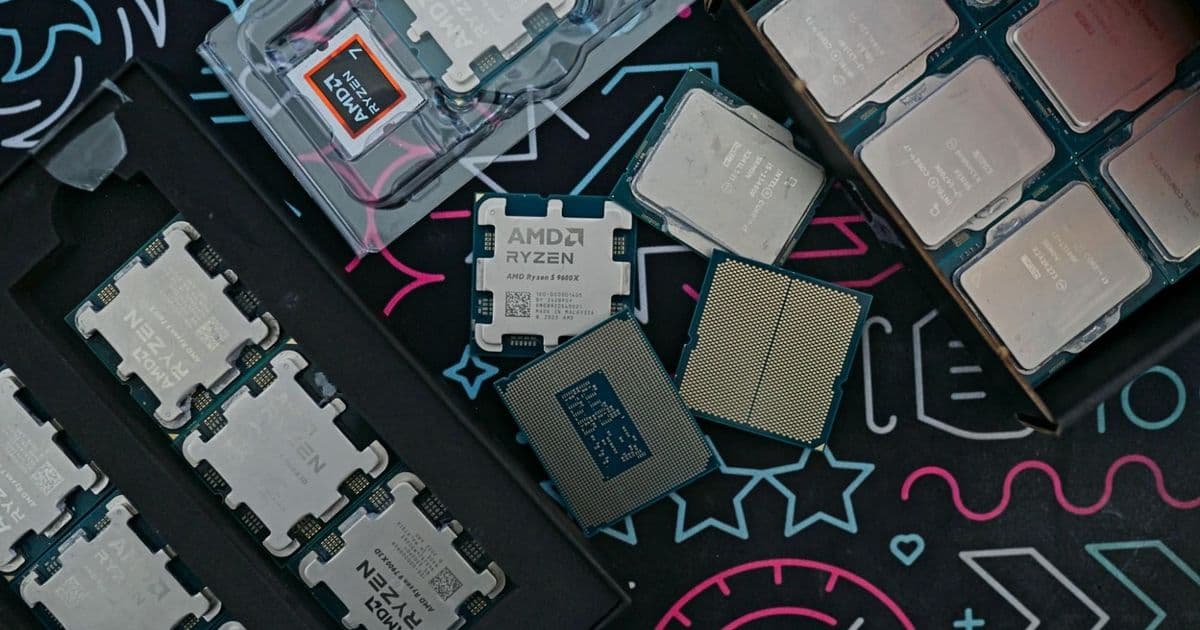
New testing reveals how Nvidia's DLSS reshapes CPU requirements as render resolutions drop below 1080p.
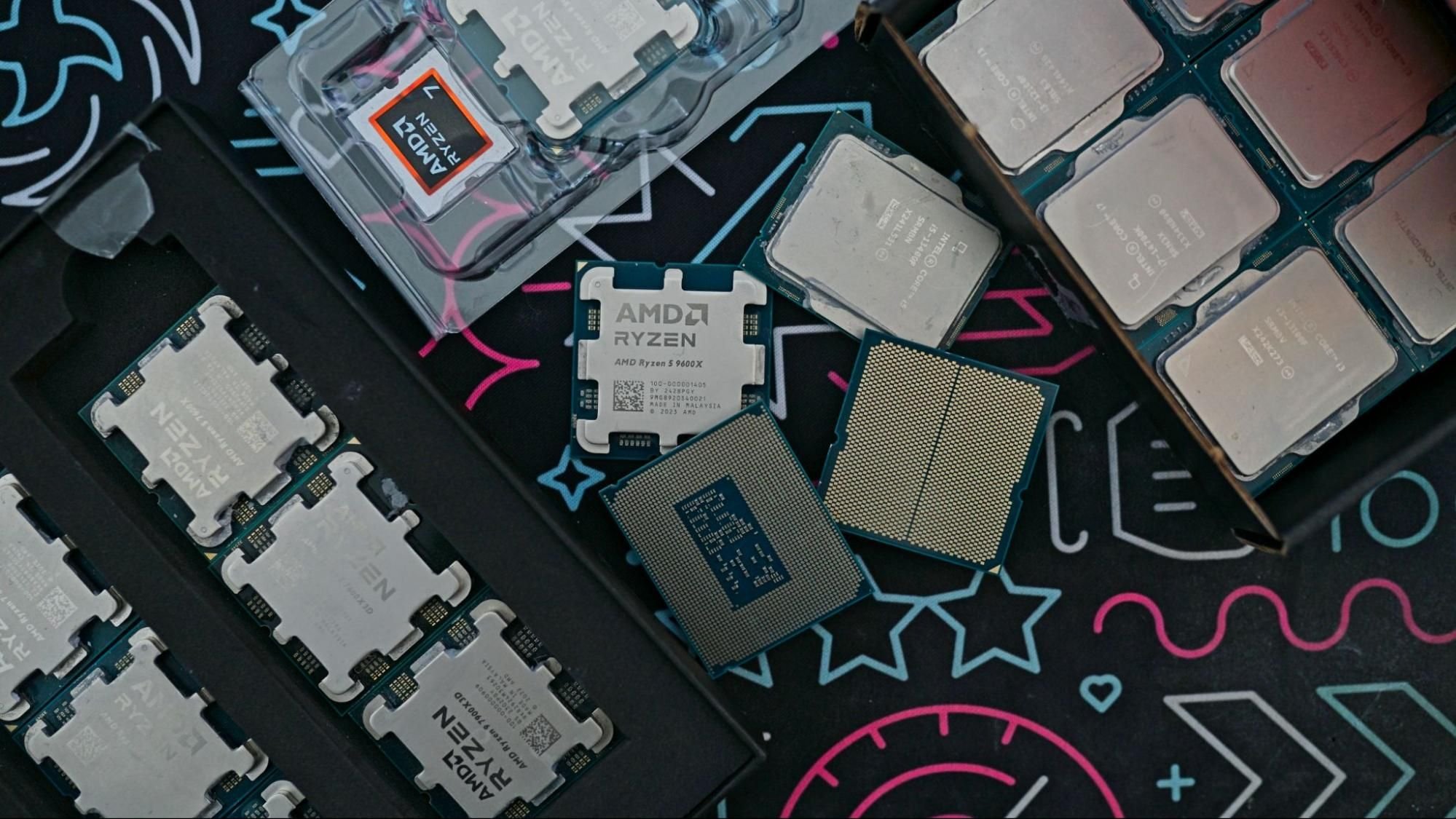
The widespread adoption of AI-powered upscalers like Nvidia's DLSS fundamentally alters CPU-GPU dynamics in modern gaming systems. Our analysis across five AAA titles demonstrates that internal render resolutions below 1080p—commonplace with DLSS enabled—create unexpected CPU bottlenecks even at high output resolutions. With over 80% of RTX users activating DLSS according to Nvidia, understanding these performance interactions becomes critical for balanced system configuration.
Resolution Scaling Mechanics
 DLSS operates by rendering frames at sub-native resolutions then upscaling to target outputs. This substantially reduces GPU workload but intensifies CPU pressure. As shown in the scaling table below, common DLSS presets render internally at resolutions far below perceived output:
| DLSS Preset | Scale Factor | Render Scale | 1080p Output Input | 1440p Output Input | 4K Output Input |
|---|---|---|---|---|---|
| Quality | 1.5x | 66.7% | 1280×720 | 1706×960 | 2560×1440 |
| Balanced | 1.7x | 58% | 1129×635 | 1506×847 | 2259×1270 |
| Performance | 2x | 50% | 960×540 | 1280×720 | 1920×1080 |
At Performance mode (50% scaling), even 4K output originates from sub-1080p renders. This resolution reduction enables GPUs like the RTX 4080 Super to push frame rates beyond what mainstream CPUs can sustain.
Test Methodology
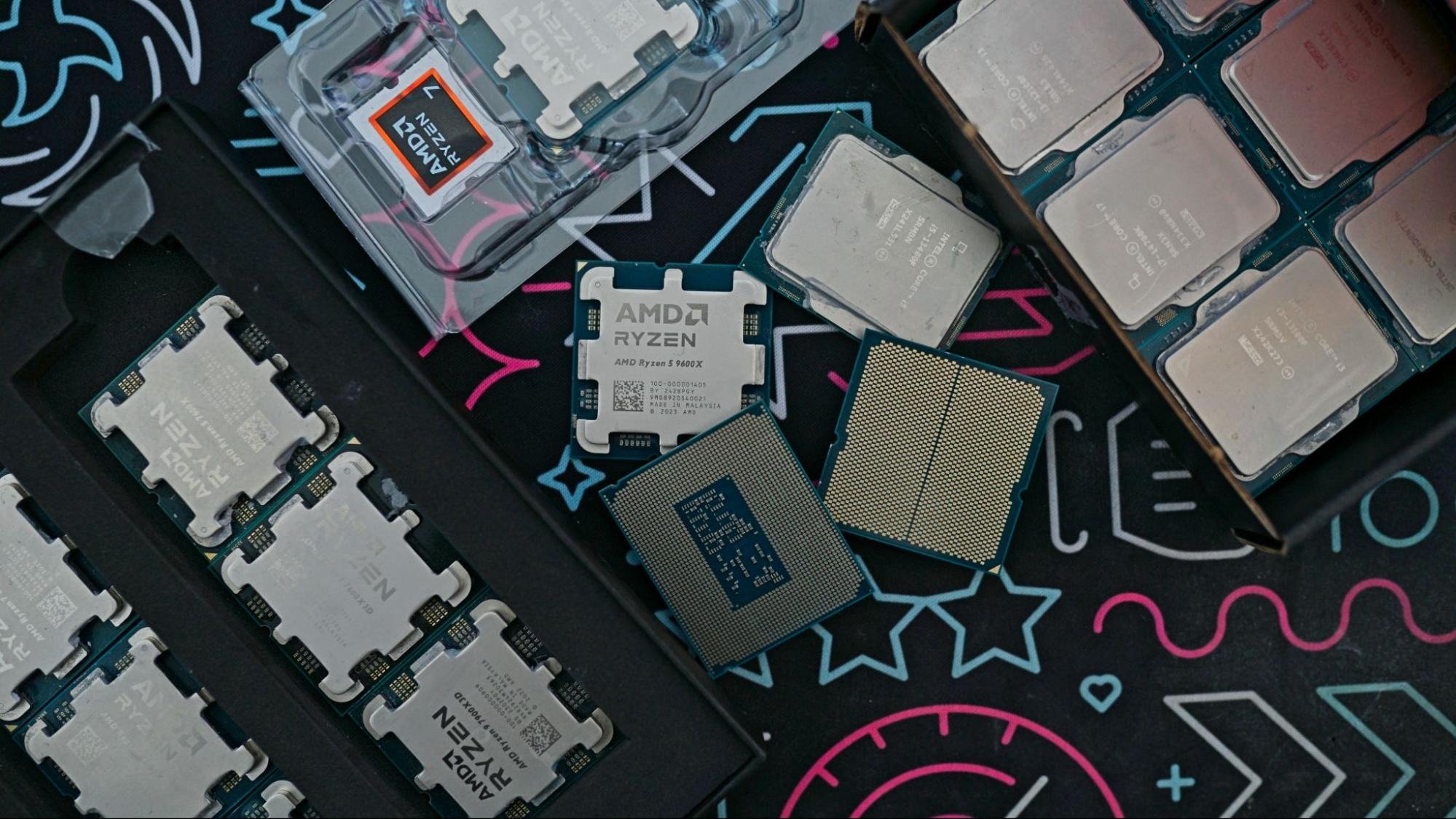
Using an RTX 4080 Super across five titles (Cyberpunk 2077, Doom: The Dark Ages, Microsoft Flight Simulator 2024, Marvel's Spider-Man 2, The Last of Us Part One), we measured CPU scaling differences between DLSS Quality (66.7%) and Performance (50%) modes. Test CPUs spanned Intel's Core i5-14400 and Core i7-14700K alongside AMD's Ryzen 5 9600X and Ryzen 5 9850X3D. All games used high-to-ultra settings with DLSS presets as implemented by developers.
Key technical variations emerged:
- DLSS versions ranged from v3.1.2 to v310.2.1
- Four titles used Transformer-based presets (J/K) requiring additional compute
- The Last of Us used older CNN-based Preset A
Performance Findings
Resolution Thresholds: CPU scaling differences vanished at native 4K across all tested processors. However, activating DLSS Performance mode (50% scaling) created clear CPU bottlenecks even when outputting to 1440p or 4K displays. The Ryzen 5 9600X showed up to 28% lower performance than the Core i7-14700K in CPU-bound scenes at DLSS Performance settings.
Preset Overhead: Transformer-based presets (J/K) exhibited 5-8% higher CPU utilization than CNN-based implementations in equivalent scenes. This overhead stems from the Tensor core operations required for AI frame reconstruction.
Core Scaling: Games leveraging >8 threads showed significant performance deltas between 6-core and 8-core CPUs when GPU-bound constraints were alleviated by DLSS. Cyberpunk 2077 demonstrated a 22% average FPS increase moving from Core i5-14400 to Core i7-14700K at DLSS Quality 1440p.
Market Implications
These findings disrupt conventional wisdom about CPU relevance at higher resolutions. As DLSS adoption grows:
Mid-range CPU limitations: Systems pairing high-end GPUs with budget CPUs (e.g., RTX 4070 + Core i5/Ryzen 5) will increasingly encounter CPU bottlenecks when using aggressive upscaling
Chip allocation strategies: Both AMD and Intel may shift more desktop silicon toward higher core counts as internal render resolutions decrease
API development: DirectX 12 Ultimate's Work Graphs could alleviate CPU bottlenecks by enabling GPU-driven scheduling
Monitor trends: The push toward 1440p/4K high-refresh displays amplifies this dynamic, as users seeking 120+ FPS increasingly rely on upscaling
Nvidia's DLSS 4.5 with FP8 acceleration may further exacerbate CPU demands when using Preset L/M, though current testing used widely available Presets J/K. AMD's FSR implementation shows similar patterns but wasn't included in this round.
Conclusion
The era of CPU irrelevance at resolutions above 1080p has ended. Upscaling technologies transfer workload from GPU to CPU, creating new performance ceilings. Gamers targeting high refresh rates with DLSS should consider 8-core processors as the new performance sweet spot, particularly when using Performance or Ultra Performance modes. As Nvidia continues refining DLSS, these CPU-GPU interactions will only intensify.

Jake Roach
Senior Analyst, CPUs
Comments
Please log in or register to join the discussion