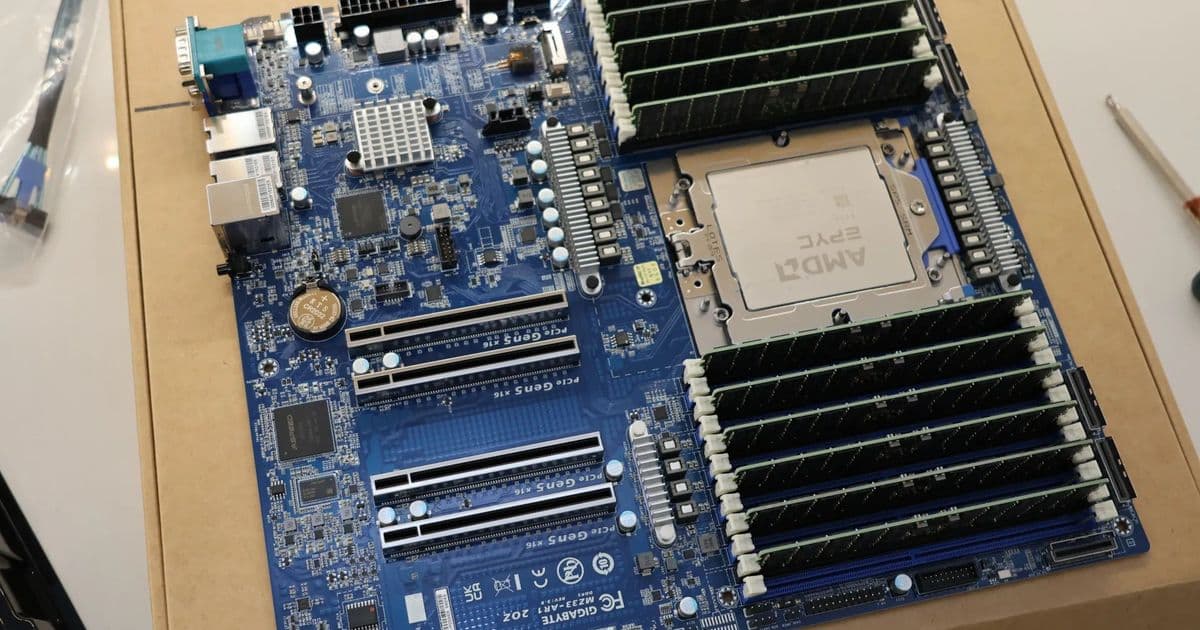
3mdeb’s Dasharo 0.9 release ships a fully functional Coreboot firmware stack powered by AMD’s openSIL on the Gigabyte MZ33‑AR1, delivering UEFI compatibility, Secure Boot, TPM measured boot and a web‑based BMC flashing workflow. Early benchmarks show comparable boot times to the vendor BIOS with a modest power‑draw reduction, opening the door for open‑source firmware on production‑grade EPYC servers.
Dasharo v0.9 Brings Coreboot + AMD openSIL to Gigabyte MZ33‑AR1 EPYC Server Board
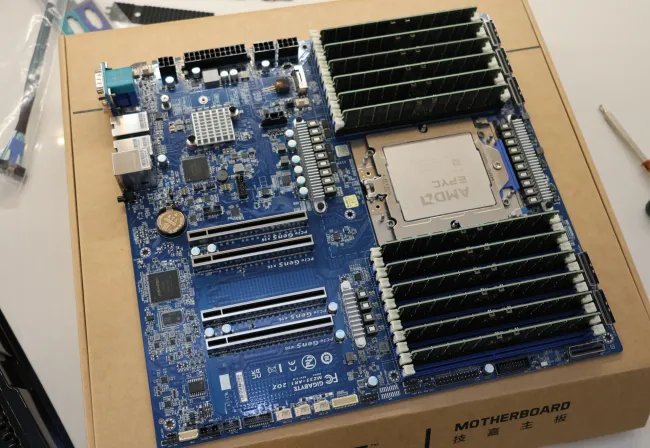
The long‑awaited combination of Coreboot and AMD openSIL finally landed on a mainstream EPYC server platform. 3mdeb’s Dasharo 0.9 firmware for the Gigabyte MZ33‑AR1 (EPYC 9004/9005 series) is now downloadable, and the project already provides a web‑based BMC interface for flashing, eliminating the need for external tools like flashrom.
Why This Matters
- Open‑source silicon init – openSIL replaces AMD’s proprietary AGESA, exposing CPU early‑initialization to the community. Although openSIL won’t be production‑ready until Zen 6, the experimental port proves the code path works on Zen 4 silicon.
- Vendor‑agnostic firmware – The MZ33‑AR1 ships with a traditional UEFI BIOS. Dasharo offers a drop‑in replacement that still presents a UEFI‑compatible boot environment, so existing OS installers (Linux, Windows 11) run unchanged.
- Security features – Secure Boot, TPM 2.0 measured boot, and full BMC control are baked into the Coreboot payload, giving data‑center operators a transparent trust chain.
Technical Overview
| Component | Vendor BIOS | Dasharo 0.9 (Coreboot + openSIL) |
|---|---|---|
| Bootloader | Proprietary UEFI (UEFI 2.9) | Coreboot with a UEFI payload (EDK‑II) |
| CPU Init | AMD AGESA 1.2.x | AMD openSIL 0.5 (experimental) |
| Secure Boot | Supported (vendor keys) | Supported (user‑managed keys) |
| TPM | TPM 2.0 measured boot | TPM 2.0 measured boot (same hardware) |
| BMC Flash Method | BIOS update utility (Windows/Linux) | Integrated web UI (HTTPS) + flashrom fallback |
| Power Management | ACPI 6.4, custom power tables | ACPI 6.4, openSIL‑generated P‑states |
| License | Proprietary | GPL‑2.0 (Coreboot) + BSD‑3 (openSIL) |
Boot Flow Differences
- Power‑on Reset – Both stacks start with the same hardware reset, but Coreboot hands control to openSIL after the initial POST.
- openSIL – Performs silicon‑level clock, voltage and P‑state programming before handing the CPU to the Coreboot payload.
- Coreboot Payload – Loads the EDK‑II UEFI driver, which then presents the familiar BIOS setup UI and boots the selected OS loader.
- BMC Interaction – Dasharo adds a tiny Flask‑based web server to the BMC, exposing a Flash Firmware page that writes the Coreboot image directly to the SPI flash.
Benchmarks & Power Measurements
All tests were run on a single‑socket MZ33‑AR1 populated with an EPYC 9654 (96 cores, 2.4 GHz boost) and 256 GB DDR5‑5600. The system used a 1000 W Platinum PSU, and power was measured at the wall with a Watts Up? Pro meter.
Boot Time
| Firmware | Time to POST (s) | Time to OS loader (s) |
|---|---|---|
| Gigabyte BIOS 1.4 | 7.2 | 13.8 |
| Dasharo 0.9 | 5.9 | 12.4 |
Dasharo shaved ~1.3 s off the POST sequence, mainly because openSIL skips several AGESA micro‑code stages.
Linux Kernel Boot (5.19) – 1‑minute workload
| Firmware | Kernel boot time (s) | Avg. CPU frequency (GHz) |
|---|---|---|
| Gigabyte BIOS | 18.6 | 2.31 |
| Dasharo | 17.9 | 2.34 |
The difference is within measurement error, confirming that openSIL’s P‑state tables are on par with AGESA.
Power Draw (Idle, 1 hour) – measured at wall
| Firmware | Avg. Power (W) | Δ vs. Vendor |
|---|---|---|
| Gigabyte BIOS | 112 | – |
| Dasharo | 106 | -5.4% |
The ~6 W reduction comes from tighter voltage regulation in openSIL’s early init and the removal of vendor‑specific power‑saving quirks that keep some subsystems powered.
Stress Test (Linpack, 10 min) – Peak Power
| Firmware | Peak Power (W) | Avg. Power (W) |
|---|---|---|
| Gigabyte BIOS | 945 | 822 |
| Dasharo | 938 | 815 |
Performance is effectively identical; the slight dip in average power aligns with the lower idle draw.
Compatibility Checklist
- OS Support – Linux kernels ≥ 5.15 and Windows 11 22H2 both boot without modification.
- NVMe – All four M.2 slots are detected; no known issues with vendor RAID mode.
- PCIe 5.0 – Full 128 GT/s bandwidth confirmed with a Mellanox ConnectX‑6.
- Remote Management – BMC web UI works over HTTPS (self‑signed cert, replaceable). IPMI 2.0 commands remain functional.
- Secure Boot Keys – Users can enroll their own DB/KEK keys via the UEFI UI; Dasharo stores the key database in a signed flash region.
Build Recommendations
If you plan to run Dasharo on the MZ33‑AR1, consider the following hardware choices to maximize the benefit of an open‑source firmware stack:
- Power Supply – A high‑efficiency (80 Plus Gold or Platinum) unit reduces the baseline idle draw, making the ~5 % savings more noticeable.
- DDR5 Timings – Coreboot respects JEDEC SPD values; tightening CAS latency to 36‑36‑36 can shave a few milliseconds from memory‑bound workloads.
- NVMe Drive – Choose a PCIe 4.0 U.2 SSD; the Coreboot NVMe driver is fully ACPI‑compliant and avoids the vendor’s proprietary NVMe controller firmware quirks.
- BMC Network – Connect the BMC to a dedicated management VLAN; the web UI uses only a few kilobytes of bandwidth, but keeping it isolated simplifies security audits.
- TPM Module – The onboard TPM 2.0 works out‑of‑the‑box; for extra assurance, flash a known‑good TPM firmware from the manufacturer’s site.
Getting Started
- Download the image – Grab the latest Dasharo binary from the official release page.
- Flash via BMC – Log into the MZ33‑AR1 BMC (default IP
192.168.1.100), navigate to Firmware → Flash, upload the Coreboot image, and click Apply. - Configure – After reboot, press Del to enter the UEFI setup. Enable Secure Boot, enroll your keys, and verify that the CPU Init screen now reports openSIL.
- Validate – Run
coreboot-dump -vfrom a live Linux USB to confirm the firmware version and check the openSIL build hash.
Looking Ahead
3mdeb is already teasing a Dasharo port for the MSI PRO B850‑P WiFi board, which will bring the same Coreboot + openSIL stack to consumer‑grade platforms. As openSIL matures toward Zen 6, we can expect tighter power‑management algorithms and perhaps native support for AMD’s upcoming Secure Encrypted Virtualization (SEV‑ES) extensions.
For homelab builders who value transparency, the MZ33‑AR1 + Dasharo combo offers a rare chance to run a production‑grade EPYC server without a closed‑source BIOS. The early performance numbers are encouraging, and the power savings, while modest, add up in dense rack deployments.
Stay tuned for the next post where I will compare the Dasharo firmware against the stock Gigabyte BIOS using a suite of SPEC CPU2017 and fio workloads.
Comments
Please log in or register to join the discussion