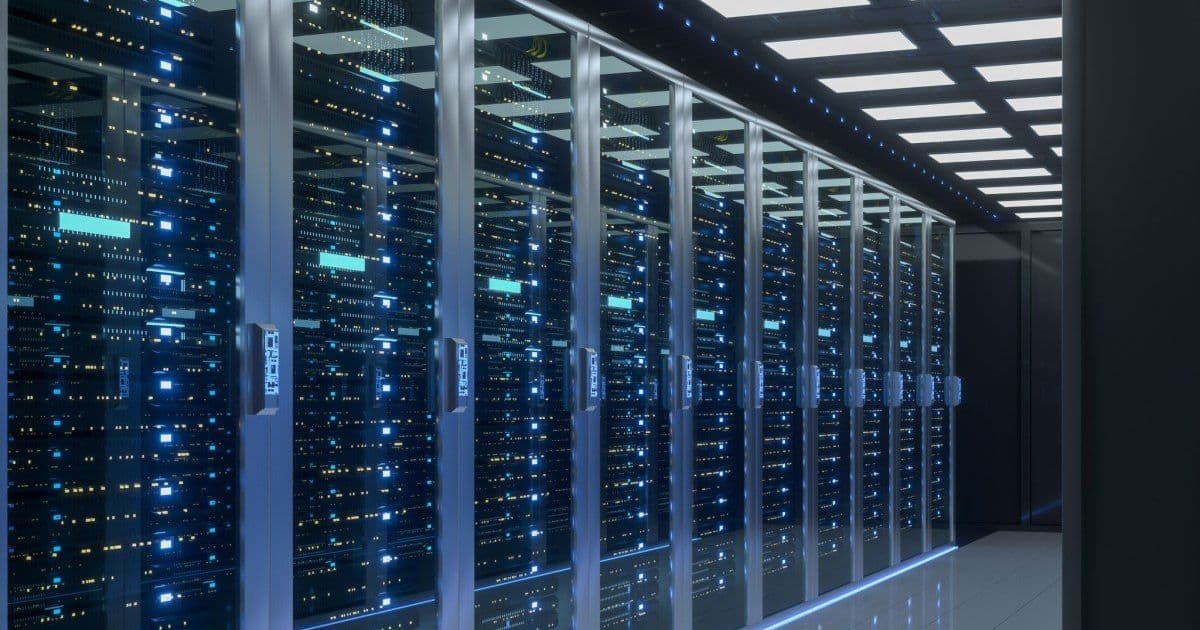
DG Matrix secures $60M Series A to scale production of solid-state transformers that boost data center power efficiency up to 2.4 MW.
Data centers are facing a power crisis. As AI workloads grow exponentially, traditional transformers—those bulky, century-old devices that convert electricity for our servers—are struggling to keep up. Enter DG Matrix, a startup that's building solid-state transformers that can handle up to 2.4 megawatts while dramatically improving power efficiency.
Today, the company announced a $60 million Series A round led by Engine Ventures, bringing its total funding to $80 million. The investment comes at a critical time when data centers are scrambling to find ways to power increasingly dense server racks without building new electrical infrastructure.
The Problem with Traditional Transformers
Most people don't think about transformers until the power goes out. But these devices are the unsung heroes of our electrical grid, stepping down high-voltage electricity to levels that can safely power buildings and equipment.
The technology hasn't changed much since the 1880s. Traditional transformers use copper coils and iron cores to transfer energy through electromagnetic induction. They're heavy, inefficient, and can't easily adapt to the variable power demands of modern data centers.
"Traditional transformers are like trying to stream 4K video over dial-up internet," explains Dr. Sarah Chen, an electrical engineering professor at Stanford who's not affiliated with DG Matrix. "They were designed for a different era of computing."
Solid-State Solution
DG Matrix's approach replaces the mechanical components with semiconductor-based power electronics. Think of it as the difference between a mechanical watch and a quartz watch—both tell time, but one is far more precise and adaptable.
The company's transformers can dynamically adjust voltage and frequency, something traditional transformers simply cannot do. This means data centers can run their servers at optimal efficiency regardless of load conditions.
"We're not just making transformers more efficient," says DG Matrix CEO Michael Torres. "We're making them intelligent. Our devices can communicate with the grid and data center infrastructure to optimize power delivery in real-time."
Why This Matters Now
The timing couldn't be better. Data centers consumed about 1% of global electricity in 2010. By 2025, that number could reach 3-4%, with some estimates suggesting it could hit 8% by 2030 if AI adoption continues its current trajectory.
Major tech companies are already feeling the squeeze. Microsoft recently announced plans to invest $50 billion by 2030 to expand AI infrastructure across the "Global South." Google's I/O 2026 conference, scheduled for May 19-20 in Mountain View, is expected to showcase the latest AI breakthroughs that will only increase power demands.
"The power delivery system is becoming the bottleneck for AI innovation," notes Torres. "You can have the most advanced AI chips in the world, but if you can't deliver power efficiently to them, you're leaving performance on the table."
The Technology Behind the Magic
DG Matrix's solid-state transformers use wide-bandgap semiconductors like silicon carbide (SiC) and gallium nitride (GaN). These materials can operate at higher frequencies and temperatures than traditional silicon, enabling more compact and efficient designs.
The company's flagship product, the DMT-2400, can handle 2.4 MW of power in a package that's roughly 60% smaller than a traditional transformer of equivalent capacity. It also reduces power losses by up to 50%, which translates to significant cost savings for data center operators.
"The efficiency gains are substantial," says Dr. Chen. "In a large data center, even a 5% improvement in power delivery efficiency can save millions of dollars annually in electricity costs."
Market Opportunity
The data center power equipment market is projected to grow from $15 billion in 2023 to over $30 billion by 2028, according to market research firm Dell'Oro Group. DG Matrix is positioning itself to capture a significant share of this expanding market.
The company's technology isn't limited to data centers. It has applications in renewable energy integration, electric vehicle charging infrastructure, and industrial automation—all markets experiencing rapid growth.
The Road Ahead
With the new funding, DG Matrix plans to scale up manufacturing and expand its product line. The company is also working on developing even higher-capacity transformers to meet the needs of hyperscale data centers.
"This is just the beginning," says Torres. "We're building the power delivery infrastructure for the AI era. The demand is there, and we're ready to meet it."
The investment from Engine Ventures brings not just capital but also deep expertise in scaling industrial hardware companies. Engine Ventures has a track record of helping startups navigate the complex process of moving from prototype to mass production.
Competition and Challenges
DG Matrix isn't alone in pursuing solid-state transformer technology. Companies like Hitachi Energy, Siemens, and ABB have all announced research initiatives in this space. However, DG Matrix claims its approach offers superior efficiency and cost-effectiveness.
The biggest challenge facing the company is scaling production. Solid-state transformers require specialized manufacturing processes and materials that aren't widely available. Building the supply chain and manufacturing capacity to meet data center demand will be crucial to the company's success.
"The technology is proven," says Dr. Chen. "The question is whether they can manufacture it at scale and at a price point that makes sense for data center operators."
Looking Forward
As AI continues to transform every industry, the infrastructure that powers it becomes increasingly critical. DG Matrix's solid-state transformers represent a fundamental shift in how we think about power delivery.
"We're at an inflection point," concludes Torres. "The old way of doing things simply won't scale to meet the demands of the AI era. Companies that can solve these infrastructure challenges will be the ones that define the next decade of technological progress."
The $60 million investment suggests that investors are betting DG Matrix will be one of those companies. As data centers continue to expand and AI workloads grow more demanding, the need for efficient, intelligent power delivery solutions will only increase.
For now, DG Matrix is focused on execution. The company plans to begin shipping its first commercial units to select customers later this year, with broader availability expected in 2027. If successful, it could help power the AI revolution while making data centers more sustainable and cost-effective.
Comments
Please log in or register to join the discussion