
After four years managing a Discord community, Taggart Tech presents a rigorous evaluation of seven alternatives across functionality, openness, security, safety and decentralization criteria.
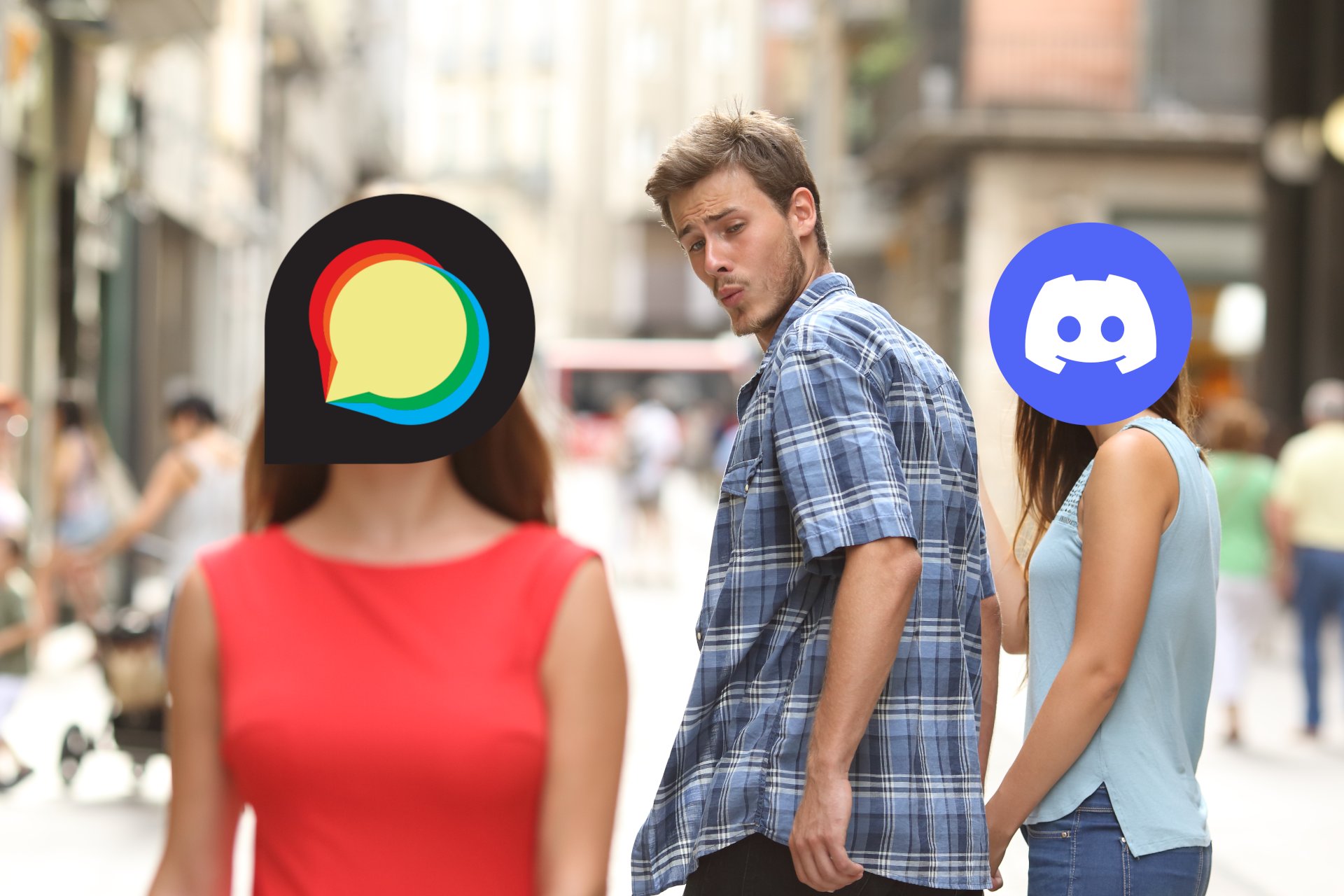
For community moderators concerned about Discord's closed ecosystem and data practices, finding viable alternatives presents significant challenges. Taggart Tech's comprehensive analysis evaluates seven platforms against five critical criteria, revealing unexpected leaders and surprising limitations in the decentralized communication space.
Evaluation Methodology The assessment uses five weighted criteria:
- Functionality: Core features for community management
- Openness: Access to features/code without payment
- Security: Data protection mechanisms
- Safety: Moderation tooling
- Decentralization: Resistance to single points of failure
Each platform receives 1-5 scores per category, with detailed analysis of real-world implementation challenges beyond marketing claims.
Platform Breakdown
Discord (Baseline) Functionality 4 · Openness 1 · Security 3 · Safety 4 · Decentralization 1 · Total 13
The industry standard excels at real-time interaction but suffers critical weaknesses: proprietary lock-in, unencrypted message storage, and complete centralization. Its moderation toolkit remains best-in-class, but administrators sacrifice data control and platform independence.
Signal Functionality 2 · Openness 4 · Security 5 · Safety 2 · Decentralization 1 · Total 14
Signal delivers gold-standard encryption but fails as community platform. Lacking channels, moderation tools, or persistent history, it's suitable only for niche communities prioritizing secrecy above all else. Its centralized infrastructure contradicts decentralized ideals.
Matrix Functionality 3 · Openness 4 · Security 3 · Safety 1 · Decentralization 4 · Total 15
The Matrix protocol promises federation freedom but delivers operational complexity. Real-world testing revealed critical moderation flaws where CSAM attacks propagated through federated servers. Despite technical decentralization, matrix.org's dominance creates centralization risks. The Element client's unfinished features and Synapse's administrative overhead limit practical adoption.
Rocket.Chat Functionality 5 · Openness 3 · Security 4 · Safety 3 · Decentralization 3 · Total 18
Rocket.Chat offers the most complete Slack-like experience with self-hosting options. Its end-to-end encryption implementation surprises positively, though enterprise pricing constrains smaller communities. Native federation features show promise but remain proprietary. Safety tools require manual configuration but surpass Matrix's capabilities.
Zulip Functionality 4 · Openness 4 · Security 2 · Safety 2 · Decentralization 2 · Total 14
Zulip merges forums with chat in an unconventional interface. While philosophically interesting, costs escalate quickly beyond 10 users. No end-to-end encryption and minimal moderation tools make it unsuitable for public communities. Documentation complexity hampers self-hosted deployments.
Mattermost Functionality 4 · Openness 2 · Security 4 · Safety 2 · Decentralization 1 · Total 13
Mattermost targets enterprises with compliance needs, not communities. "Open core" licensing restricts critical features behind $10/user pricing. Security focuses on regulatory compliance rather than privacy. Lacks community moderation paradigms entirely.
Discourse Functionality 3 · Openness 5 · Security 3 · Safety 5 · Decentralization 3 · Total 19
Asynchronous Discourse emerges as the highest scorer despite not being real-time chat. Its 100% open-source model, exceptional moderation transparency, and self-hosting flexibility offset the paradigm shift from instant messaging. Public moderation logs create accountability missing from other platforms.
Revolt/Stoat This early-stage project (renamed from Revolt) shows potential but lacks stability and features for production use. Not formally scored due to immaturity.
Key Findings
- No perfect solution: All platforms show significant tradeoffs between security, decentralization and usability
- Cost matters: Self-hosting advantages often come with steep administrative or financial burdens
- Moderation gap: Only Discord and Discourse provide comprehensive safety tooling
- Encryption rarity: Signal remains the only platform with robust default E2EE
- Federation fiction: Matrix's theoretical decentralization falters in practical implementation
"Tools don't create communities—people do," concludes Taggart Tech. "But platform choices profoundly impact community resilience. Discourse's asynchronous model, while different from Discord's real-time approach, currently offers the best combination of openness, safety and sustainability for long-term communities."
Full Scoring Comparison
| Platform | Functionality | Openness | Security | Safety | Decentralization | Total |
|---|---|---|---|---|---|---|
| Discord | 4 | 1 | 3 | 4 | 1 | 13 |
| Signal | 2 | 4 | 5 | 2 | 1 | 14 |
| Matrix | 3 | 4 | 3 | 1 | 4 | 15 |
| Rocket.Chat | 5 | 3 | 4 | 3 | 3 | 18 |
| Zulip | 4 | 4 | 2 | 2 | 2 | 14 |
| Mattermost | 4 | 2 | 4 | 2 | 1 | 13 |
| Discourse | 3 | 5 | 3 | 5 | 3 | 19 |
| Stoat | ? | ? | ? | ? | ? | ? |
Comments
Please log in or register to join the discussion