A developer with no prior GIMP plugin experience created Dream Prompter—a seamless AI image generator/editor for GIMP—in just two days using Google's Gemini Nano Banana model and Claude's coding assistance. The open-source plugin eliminates creative workflow fragmentation by bringing AI capabilities directly into GIMP's interface.
For digital artists, constantly switching between GIMP and standalone AI image generators creates disruptive workflow friction. Developer Grey Hat saw this problem firsthand: "You’re working on a design, need to add an element, switch to a web interface, generate, download, re-import... it’s clunky." This frustration sparked Dream Prompter—a novel GIMP plugin integrating Google's Gemini 2.5 Flash model (codenamed "Nano Banana") directly into the open-source image editor.
Why Integrated AI Matters
While AI image tools proliferate, most operate as isolated silos. Grey Hat recognized that true creative efficiency requires embedding AI natively: "GIMP needs better AI integrations. The future is seamless tools that augment existing workflows." Dream Prompter delivers this via Filters → AI → Dream Prompter, enabling:
- Text-to-image generation: Create assets from prompts
- Natural language editing: Transform existing layers (e.g., "change background to forest")
- Non-destructive workflows: AI outputs land as named layers, preserving originals
The Claude-Powered Development Sprint
Remarkably, Grey Hat built this without prior GIMP plugin or Python expertise by partnering with Anthropic's Claude AI:
"Claude helped me navigate GIMP's Python API, implement GTK interfaces, and handle threading for non-blocking API calls. When I requested API integration, it automatically implemented threading patterns without prompting—anticipating needs I hadn’t considered."
Their collaborative Zed editor sessions produced a modular architecture in just 48 hours, including:
- API handlers for Gemini
- Multi-threaded background processing
- Internationalization for 11 languages
- GTK UI components
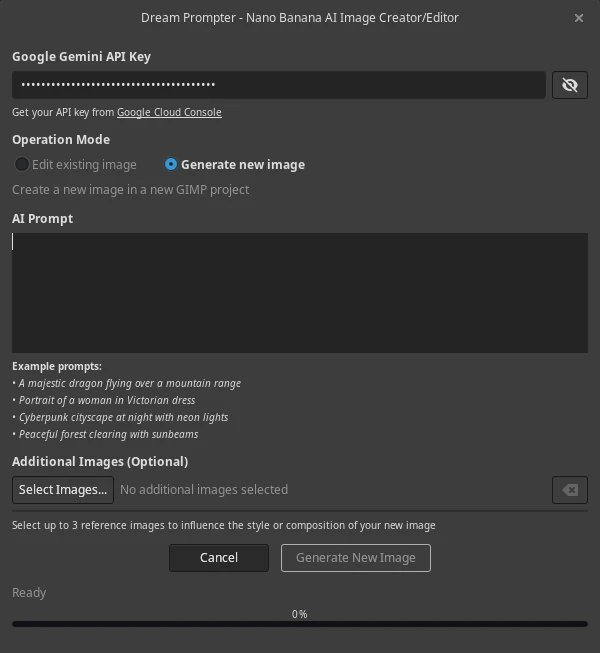 Dream Prompter's clean interface enables prompt-based editing without leaving GIMP
Technical Capabilities & Constraints
Dream Prompter supports sophisticated use cases:
- Reference images: Upload up to 3 style guides for generation
- Context-aware editing: Modify existing artwork via text prompts
- Smart asset management: Auto-named layers maintain project organization
However, key limitations exist:
- Requires paid Google Gemini API access (free tier excluded)
- Supports only PNG/JPEG/WebP under 7MB
- Currently runs on GIMP 3.0.x +
google-genaiPython library
Seeing Is Believing: AI Output Samples
Gemini Nano Banana delivers surprisingly coherent results through the plugin:
Pure Generation
"A lego fortress"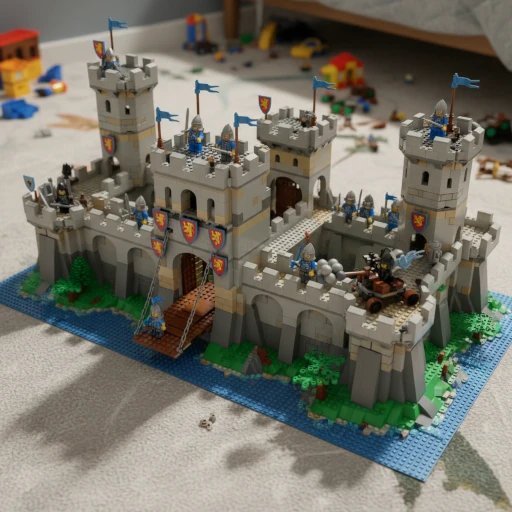
Atmospheric Creation
"A majestic dragon flying over snow-capped mountains at sunset"
Contextual Editing
"Change the background to a peaceful forest clearing"
The Road to Refinement
Grey Hat openly acknowledges this as a first-gen release and invites community collaboration:
"I want feedback on clunky edges, ideal prompting patterns, and missing features. Contributors could transform this—especially testers, documentation writers, and translators for additional languages."
The project exemplifies how AI assistants lower barriers to specialized development. As Grey Hat reflects: "Claude was like a tireless pair programmer who’d read all the docs. We proved AI can help developers conquer unfamiliar domains rapidly."
Dream Prompter’s source code is available on GitHub, offering both a practical tool for digital artists and a fascinating case study in AI-augmented development.
Source: Grey Hat Thoughts
Comments
Please log in or register to join the discussion