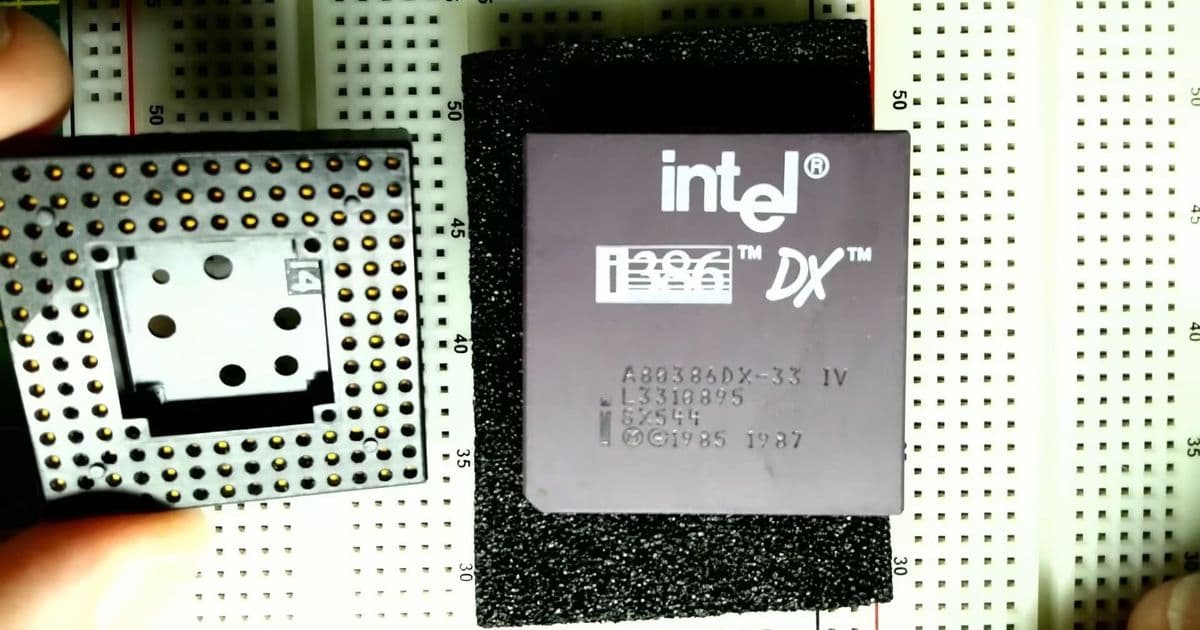
A maker known as Breadboarding Labs is undertaking a complex project to build a fully functional Intel 386 PC using solderless breadboards, building upon their successful 8088-based PC-XT and PC-AT builds.
Electronics enthusiast Breadboarding Labs has embarked on an ambitious new project to construct a fully functional Intel 386-based PC using solderless breadboards, marking a significant leap in complexity from their previous successful builds. The project aims to replicate the functionality of Compaq's milestone DeskPro 386 system, which was one of the first 386-based computers to hit the market.
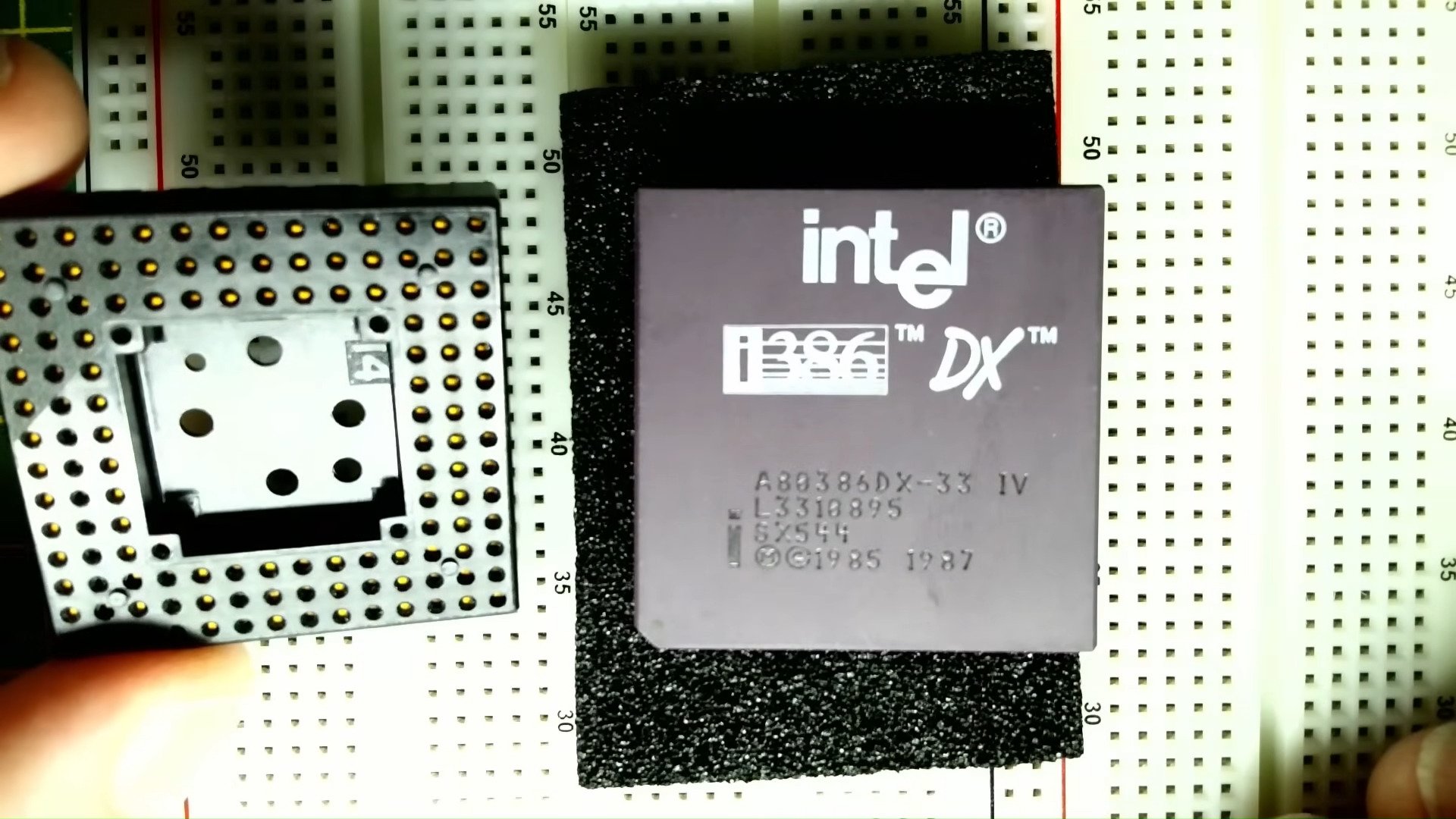
This isn't the maker's first rodeo with breadboard PC builds. Breadboarding Labs has already completed two similar projects based on the Intel 8088 processor - a PC-XT and a PC-AT. These earlier successes have provided valuable experience and reusable components that will help streamline the 386 build. However, the jump from 8088 to 386 represents a substantial increase in complexity.
The Challenge of 386 Architecture
The Intel 386 (i386) processor introduced several significant advancements over its 8088 predecessor:
- 32-bit processing: Unlike the 16-bit 8088, the 386 can handle 32-bit data and addresses
- Increased pin count: The 386 uses 136 pins compared to the 8088's 40 pins
- Enhanced memory management: Built-in memory management unit (MMU) for virtual memory support
- Improved performance: Higher clock speeds and more efficient instruction execution
These architectural differences mean that while some components from the 8088 builds can be reused, many new circuits and interfaces will need to be designed and constructed from scratch.
Reusable Components from Previous Builds
Breadboarding Labs will be able to leverage several components from their earlier 8088-based projects:
- Clock and bus controller
- MDA video controller
- CGA video controller
- Timer
- Parallel port
- Speaker
- Real-time clock
- Serial port
- Dual interrupt controller
- Power on self test port
- IDE hard disk and controller
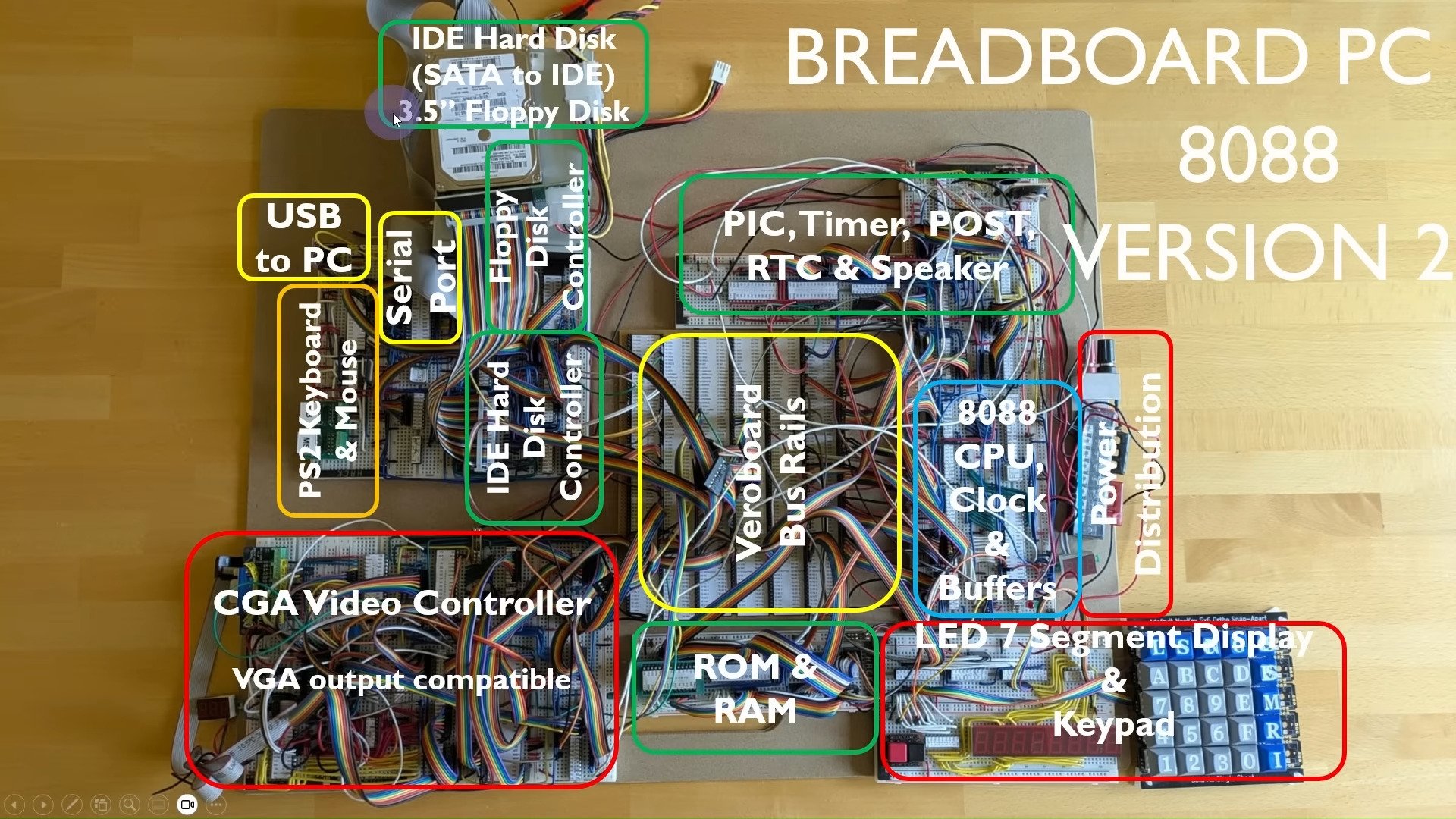
The image above shows the maker's immediately previous project, the Breadboard PC 8088 Version 2. Several of these assemblies will be carried forward to the 386 project, though they may require modifications to work with the new architecture.
New Components and Challenges
Despite the reusable elements, the 386 build presents numerous new challenges:
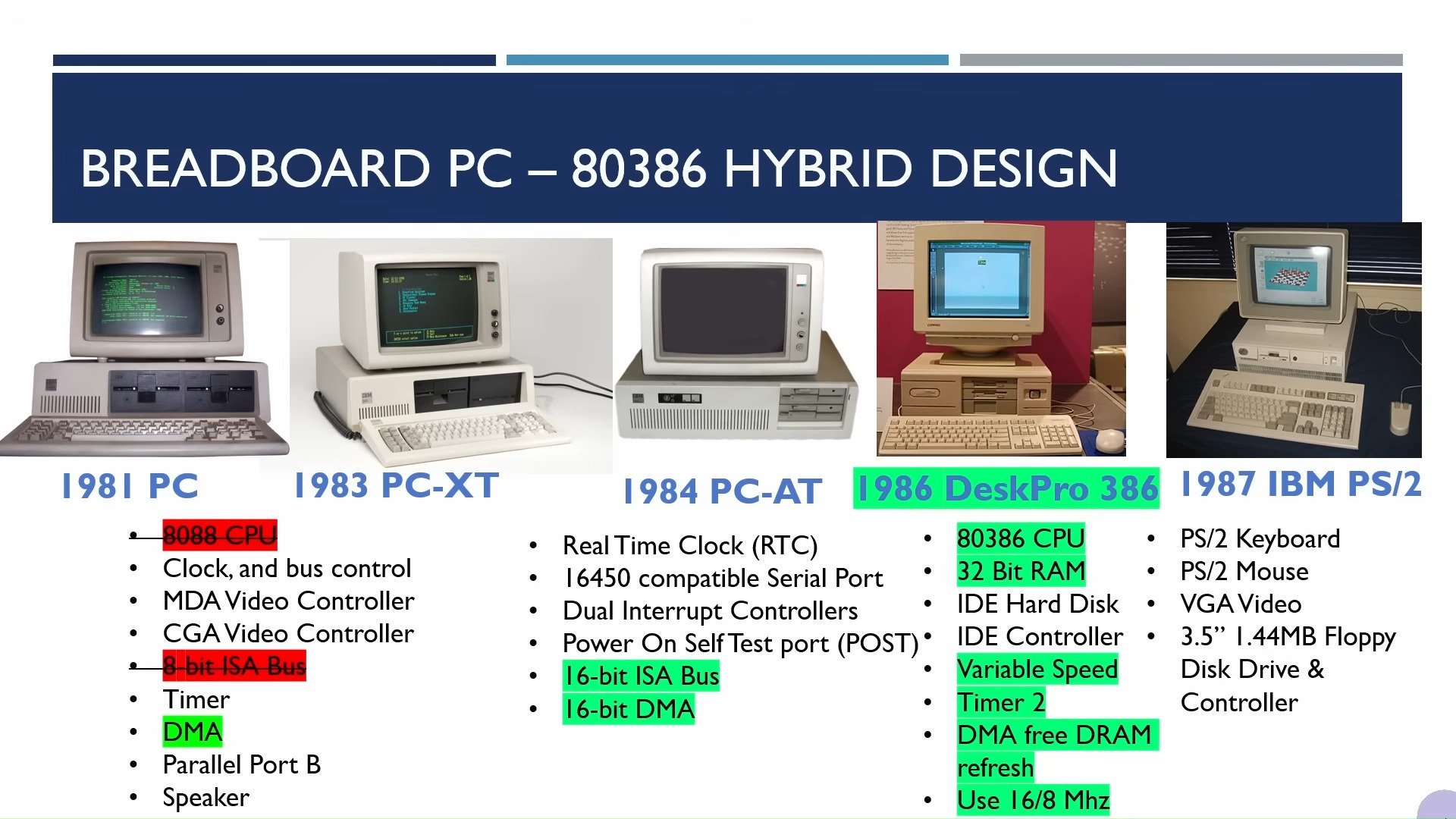
- 80386 CPU interface: Designing the breadboard adapter for the 386's 136 pins
- 32-bit RAM: Implementing memory that can handle 32-bit data paths
- 16-bit ISA bus: Creating a compatible expansion bus interface
- 16-bit DMA: Direct memory access controller for the 16-bit architecture
- Timer 2 and variable speed control: More sophisticated timing circuits
- DMA-free DRAM refresh logic: Memory refresh without DMA overhead
- 16/8 MHz clock reduction: Implementing variable clock speed control
- PS/2 mouse and keyboard: Modern input device support
- VGA video: Upgrading from CGA/MDA to VGA graphics
- 3.5-inch floppy drive and controller: Modernizing storage interfaces
Technical Complexity and Scale
The 386 breadboard project represents a quantum leap in complexity compared to typical DIY electronics projects. While many hobbyists build simple circuits on breadboards, constructing an entire computer system this way is extraordinarily rare.
Some key statistics that illustrate the scale:
- Pin count: 386 (136 pins) vs 8088 (40 pins) - 3.4x more connections
- Data width: 32-bit vs 16-bit - double the data throughput
- Clock speed: 386 systems typically run at 16-33 MHz vs 8088's 4.77 MHz
- Component count: Thousands of breadboard connections required
Following the Project
Breadboarding Labs is documenting their progress on YouTube, where interested electronics enthusiasts can follow along with the build. The channel provides detailed explanations of the design decisions, circuit construction techniques, and troubleshooting processes involved in such a complex project.
Historical Context and Significance
The original Compaq DeskPro 386, released in 1986, was a landmark system that helped establish the 386 as the dominant processor architecture for business computing. By recreating this system on breadboards, Breadboarding Labs is not just building a computer - they're recreating a piece of computing history in a way that makes the internal workings visible and understandable.
Performance Expectations
When completed, the breadboard 386 system should be capable of running MS-DOS and early Windows 3.0/3.1, though performance will likely be limited by the breadboard construction rather than the processor itself. Breadboards introduce significant parasitic capacitance and resistance that can limit high-frequency operation.
Potential performance comparisons of interest:
- Boot time: How quickly does the breadboard system POST and load DOS?
- Application performance: Running benchmarks like Dhrystone or Whetstone
- Compatibility: Testing with various 386-compatible software
- Stability: How reliable is the breadboard construction compared to PCB-based systems?
Educational Value
Beyond the impressive technical achievement, this project serves as an invaluable educational resource. It demonstrates:
- Computer architecture: How all the components of a PC work together
- Digital logic design: Practical implementation of complex digital circuits
- Troubleshooting methodology: Systematic approaches to debugging hardware issues
- Historical computing: Understanding how early PCs were designed and built
Conclusion
The Breadboard Labs 386 project represents one of the most ambitious homebrew computer projects in recent years. By choosing to build a complex 32-bit system on solderless breadboards, the maker is pushing the boundaries of what's possible with this prototyping technique while creating an educational resource that will benefit electronics enthusiasts for years to come.
The project also highlights the enduring fascination with retro computing and the desire to understand computer systems at their most fundamental level. In an age where most people interact with sealed, black-box devices, seeing a complete computer system laid bare on breadboards offers a refreshing and educational perspective on how these machines actually work.
As the project progresses, it will be fascinating to see how the maker overcomes the numerous challenges involved and whether the finished system can deliver usable performance despite its unconventional construction method.
Comments
Please log in or register to join the discussion