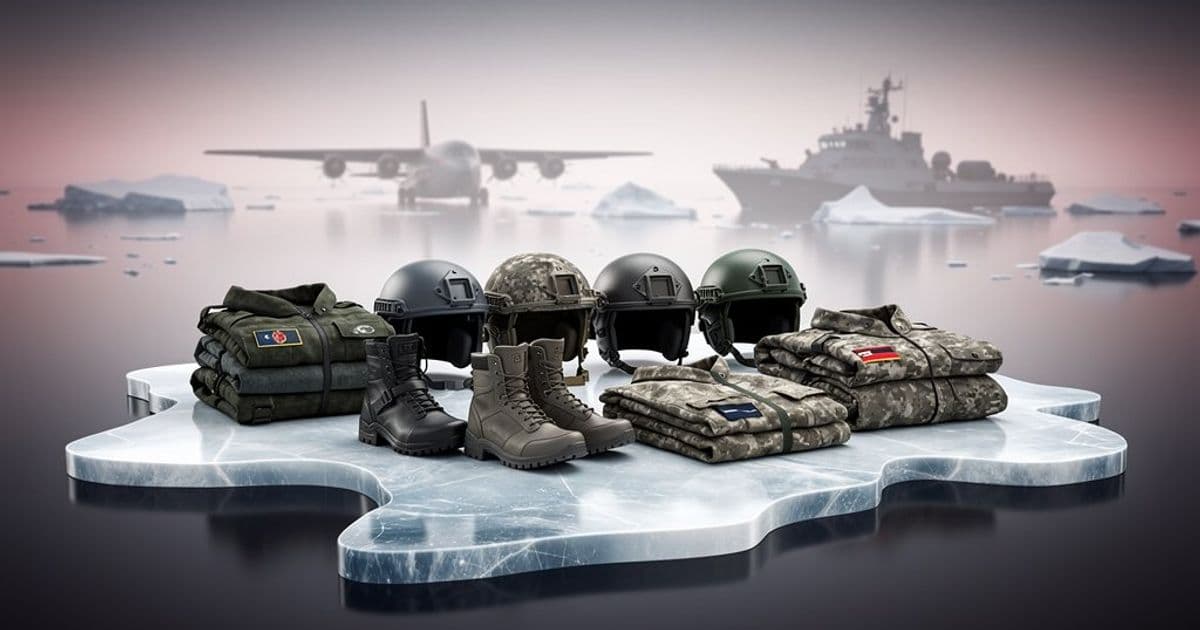
A small but symbolic European NATO contingent has arrived in Greenland's capital, Nuuk, for joint exercises as President Trump escalates his claim to the Arctic territory. The deployment, involving France, Germany, Sweden, Norway, the Netherlands, and the UK, signals European allies' stake in Arctic security amid US pressure to control the semi-autonomous Danish territory.
A 15-strong French military contingent arrived in Greenland's capital Nuuk this week, marking the beginning of a European NATO reconnaissance mission that will include personnel from Germany, Sweden, Norway, the Netherlands, and the UK. The deployment comes as President Donald Trump continues to press his claim to the Arctic island, which is a semi-autonomous part of Denmark.
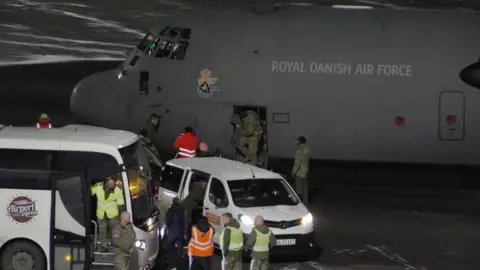
The joint exercises, called Operation Arctic Endurance, are Danish-led but involve foreign allies. French President Emmanuel Macron said the initial contingent would be reinforced soon with "land, air, and sea assets." Senior diplomat Olivier Poivre d'Arvor described the mission as sending a strong political signal: "This is a first exercise... we'll show the US that Nato is present."
The movement of military personnel follows a meeting in Washington between Denmark and Greenland's foreign ministers and US Vice-President JD Vance. After the talks, Danish Foreign Minister Lars Lokke Rasmussen said while they were constructive, there remained a "fundamental disagreement" between the two sides. He later criticized Trump's bid to buy Greenland.
Trump, meanwhile, doubled down on his bid to bring Greenland under US control, telling reporters in the Oval Office, "we need Greenland for national security." Although he did not rule out the use of force, he said late on Wednesday that he thought something could be worked out with Denmark.
"The problem is there's not a thing that Denmark can do about it if Russia or China wants to occupy Greenland, but there's everything we can do. You found that out last week with Venezuela," Trump said.
Polish Prime Minister Donald Tusk said Poland was not planning to join the European military deployment to Greenland, but warned that any US military intervention there "would be a political disaster."
"A conflict or attempted annexation of the territory of a Nato member by another Nato member would be the end of the world as we know it - and which for many years guaranteed our security," Tusk told a press conference.
Russia's embassy in Belgium meanwhile expressed "serious concern" at what was unfolding in the Arctic, accusing NATO of building up a military presence there "under the false pretext of a growing threat from Moscow and Beijing."
However, the European NATO deployment consists of only a few dozen personnel. Germany was sending an A400M transport plane to Nuuk on Thursday with a contingent of 13 soldiers, although officials said they would stay in Greenland only until Saturday. The symbolic nature of the deployment underscores its political messaging rather than immediate military significance.
Danish defence officials said they had decided with the government of Greenland that there would be an increased military presence around Greenland in the coming period to bolster NATO's "footprint in the Arctic for the benefit of both European and transatlantic security."
Macron, in his new year address to France's armed forces, said Europeans had a special responsibility to Greenland "because this territory belongs to the European Union and it's also one of our Nato allies."
The US already has a military base in Greenland, currently staffed by up to 150 people, and has the option of bringing in far greater numbers under existing agreements with Copenhagen. The Danish-led initiative is seen as signalling to the Trump administration that its European allies also have a stake in security in the Arctic and North Atlantic.
Sweden's prime minister said Swedish army officers had been sent to Nuuk on Wednesday. Two Norwegian soldiers, one British military officer and a Dutch naval officer were also being sent. Downing Street said the UK shared President Trump's concern about "the security of the High North", and said the deployment involved "stepping up with stronger exercising, to deter the Russian aggression and the Chinese activity."
Danish Prime Minister Mette Frederiksen said on Thursday that defence and protection of Greenland was a common concern for the entire NATO alliance. Danish Defence Minister Troels Lund Poulsen said the intention was to have a military presence "in rotation", with the aim of having a more permanent military presence on the island with foreign allies taking part in exercise and training activities.
Copenhagen has disputed Trump's justification for wanting to control Greenland. Rasmussen said on Wednesday there was no "instant threat" from China or Russia that Denmark and Greenland could not accommodate, although he shared American security concerns to some extent.
A Democratic-led US delegation is due to visit Denmark on Friday for talks with Danish MPs. Rasmussen spoke alongside Greenland's foreign minister after talks with Vance and US Secretary of State Marco Rubio on Wednesday.
"The president's ambition is on the table," the Danish diplomat told Fox News. "Of course we have our red lines. This is 2026, you trade with people but you don't trade people."
Greenland's Prime Minister, Jens-Frederik Nielsen, said this week that the territory was in the midst of a geopolitical crisis, and that if his people were asked to make a choice they would choose Denmark over the US.
"Greenland does not want to be owned by the United States. Greenland does not want to be governed by the United States. Greenland does not want to be part of the United States," he stressed.
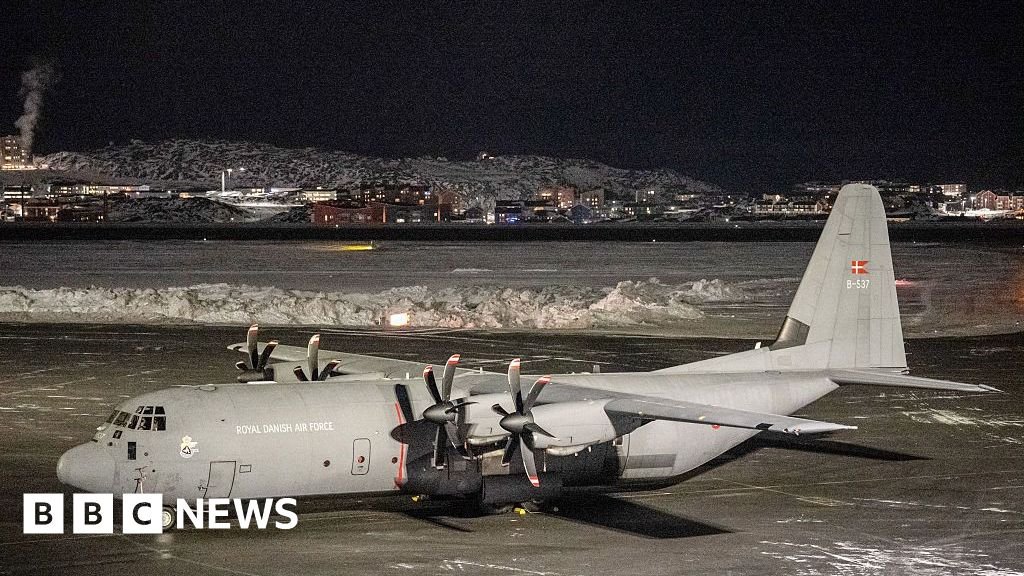
The broader context involves competing strategic interests in the Arctic. Greenland's location makes it strategically important for monitoring Russian and Chinese activity in the region, as well as for control of shipping routes and potential resource extraction. The island's ice sheet is melting at an accelerating rate, potentially opening new shipping lanes and access to mineral deposits.
The European deployment, while small, represents a coordinated response from multiple NATO members. It demonstrates that European allies are willing to assert their interests in Arctic security matters, even when those interests diverge from US priorities. The exercises also provide practical benefits, allowing NATO members to practice operating in Arctic conditions and build interoperability.
For Greenland's population of approximately 56,000, these developments carry significant implications. The territory has been moving toward greater autonomy from Denmark, but full independence remains economically challenging. The prospect of becoming part of the United States has been met with resistance from local leadership, who emphasize Greenland's European cultural and political ties.
The situation highlights the complex intersection of national security, international law, and self-determination. While Trump has framed his interest in Greenland as a national security imperative, Denmark and Greenland's leaders maintain that the territory's future should be determined by its people, not by external powers.
As the European military personnel begin their exercises in Nuuk, the diplomatic and military posturing continues. The small but symbolic deployment sends a clear message about European commitment to Arctic security and NATO solidarity, even as questions about the alliance's future direction under the Trump administration persist.
Comments
Please log in or register to join the discussion