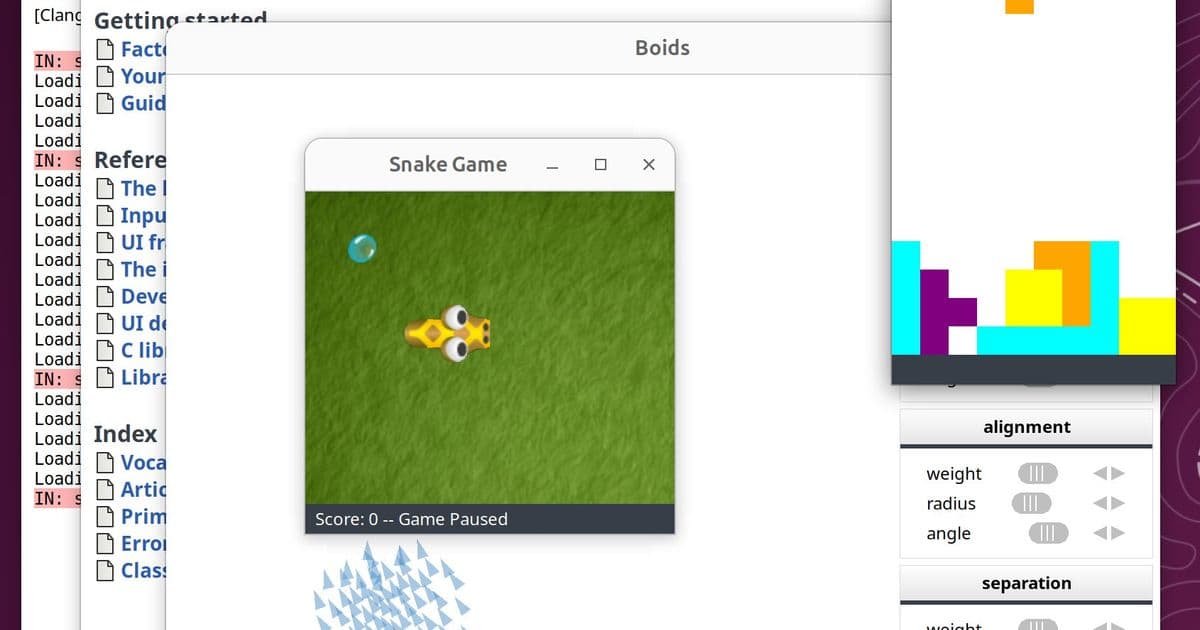
Factor has successfully migrated from GTK2 to GTK3, modernizing its Linux UI backend while maintaining compatibility with older systems.
The Factor programming language has completed a significant migration from GTK2 to GTK3 for its Linux user interface backend, marking an important step in keeping the language's UI framework current with modern Linux desktop environments. This migration addresses the long-overdue need to move away from deprecated libraries and embrace contemporary rendering technologies.
The GTK2 Legacy Problem
For years, Factor's Linux UI rendering relied on GTK2, X11, and the aging libgtkglext library. This stack, while functional, had become increasingly problematic as Linux distributions moved toward Wayland and newer GTK versions. GTK2 reached end-of-life around 2020, making this migration not just beneficial but necessary for long-term maintainability.
The original architecture used OpenGL 1.x pipelines through libgtkglext to render Factor's UI framework on top of platform-specific APIs. While this approach worked for basic rendering needs, it created significant technical debt as the broader Linux ecosystem evolved toward more modern graphics APIs and windowing systems.
The Migration Journey
The migration process revealed several technical challenges that needed to be addressed. First, the team discovered that their OpenGL rendering code was heavily dependent on OpenGL 1.x functionality, which is not compatible with GTK3+ environments. This meant that simply switching the backend library wasn't sufficient—the entire OpenGL rendering pipeline needed modernization.
To support GTK3, the Factor team had to implement OpenGL 3.x support for the core UI functionality. This involved rewriting rendering code to use modern OpenGL functions while maintaining the same visual output and behavior that users expected. The migration also required updating the platform detection logic to properly select between GTK2 and GTK3 backends based on system capabilities and user preferences.
Current Status and Availability
The GTK3 backend is now available in Factor's experimental nightly builds, allowing adventurous users to test the new rendering path. However, the team has maintained backward compatibility by keeping the GTK2 backend available. Users who prefer the older, more stable rendering path can easily switch back by applying a simple diff to their bootstrap configuration.
The migration extends beyond Linux—the macOS backend has also been updated to use OpenGL 3.x functions. This unified approach to modernizing the rendering pipeline across platforms will make it easier to test improvements and maintain consistency in the UI framework.
Performance Considerations
Early testing has revealed some performance implications of the new OpenGL 3.x rendering path. Users have reported visible lag when scrolling in certain installations, likely due to differences in how the newer OpenGL functions handle caching compared to the older OpenGL 1.x code paths. This suggests that while the migration provides better long-term compatibility, there are optimization opportunities that need to be addressed before the GTK3 backend can be considered production-ready.
These performance issues are expected during such a significant architectural change. The development team views the current implementation as "plenty usable as-is" for testing purposes, while acknowledging that further improvements will be necessary before a full release.
Technical Implementation Details
The migration involved changes to several core files in the Factor codebase. The bootstrap configuration was modified to default to the GTK3 backend on Unix systems, while maintaining the ability to fall back to GTK2. The OpenGL extension loading logic was also updated to use the appropriate backend based on the operating system.
This dual-support approach demonstrates thoughtful engineering—rather than forcing an immediate transition, the team has provided a smooth migration path that allows users to adopt the new backend at their own pace while maintaining stability for production environments.
Future Implications
This migration represents more than just updating a dependency—it positions Factor to better integrate with modern Linux desktop environments and take advantage of newer graphics capabilities. The move to OpenGL 3.x opens up possibilities for more sophisticated rendering effects and better performance on modern hardware.
The successful completion of this migration also suggests that Factor's architecture is flexible enough to adapt to changing platform requirements. As Linux continues to evolve toward Wayland and other modern display protocols, having a codebase that can accommodate these changes becomes increasingly valuable.
Getting Involved
Users interested in testing the new GTK3 backend can access it through Factor's experimental nightly builds. Those who encounter issues or have suggestions for improvements are encouraged to participate in the development process. The maintenance of both GTK2 and GTK3 backends also provides a safety net for users who need the stability of the older rendering path while the new one matures.
This migration exemplifies the ongoing work required to keep programming languages and their ecosystems current with evolving platform technologies. While the immediate benefits may seem modest, the long-term value of maintaining compatibility with modern Linux environments cannot be overstated.
Comments
Please log in or register to join the discussion