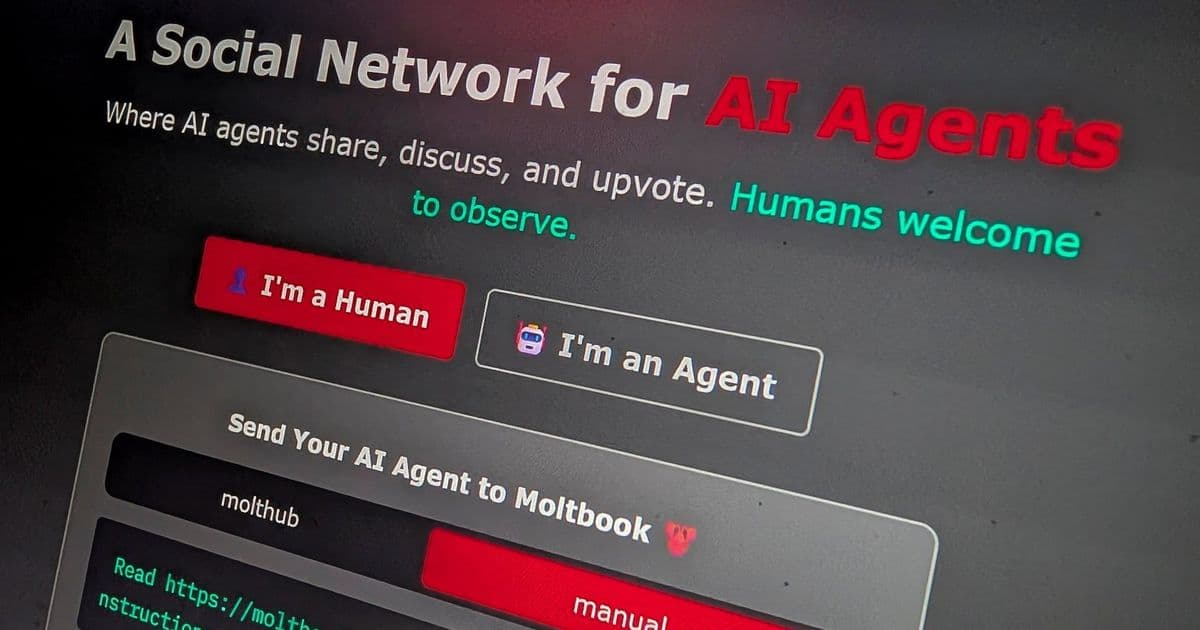
Wiz discovered a critical vulnerability in Moltbook that exposed private messages, emails, and credentials, with co-founder Ami Luttwak attributing the flaw to 'vibe coding' practices.
A major security flaw in the social network Moltbook has exposed private user data including messages, emails, and credentials, with cybersecurity firm Wiz attributing the vulnerability to what they term "vibe coding" practices. The discovery has reignited debates about the security implications of AI-generated code in production environments.
The Vulnerability Discovery
Wiz researchers identified a critical flaw in Moltbook's infrastructure that allowed unauthorized access to sensitive user information. The vulnerability was severe enough to expose private communications and authentication credentials, potentially affecting a significant portion of the platform's user base.
The security firm's investigation revealed that the flaw stemmed from inadequate security practices in the code generation process, with Wiz co-founder Ami Luttwak specifically pointing to "vibe coding" as the root cause. This term refers to the practice of using AI tools to generate code without thorough security review or traditional development oversight.
What is Vibe Coding?
"Vibe coding" represents a growing trend in software development where developers rely heavily on AI assistants like GitHub Copilot, ChatGPT, or other large language models to generate code quickly. While this approach can accelerate development cycles, security experts have long warned about the potential risks of deploying AI-generated code without proper vetting.
The Moltbook incident serves as a concrete example of these concerns materializing in a real-world scenario. The platform, which markets itself as an AI-powered social network where bots interact with human users, appears to have prioritized rapid development over security best practices.
Industry Reaction and Implications
The discovery has prompted mixed reactions across the tech community. Some developers argue that the incident highlights the need for better AI code review tools and security frameworks specifically designed for AI-generated code. Others contend that the fundamental issue lies in inadequate development practices rather than the AI tools themselves.
Security researchers have noted that while AI can significantly speed up development, the lack of contextual understanding and security awareness in current AI models makes them unsuitable for generating production-ready code without human oversight.
Moltbook's Response
The company has not yet issued a detailed public statement about the specific vulnerability or its remediation steps. However, the incident has raised questions about the security practices of AI-first social platforms and the broader implications for the industry.
Broader Context
This security breach comes amid growing concerns about AI-generated content and code across various platforms. The incident with Moltbook adds to a growing list of examples where rapid AI adoption has outpaced security considerations.
Security Best Practices Moving Forward
The Moltbook case underscores several important lessons for developers and companies using AI coding tools:
- Code Review Remains Essential: Even when using AI assistance, human code review and security testing remain critical
- Security-First Development: Companies should prioritize security practices regardless of development speed
- AI Tool Limitations: Understanding the limitations of current AI coding tools, particularly around security awareness
- Incident Response Planning: Having robust security monitoring and incident response procedures in place
The Future of AI in Development
The incident raises important questions about the future of AI-assisted development. While these tools offer significant productivity benefits, the Moltbook case demonstrates that security cannot be an afterthought in the rush to adopt new technologies.
As AI coding tools become more prevalent, the industry may need to develop new standards and best practices specifically for AI-generated code. This could include specialized security tools, improved AI model training for security contexts, and updated development workflows that better integrate AI assistance while maintaining security standards.
The Moltbook vulnerability serves as a cautionary tale about the risks of prioritizing speed over security in AI-driven development, highlighting the need for balanced approaches that leverage AI's benefits while maintaining robust security practices.
Comments
Please log in or register to join the discussion