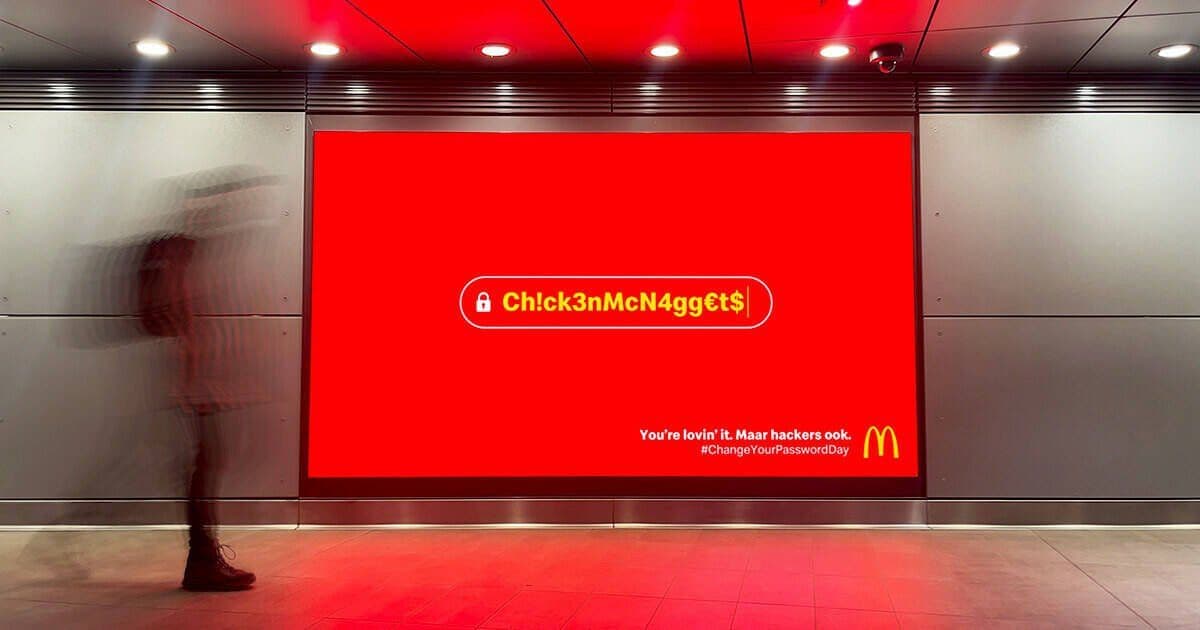
Fast food giant McDonald's is urging customers to avoid using popular menu items like 'bigmac' and 'mcnuggets' as passwords, highlighting how common password choices make accounts vulnerable to hackers.
The fast food industry isn't typically associated with cybersecurity advice, but McDonald's Netherlands has taken an unusual step in joining the global push for better password hygiene. As part of Change Your Password Day, the burger giant launched a campaign warning customers against using menu items as passwords, revealing that common choices like "bigmac" appear in data breach databases over 110,000 times.
Using data from Have I Been Pwned, McDonald's demonstrated how predictable password choices leave accounts vulnerable to attack. The company's analysis found that not only "bigmac" but also "happymeal," "mcnuggets," and even "frenchfries" are frequently compromised credentials. The problem extends beyond simple words to their leetspeak variants, where users substitute numbers and special characters for letters in an attempt to strengthen their passwords.
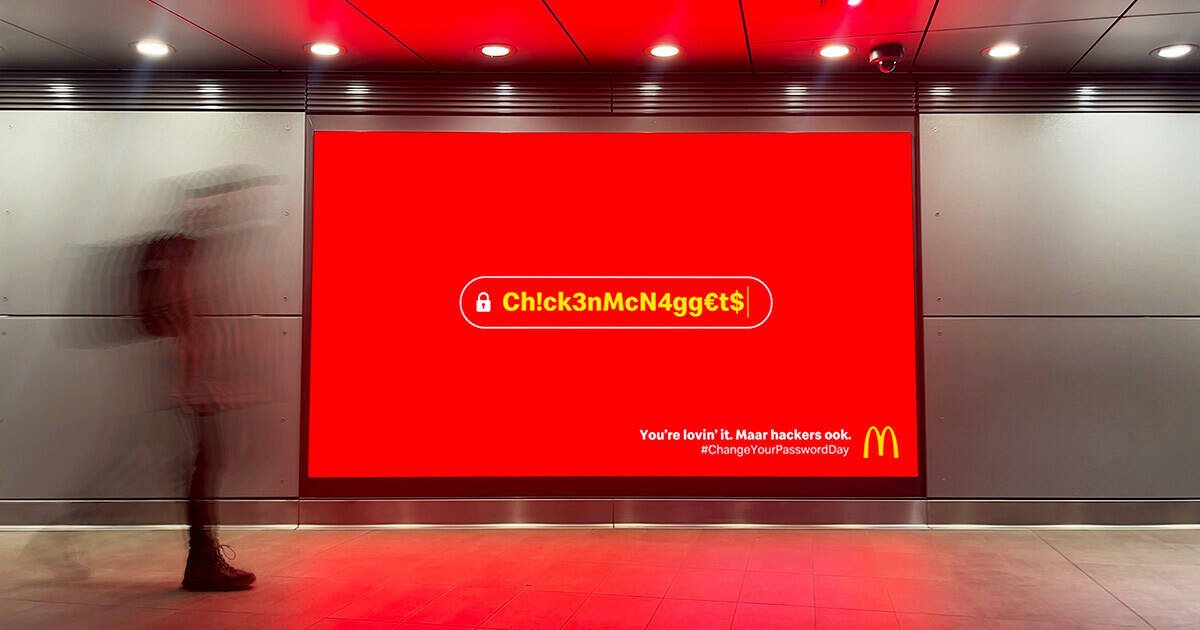
This practice of character substitution—replacing letters with similar-looking numbers or symbols—has long been recommended as a password-strengthening technique. However, McDonald's campaign highlights why this approach no longer provides adequate security. As the company's advertisements in Dutch subway stations pointedly note, even seemingly clever variations like "Ch!ck3nMcN4gg€t$" are easily guessed by modern hacking tools.
The fundamental issue is that password-cracking software now includes extensive dictionaries of common substitutions. What might have seemed secure in the early days of the internet has become predictable and easily defeated. When millions of users employ the same substitution patterns, these variations become just another entry in the attacker's toolkit.
McDonald's warning comes at a time when password security remains a critical vulnerability for most internet users. Despite years of warnings and numerous high-profile data breaches, research consistently shows that people continue to choose weak, easily guessable passwords. The persistence of passwords like "123456" and "password" demonstrates how difficult it is to change user behavior, even when the risks are well-documented.
The challenge extends beyond individual users to organizational security. Even system administrators, who should know better, sometimes fall into the trap of using weak credentials. This creates vulnerabilities that can be exploited to gain unauthorized access to sensitive systems and data.
Google's research from last summer reinforces McDonald's message, showing that most internet users still rely primarily on traditional password-based security. While younger users may be more likely to adopt modern security tools, their password choices often remain just as weak as those of older generations. This generational consistency in poor password hygiene suggests that awareness alone isn't sufficient to drive behavioral change.
The solution requires a multi-faceted approach to account security. Strong, unique passwords remain the foundation, but they should be combined with additional security measures. Multi-factor authentication adds a crucial layer of protection, requiring attackers to compromise multiple authentication factors rather than relying solely on password guessing.
Password managers can help users generate and store complex, unique passwords for each account, eliminating the temptation to reuse passwords or choose easily memorable options. Biometric authentication, where available, provides another secure alternative that doesn't rely on traditional passwords at all.
McDonald's campaign serves as a reminder that cybersecurity awareness needs to reach beyond the tech community. When a fast food company feels compelled to warn customers about password security, it indicates how widespread and persistent the problem has become. The fact that McDonald's chose to use its brand recognition to promote better security practices shows how seriously the company takes protecting customer accounts.
The timing of the campaign, coinciding with Change Your Password Day, demonstrates how corporate entities can leverage awareness events to promote better security practices. By using familiar menu items as examples of poor password choices, McDonald's makes the security message more relatable and memorable for its customer base.
However, the campaign also highlights the limitations of awareness-based approaches to security. While McDonald's message may prompt some customers to reconsider their password choices, lasting change requires making secure options the default and easy to use. This might involve implementing stronger password requirements, encouraging the use of password managers, or promoting the adoption of passwordless authentication methods.
The broader implication of McDonald's intervention is that cybersecurity has become a mainstream concern that affects all industries, not just technology companies. As more services move online and digital accounts become central to daily life, the security of these accounts becomes everyone's responsibility.
For businesses, McDonald's example shows how companies can use their platforms to promote security awareness among customers. This not only helps protect users but also demonstrates corporate responsibility and can enhance brand trust. However, companies must balance security messaging with user experience, ensuring that security measures don't create unnecessary friction for legitimate users.
The persistence of weak password practices despite years of warnings suggests that the industry needs to move beyond passwords entirely. Passwordless authentication methods, including biometrics, hardware security keys, and cryptographic authentication, offer more secure alternatives that don't rely on users choosing strong passwords.
Until these methods become universally available and adopted, the message from McDonald's remains relevant: avoid using easily guessable information as passwords, even if it seems convenient. The security of your accounts depends not just on what you choose, but on how predictable those choices are to potential attackers.
As we move forward from Change Your Password Day 2026, the fast food giant's intervention serves as a timely reminder that cybersecurity is everyone's responsibility. Whether you're securing your McDonald's account or your corporate network, the principles remain the same: choose strong, unique credentials and implement multiple layers of security protection.
Comments
Please log in or register to join the discussion