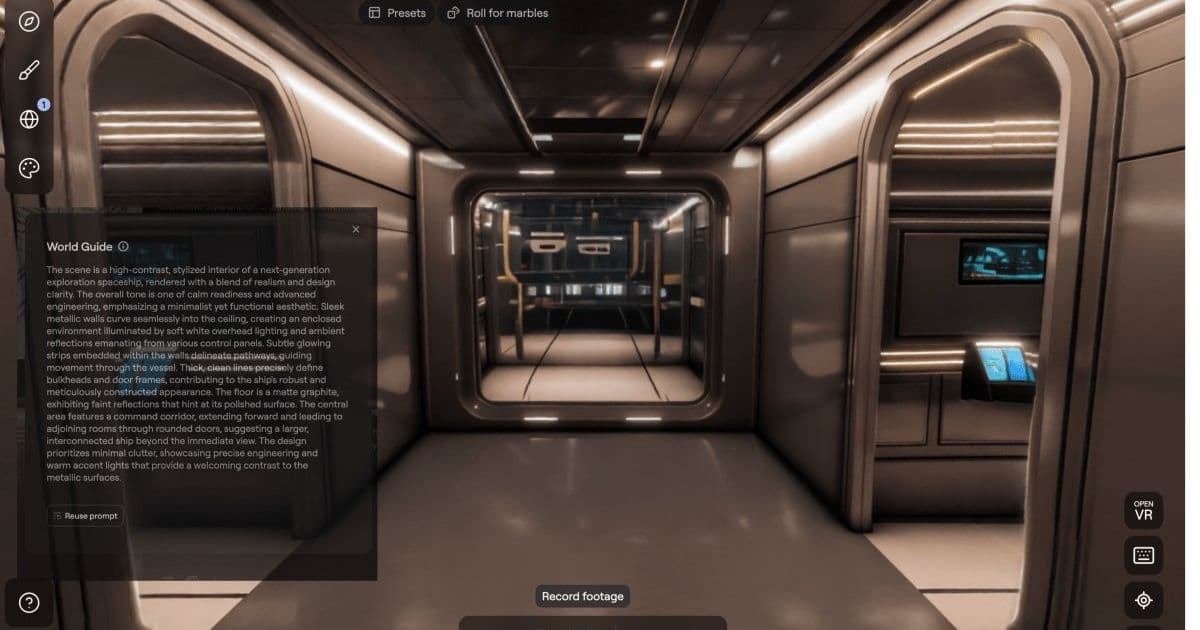
World Labs, the AI startup founded by renowned computer scientist Fei-Fei Li, has secured a $200 million investment from Autodesk as part of a larger funding round, with the two companies exploring integration of World Labs' AI models into Autodesk's design software.
Fei-Fei Li, the pioneering computer scientist behind ImageNet and a leading figure in artificial intelligence research, has taken another significant step in her entrepreneurial journey. Her AI startup, World Labs, has raised $200 million from Autodesk, the design software giant, as part of a larger funding round that signals growing confidence in the company's vision for AI-powered spatial computing.
This investment represents more than just capital infusion—it's a strategic partnership that could reshape how designers, architects, and engineers interact with AI tools. Autodesk, known for its AutoCAD, Revit, and Maya software used across industries from architecture to entertainment, is exploring ways to integrate World Labs' AI models directly into its product ecosystem.
The Vision Behind World Labs
World Labs was founded with the ambitious goal of creating AI systems that can understand and generate three-dimensional spaces with human-like comprehension. While most AI models today excel at processing flat, two-dimensional data, World Labs is building technology that can reason about depth, spatial relationships, and physical properties in ways that mirror human perception.
The company's approach focuses on what Li calls "spatial intelligence"—AI that doesn't just recognize objects but understands how they exist in space, how they relate to each other, and how they can be manipulated in three-dimensional environments. This has profound implications for fields ranging from architecture and product design to gaming and virtual reality.
Why Autodesk's Investment Matters
Autodesk's $200 million stake isn't just about financial returns—it's about staying ahead in an industry being transformed by AI. The design software market, valued at over $60 billion globally, is ripe for disruption as AI capabilities mature.
For Autodesk, integrating World Labs' technology could mean:
- Intelligent design assistance: AI that can suggest design improvements based on spatial reasoning
- Automated modeling: Tools that can generate complex 3D models from simple sketches or descriptions
- Real-time collaboration: AI systems that can understand and manipulate shared 3D spaces in real-time
- Enhanced visualization: More realistic and interactive previews of designs before they're built
The Broader AI Investment Landscape
The World Labs funding comes amid a surge in AI investment across the tech industry. Just this week, Microsoft announced plans to invest $50 billion by 2030 to expand AI across the Global South, while Nvidia revealed partnerships with Indian venture capital firms to fund AI startups in one of the world's fastest-growing tech markets.
This investment climate reflects a fundamental shift in how companies view AI—not just as a tool for automation, but as a core capability that will define competitive advantage in the coming decade. The fact that a company like Autodesk, with its deep roots in traditional design software, is making such a significant bet on spatial AI speaks volumes about where the industry is headed.
The Technical Challenge
Building AI that truly understands three-dimensional space is extraordinarily difficult. Unlike text or images, which can be processed as flat data, spatial reasoning requires understanding:
- Depth perception: How objects relate to each other in three-dimensional space
- Physical properties: Material characteristics, weight, and structural integrity
- Temporal dynamics: How spaces change over time and with different conditions
- Human interaction: How people move through and use spaces
World Labs is tackling these challenges by combining advances in computer vision, physics simulation, and machine learning. The company's technology aims to create AI models that can not only generate realistic 3D environments but also reason about them in ways that are useful for human designers.
Industry Implications
The partnership between World Labs and Autodesk could have ripple effects across multiple industries:
Architecture and Construction: AI-assisted design tools that can optimize building layouts for energy efficiency, structural integrity, and human comfort.
Manufacturing: Intelligent systems that can design and optimize products for manufacturability and performance.
Entertainment: More sophisticated tools for creating virtual environments in games and films.
Product Design: AI that can generate and iterate on product concepts based on functional requirements and aesthetic preferences.
The Competitive Landscape
World Labs isn't alone in pursuing spatial AI. Companies like NVIDIA are investing heavily in AI for 3D graphics and simulation, while tech giants like Google and Meta are exploring AI for virtual and augmented reality. However, World Labs' focus on spatial intelligence as a distinct capability—rather than just applying existing AI techniques to 3D data—sets it apart.
The company's academic pedigree, with Fei-Fei Li's reputation as one of the world's leading AI researchers, also provides a significant advantage in attracting talent and partnerships. Li's work on ImageNet helped catalyze the modern AI revolution, and her involvement signals that World Labs is pursuing fundamental advances rather than incremental improvements.
What's Next
With this new funding, World Labs is likely to accelerate its research and development efforts while expanding its team of AI researchers and engineers. The partnership with Autodesk will also provide valuable real-world testing grounds for the company's technology, helping to refine its models based on actual design workflows.
For the broader tech industry, this investment represents another sign that AI is moving beyond text and images into more complex, spatial domains. As AI systems become better at understanding and manipulating three-dimensional space, we can expect to see new applications emerge across industries that have traditionally relied on human spatial reasoning.
The Bottom Line
World Labs' $200 million investment from Autodesk is more than just another AI funding round—it's a bet on the future of how humans will interact with digital tools for design and creation. By combining Fei-Fei Li's expertise in computer vision with Autodesk's industry-leading design software, this partnership could help define the next generation of AI-powered creative tools.
As AI continues to evolve from simple pattern recognition to more sophisticated forms of reasoning and understanding, companies that can bridge the gap between digital intelligence and physical reality will be well-positioned to lead the next wave of technological innovation.
[IMAGE:1]
The featured image shows Fei-Fei Li, founder of World Labs, highlighting the human element behind this significant AI investment and partnership.
Comments
Please log in or register to join the discussion