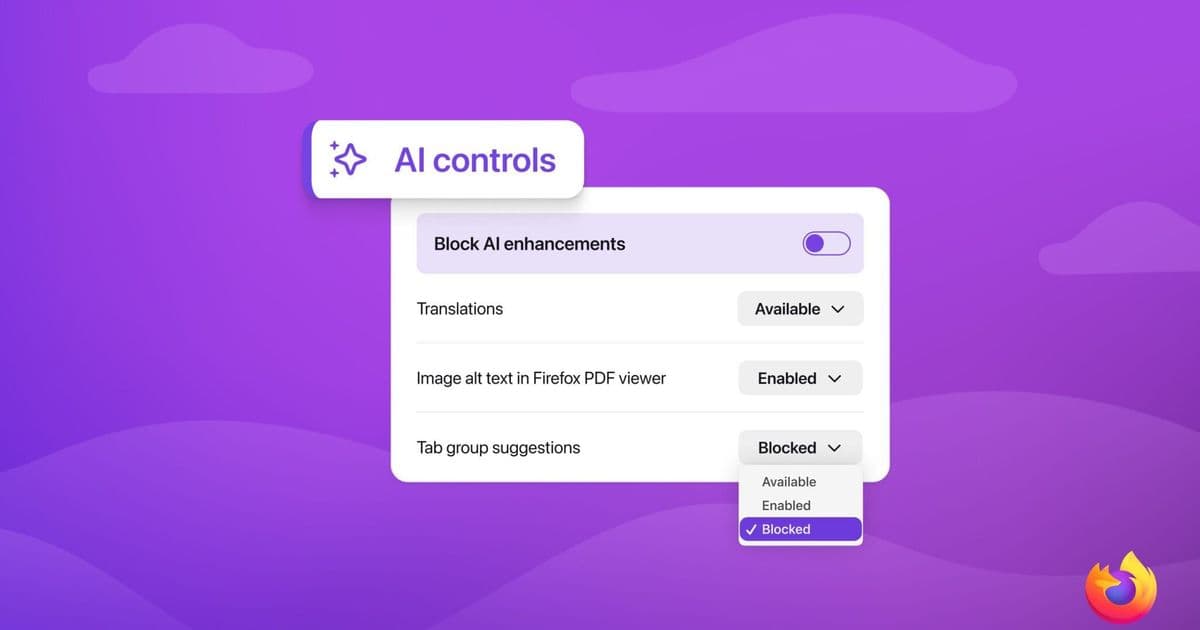
Mozilla introduces granular controls to disable AI features in Firefox, addressing user concerns about unwanted AI integration in the browser.
Mozilla is introducing new controls in Firefox that let users disable artificial intelligence features, addressing growing concerns from users who prefer a browser experience without AI integration. The move comes as Firefox 148 prepares to roll out on February 24, bringing with it a suite of toggle options for the browser's AI-powered capabilities.

The new controls offer both granular and comprehensive options for managing AI features. Users can disable individual components like translation services, PDF accessibility tools, tab grouping suggestions, link previews, and the AI chatbot sidebar. For those who want a complete break from AI, a master "Block AI Enhancements" toggle will disable all current and future AI features, including pop-ups and reminders.
This development represents a significant shift in Mozilla's approach to AI integration. The organization has been steadily adding AI-powered features to Firefox over the past several months, including translation tools that help users browse in their preferred language, AI-enhanced tab grouping that suggests related tabs and group names, and link previews that show key points before users open links.
The AI chatbot sidebar, which allows users to interact with various AI models like Anthropic Claude, ChatGPT, Microsoft Copilot, Google Gemini, and Le Chat Mistral while browsing, has been particularly controversial among Firefox's user base.
Mozilla's decision to add these controls appears to be a direct response to user feedback. Many Firefox users have expressed frustration with the gradual AI integration, arguing that it clutters the browser interface and introduces unnecessary complexity. The ability to completely disable AI features addresses these concerns while allowing Mozilla to continue developing AI capabilities for users who want them.
The timing of this announcement is noteworthy. As major tech companies race to integrate AI into their products, Mozilla is taking a different approach by giving users more control over these features rather than making them mandatory. This user-centric philosophy has long been a cornerstone of Firefox's identity, and the new AI controls reinforce that commitment.
For enterprise users and organizations that prioritize privacy and simplicity, the ability to completely disable AI features could be particularly valuable. Many businesses have expressed concerns about AI features potentially exposing sensitive information or creating compliance issues.
The implementation of these controls also raises interesting questions about the future of AI in web browsers. Will other browser developers follow Mozilla's lead and provide similar opt-out mechanisms? Or will they continue to push AI features as default components of the browsing experience?
From a technical perspective, the granular control system represents a sophisticated approach to feature management. Rather than simply removing AI code from the browser, Mozilla has built a framework that can selectively disable AI functionality while maintaining the underlying infrastructure. This approach allows for easier re-enabling of features if users change their minds, and it provides Mozilla with valuable data about which AI features are most and least popular among users.
The February 24 rollout of Firefox 148 will be closely watched by the tech community to see how effectively these controls work in practice. Early feedback from beta testers suggests that the toggle system is intuitive and responsive, though some users have reported minor performance improvements when AI features are disabled.
This move by Mozilla could signal a broader trend in the tech industry toward more user-controlled AI integration. As AI becomes increasingly ubiquitous in software applications, the ability to opt out may become a key differentiator for privacy-conscious users and organizations.
For Firefox users who have been frustrated by unwanted AI features, the new controls offer a welcome solution. The browser that once positioned itself as the alternative to feature-bloated competitors is reasserting its commitment to user choice in the age of AI.

The introduction of these AI controls demonstrates Mozilla's attempt to balance innovation with user autonomy. While the organization continues to invest in AI technology, it's doing so in a way that respects user preferences and maintains the trust that has made Firefox a popular choice for privacy-conscious internet users.
As the February 24 release date approaches, Firefox users can look forward to a browsing experience that puts them firmly in control of their interaction with artificial intelligence.
Comments
Please log in or register to join the discussion