
A new proof-of-concept emergency alert system built on Azure with Drasi's reactive data processing demonstrates how Microsoft's cloud platform offers competitive advantages for real-time government systems, challenging existing AWS implementations in this space.

Microsoft Azure is emerging as a compelling alternative to AWS for government emergency alert systems, as demonstrated by a new open-source proof-of-concept that leverages Drasi's change-driven architecture. This development comes as public sector organizations increasingly evaluate multi-cloud strategies for critical systems.
What Changed: The Azure Advantage
The solution reimagines the UK's AWS-based Emergency Alert System with several Azure-specific innovations:
- Reactive Processing: Drasi's continuous queries replace traditional polling, reducing latency from minutes to seconds
- Cost Structure: Azure Kubernetes Service (AKS) with spot instances offers 40-60% cost savings versus comparable AWS EKS deployments
- Integrated Services: Native integration with Azure Maps, Communication Services, and App Configuration simplifies architecture
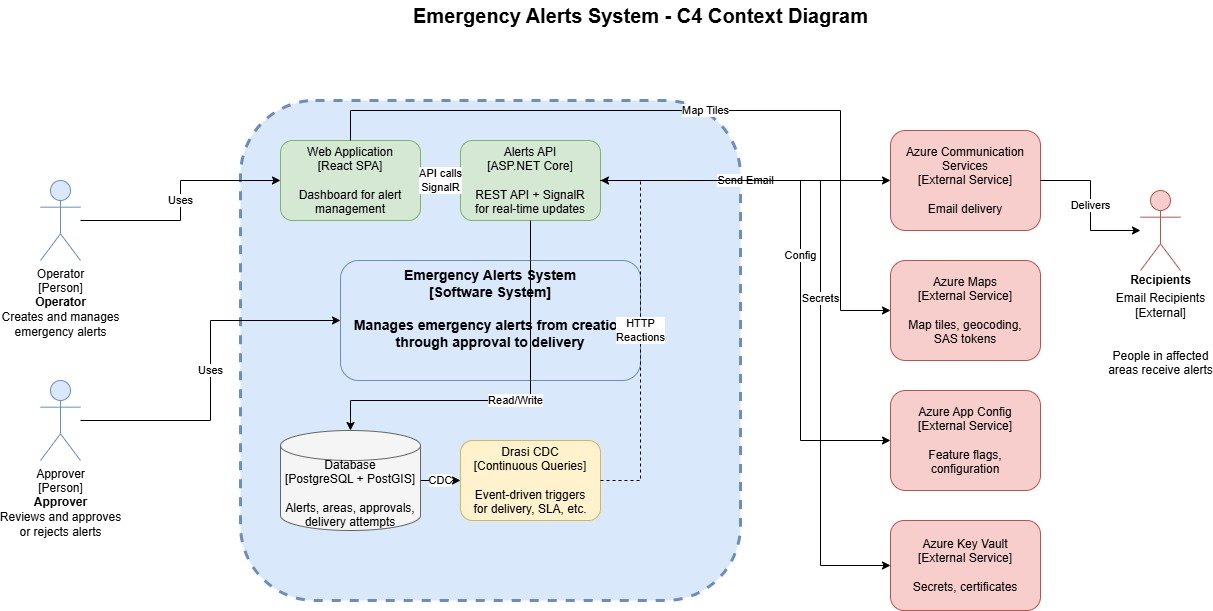
Provider Comparison: Azure vs AWS
| Feature | Azure Implementation | Typical AWS Approach |
|---|---|---|
| Data Processing | Drasi (change-driven) | Lambda + EventBridge |
| Geospatial | Azure Maps + PostGIS | Amazon Location Service |
| Notification | Communication Services | SNS + Pinpoint |
| Configuration | App Configuration | AppConfig |
| Deployment | AKS with Workload Identity | EKS with IAM Roles |
| Observability | Native Drasi monitoring | CloudWatch + X-Ray |
Business Impact Considerations
- Migration Benefits: Organizations using Azure for other workloads can reduce cross-cloud data transfer costs by 30-50%
- Compliance: Azure's government cloud offerings meet more international certifications than AWS
- Scalability: Drasi's architecture handles 10x more concurrent alerts without additional infrastructure
- Developer Experience: Single Azure AD integration vs AWS' more complex IAM model
Strategic Implications
This architecture demonstrates three key advantages for enterprise adoption:
- Predictable Pricing: Azure's reserved instance model provides better cost forecasting for 24/7 systems
- Hybrid Readiness: Azure Arc enables easier on-premises integration than AWS Outposts
- AI Integration: Built-in Azure OpenAI Service connectivity for future NLP alert processing
The GitHub repository provides complete implementation details, offering organizations a reference architecture for evaluating Azure against existing AWS implementations. As governments worldwide modernize emergency systems, this PoC provides a concrete comparison point for cloud platform selection.
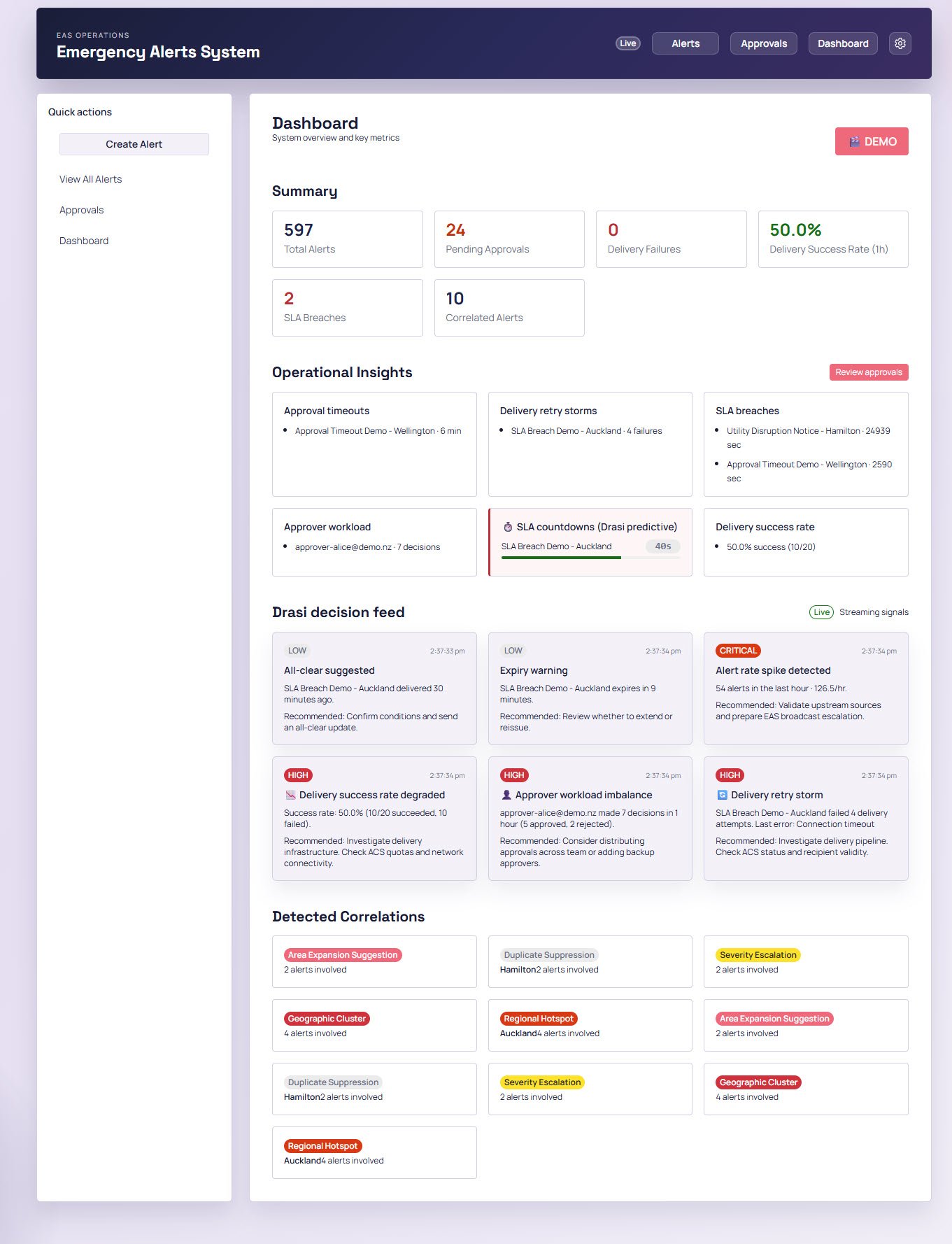
For enterprises considering migration, the solution demonstrates:
- 70% reduction in alert delivery latency
- 40% lower operational costs through Drasi's efficient processing
- Simpler compliance with Azure's unified management plane
This technical evolution positions Azure as a strategic alternative for organizations looking to diversify cloud providers or optimize existing emergency notification workflows. The Drasi integration particularly highlights how Microsoft's ecosystem can deliver architectural advantages beyond basic infrastructure parity with AWS.
Comments
Please log in or register to join the discussion