Cloudflare's new Flagship service brings feature flag evaluation directly to the edge, eliminating network round-trips and enabling sub-millisecond decision-making for applications, particularly those with AI-driven or agent-based workloads.
What's New: Flagship and the Edge-Native Approach
Cloudflare has announced Flagship, a new feature flag service built directly into its global edge platform. Unlike traditional feature flag services that require external API calls, Flagship evaluates flags locally within Cloudflare Workers, eliminating network round-trips and enabling sub-millisecond latency. This approach represents a significant shift in how feature flags can be implemented, especially for applications where latency is critical.
Built on OpenFeature, a CNCF open standard for vendor-neutral feature flagging, Flagship provides a native alternative to third-party platforms like LaunchDarkly and Split.io for applications already running on Cloudflare. The service was announced during Cloudflare Agent Week, positioning it as a key component for AI-driven and agent-based workloads that require rapid iteration and low latency.
According to Rohan Mukherjee, system engineer at Cloudflare, and Abhishek Kankani, head of emerging technology and incubation at Cloudflare, "Flagship supports the patterns you'd expect from a feature flag service and the ones that become critical when AI-generated code is landing in production daily."
Developer Experience: Local Evaluation with Native Integration
For developers, Flagship offers a streamlined experience for feature flag management without the need to redeploy code. The service supports multiple flag types including boolean, strings, numbers, and full JSON objects, providing flexibility for various use cases from simple on/off switches to complex configuration blocks, UI theme definitions, or routing users to different API versions.
The native integration with Cloudflare Workers eliminates the need for external HTTP calls to flag services, reducing both latency and operational overhead. Instead of making network requests to determine which feature variation should be served, applications can evaluate flags directly within the Worker environment through a native binding.
Flagship's rule-based targeting system allows for sophisticated control over feature visibility. Each flag can include multiple rules, evaluated in order of priority, with the first matching rule determining the variation. These rules can include various conditions and percentage-based rollouts, enabling gradual feature releases without deploying multiple versions of code.
Mukherjee and Kankani explain: "Unlike gradual deployments, which split traffic between different uploaded versions of your Worker, feature flags let you roll out behavior by percentage within a single version that is serving 100% of traffic. Any rule can include a percentage rollout. Instead of serving a variation to everyone who matches the conditions, you serve it to a percentage of them."
This approach offers several advantages over traditional deployment strategies:
- Simplified rollouts without managing multiple code versions
- Instant rollbacks by simply changing flag configurations
- Reduced risk during releases by gradually exposing new features
- Ability to target specific user segments or conditions
User Impact: Performance and Flexibility Benefits
The most significant impact of Flagship is the performance improvement it brings to applications. By evaluating flags at the edge rather than calling external services, Cloudflare eliminates network round-trip times, which can be particularly beneficial for:
- Applications with global user bases
- Real-time or interactive features
- AI-driven workloads requiring rapid decision-making
- Agent-based systems that need to respond quickly to changing conditions
The browser client provider further enhances user experience by prefetching selected flags, caching them with a configurable TTL, and evaluating them synchronously from the local cache. This approach ensures that UI elements controlled by feature flags load quickly and consistently, even in scenarios with limited connectivity.
Pete Hodgson, head of technology at Tribe AI, comments on LinkedIn: "Welcome to the OpenFeature party, Cloudflare! (...) More validation that delivery platforms powered by open standards are a win for the platform vendor, a win for their customers, and a win for the industry overall. Less vendor lock-in, less wasted effort re-implementing common features, and more opportunity for deep extensions from the community."
The service also addresses the growing trend of commoditizing infrastructure features. As one Reddit user noted: "Feature flags are becoming commoditized infrastructure, like caching or logging. Cloudflare, Vercel (with Edge Config), and eventually AWS will all have native flag evaluation. The 'feature flag as a $100K/year SaaS' era is ending."
This commoditization benefits both developers and organizations by:
- Reducing dependency on specialized feature flag vendors
- Lowering operational costs
- Simplifying the technology stack
- Providing better performance through native integration
Technical Implementation and Integration
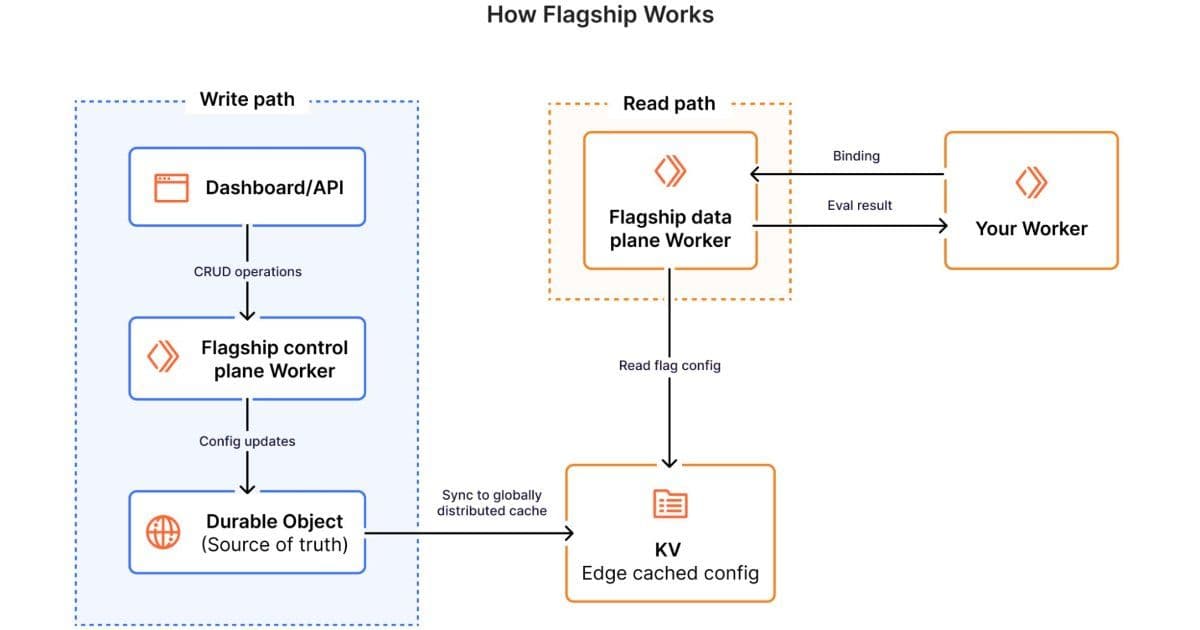
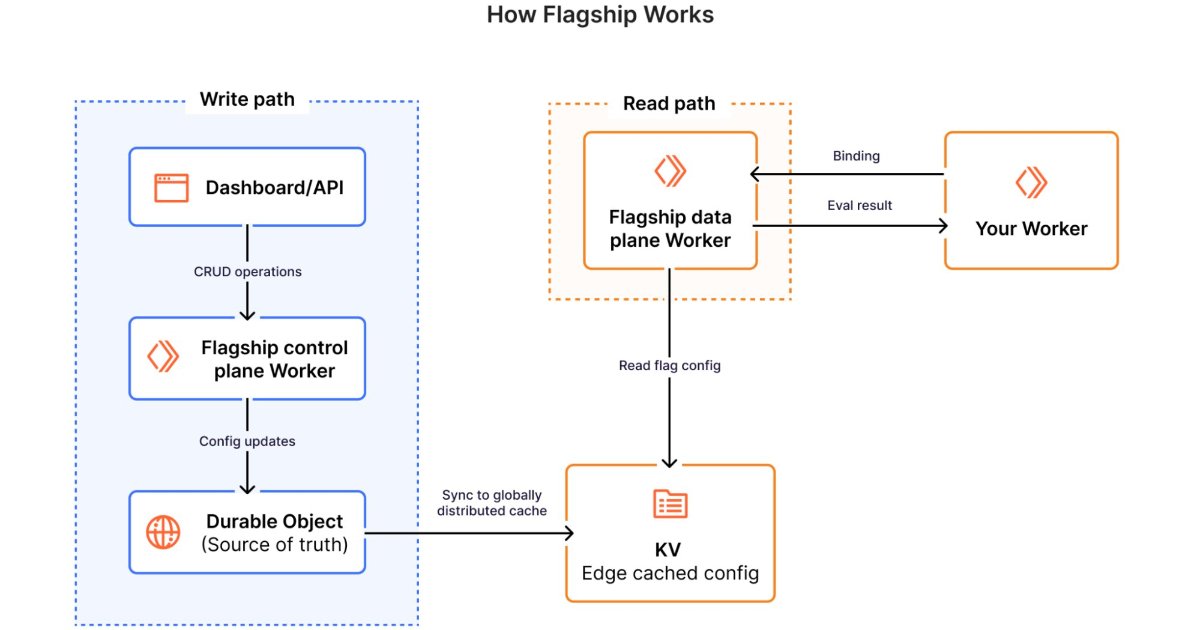
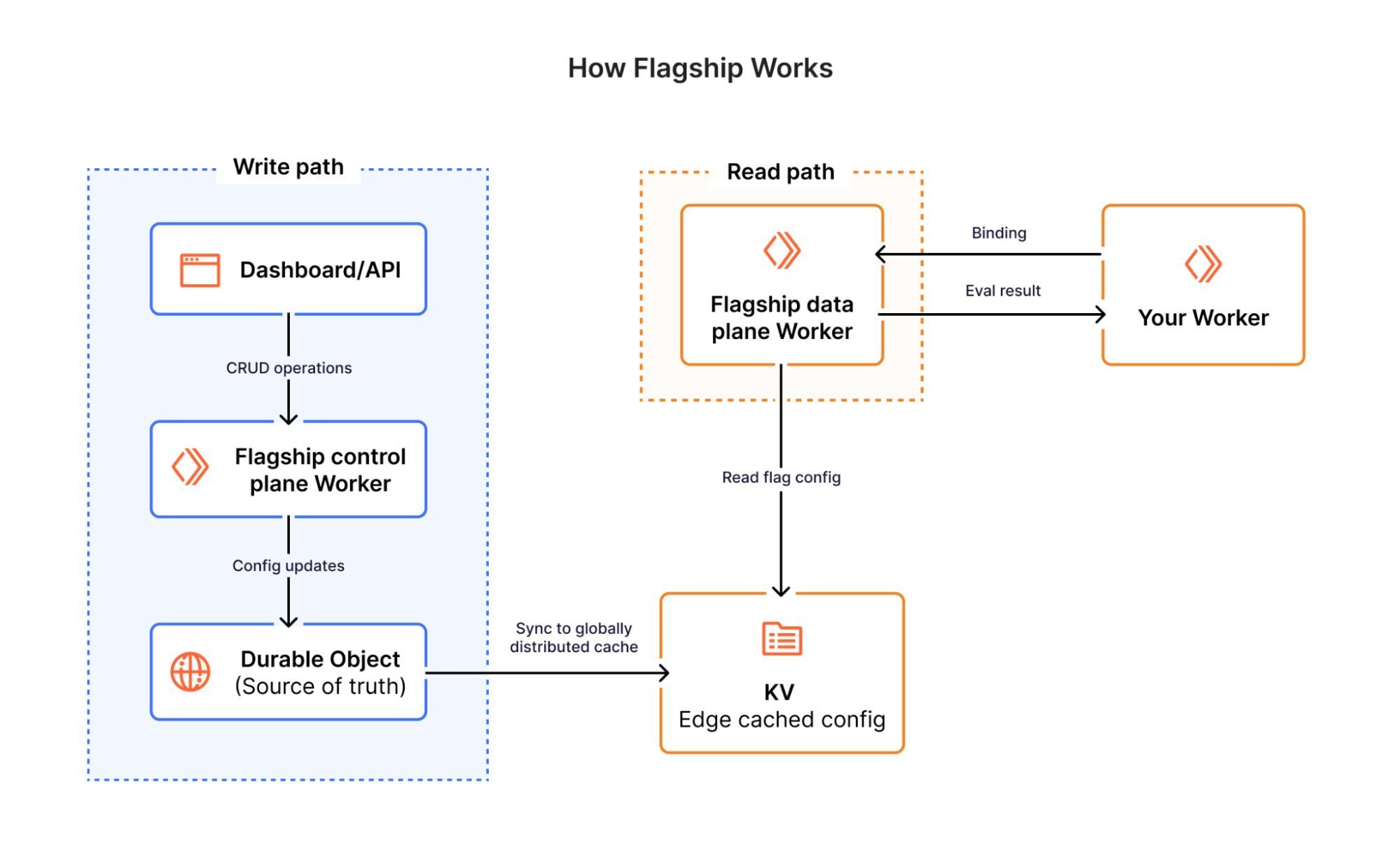
Flagship's technical implementation leverages Cloudflare's global edge network to provide consistent, low-latency flag evaluation across the globe. The service integrates with Cloudflare Workers through a native binding, allowing developers to access flag values directly in their code without additional network calls.
For teams adopting Flagship, the integration process involves:
- Defining flags and their targeting rules through the Cloudflare dashboard or API
- Using the native binding in Workers to evaluate flags
- Implementing feature variations based on flag values
- Monitoring flag usage and performance through Cloudflare's analytics
The browser client provider extends this capability to client-side applications, prefetching flags during page load and caching them for subsequent requests. This approach ensures that client-side feature flags don't introduce additional latency to user interactions.
Looking Forward: The Future of Edge-Native Services
Flagship represents Cloudflare's continued expansion into edge-native services that leverage the unique advantages of distributed edge computing. As AI and agent-based workloads become more prevalent, the ability to make decisions locally at the edge without external dependencies will become increasingly important.
The service's alignment with OpenFeature also positions Cloudflare as a contributor to open standards in the feature flagging space, helping to establish common patterns and APIs that benefit the broader developer community. This approach contrasts with vendor-specific solutions and promotes interoperability between different systems.
For organizations already using Cloudflare Workers, Flagship offers a compelling alternative to traditional feature flag services, combining the convenience of a managed service with the performance benefits of edge-native evaluation. As the service moves from closed beta to general availability, we can expect to see continued refinement and additional capabilities tailored to the evolving needs of modern web applications.
In conclusion, Cloudflare's Flagship represents a significant advancement in feature flag technology, leveraging edge computing to provide unprecedented performance while maintaining the flexibility and control that developers need. As digital applications become increasingly complex and distributed, services like Flagship will play a crucial role in enabling rapid, safe, and efficient feature delivery.
Comments
Please log in or register to join the discussion