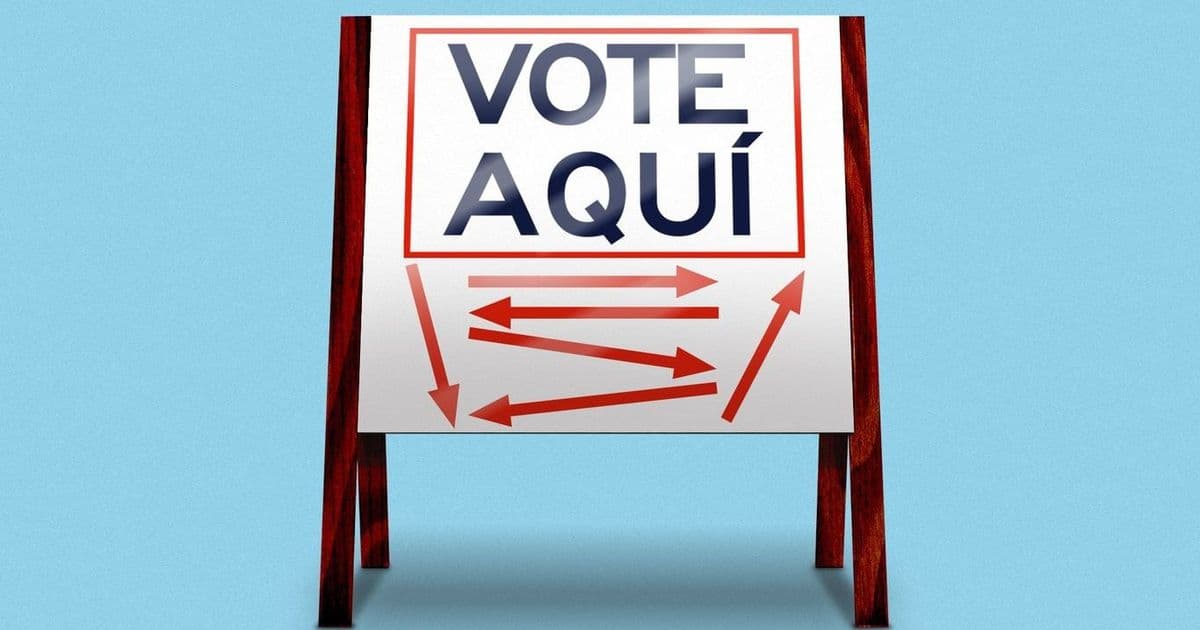
The once-reliable Democratic voting bloc is splintering along generational, national origin, and ideological lines, creating unprecedented volatility in battleground states.
The Latino electorate, once considered a monolithic Democratic voting bloc, is undergoing a dramatic transformation that has emerged as one of the most significant wildcards in American electoral politics. Recent polling and election results reveal a community increasingly divided along generational, national origin, and ideological lines, creating both opportunities and challenges for political parties heading into the 2024 election cycle.
Shifting Political Landscape
Traditional assumptions about Latino voting patterns are being upended. While Democrats have historically enjoyed strong support from Latino voters—winning approximately 70% of the Latino vote in 2012—that advantage has eroded significantly. In the 2020 election, Joe Biden secured about 65% of Latino voters, and in the 2022 midterms, Democratic candidates saw further declines in Latino support in key battleground states.
This fragmentation is particularly pronounced among younger Latino voters. Millennials and Gen Z Latinos are showing greater ideological diversity than their predecessors, with increasing numbers identifying as independent or even conservative. The reasons are multifaceted: economic concerns, frustration with progressive policies, and a desire for greater political representation beyond traditional party lines.
Generational and National Origin Divides
One of the most significant factors driving this fragmentation is the growing diversity within the Latino community itself. Cuban Americans in Florida have long leaned Republican, but now we're seeing similar patterns emerge among Venezuelan and Colombian communities, particularly in response to progressive policies they associate with socialism.
Mexican Americans, who comprise the largest segment of the Latino electorate, are also showing signs of political diversification. In Texas border communities, for instance, Republican candidates have made surprising inroads, winning several historically Democratic districts in recent elections.
Generational differences compound these national origin divides. Older Latino voters who immigrated to the U.S. often maintain strong ties to the Democratic Party, viewing it as the party of immigration reform and civil rights. Younger Latinos, however, are more likely to prioritize issues like economic opportunity, public safety, and education reform, leading some to question Democratic orthodoxy.
Economic Anxiety and Cultural Conservatism
Economic concerns are emerging as a unifying factor across Latino demographic groups. Rising inflation, housing costs, and concerns about job opportunities have pushed economic issues to the forefront of many Latino voters' priorities. This shift has benefited Republican messaging around economic growth, lower taxes, and reduced regulation.
Cultural conservatism also plays a significant role. Many Latino voters hold traditional views on family, religion, and social issues that align more closely with Republican positions. The Democratic Party's shift toward more progressive stances on issues like abortion, gender identity, and criminal justice reform has alienated some socially conservative Latino voters.
Battleground State Implications
This fragmentation has profound implications for electoral strategy in key battleground states. In Arizona, Nevada, and Colorado, the Latino vote could determine control of Senate seats and presidential electoral votes. In Florida and Texas, growing Latino populations are reshaping congressional districts and state-level politics.
Political strategists on both sides recognize the opportunity. Republicans are investing heavily in Latino outreach, particularly in Florida, Texas, and increasingly in Arizona. Democrats, meanwhile, are working to shore up their traditional advantages while trying to address the concerns driving Latino voters away.
The 2024 Wildcard
The 2024 election will likely test whether the Latino vote can be consolidated again or whether fragmentation becomes the new normal. Both parties face strategic decisions: Should Republicans double down on culturally conservative messaging? Should Democrats moderate their positions to recapture lost support?
What's clear is that the Latino electorate is no longer a reliable Democratic firewall. The community's growing diversity—in national origin, generation, ideology, and priorities—has created a volatile electoral force that could swing elections in either direction. As both parties adapt their strategies, the Latino vote has emerged as perhaps the most significant wildcard in American electoral politics.
The fragmentation of the Latino vote represents a fundamental shift in American politics, one that challenges decades of conventional wisdom about demographic voting patterns. As the 2024 election approaches, how both parties navigate this new reality could determine not just individual races, but the broader trajectory of American political alignment for years to come.
Comments
Please log in or register to join the discussion