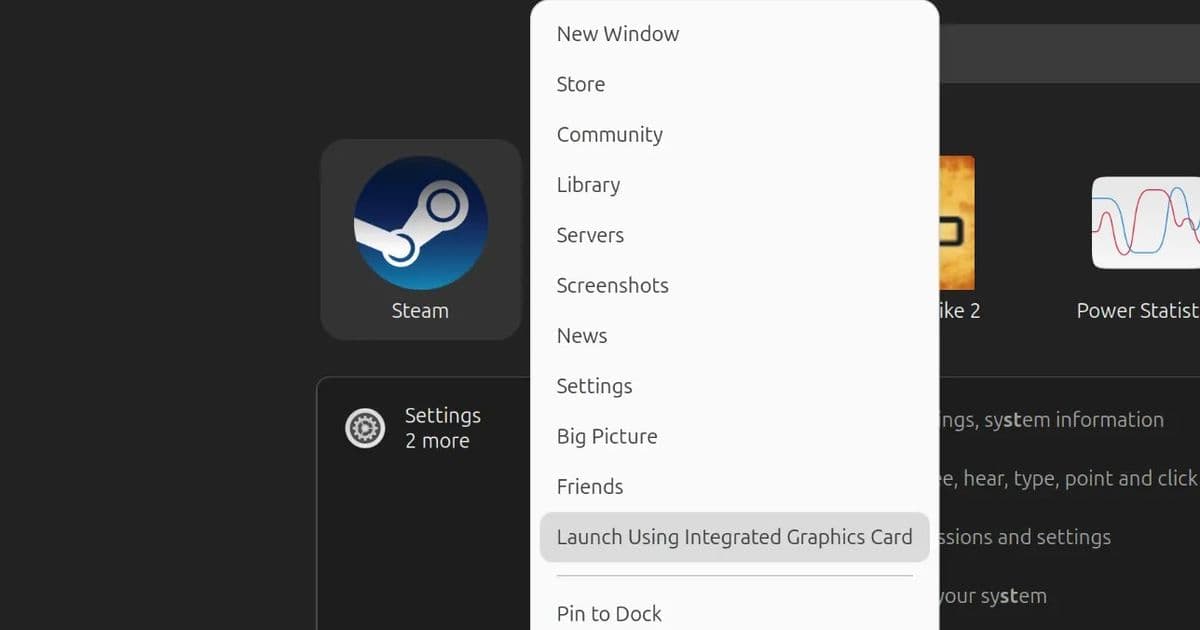
After two years of development, GNOME 50 will ship with enhanced dGPU detection that properly identifies discrete graphics cards for optimal performance in multi-GPU systems.
The upcoming release of GNOME 50, which will ship with Ubuntu 26.04 LTS and Fedora Workstation 44, brings a significant improvement to how the desktop environment handles discrete GPU detection. This long-awaited feature, which has been in development for two years, finally merged into the GNOME Shell codebase this week, promising a better experience for users with multi-GPU setups.
The Problem with GPU Detection
Historically, GNOME's GPU detection logic was limited to identifying the "Default" GPU - the one used during system boot. This approach worked adequately for laptops with hybrid graphics but fell short for users with dedicated GPU configurations. The original method would simply use the first non-default GPU if it wasn't the primary boot GPU, which could lead to suboptimal performance when launching games or other GPU-intensive applications.
The New Detection Logic
The improved system now leverages switcheroo-control, a tool that manages GPU switching on hybrid graphics systems. The new detection logic follows a clear hierarchy:
- The first non-default GPU if it is discrete
- The first discrete GPU if one exists
- The fallback to the first non-default GPU (maintaining backward compatibility)
This approach ensures that when users launch demanding applications, they'll be directed to the most appropriate GPU for the task - typically the discrete GPU rather than integrated graphics.
Technical Implementation
The merge request, which was opened in February 2024, represents a significant overhaul of GNOME's GPU detection system. The implementation checks for the "Discrete" key in GPU information, allowing the system to properly distinguish between integrated and dedicated graphics cards. This is particularly important for systems with both integrated and discrete GPUs, where users might want to explicitly choose which GPU handles specific workloads.
For systems where switcheroo-control isn't installed or is outdated, the new logic gracefully falls back to the previous behavior, ensuring compatibility across different system configurations. This thoughtful approach prevents breaking existing setups while improving the experience for users with modern GPU management tools.
KDE's Parallel Development
Interestingly, the KDE community had already addressed this issue in their ecosystem. KDE merged a similar patch for switcheroo-control integration last year, demonstrating that both major Linux desktop environments were working toward solving the same fundamental problem. The GNOME team's implementation, while arriving later, benefits from the lessons learned by KDE's earlier work.
Impact on User Experience
The practical implications for GNOME users are substantial. Gamers and professionals using GPU-intensive applications will now have a more reliable experience when launching these programs. Instead of potentially running on integrated graphics when a discrete GPU is available, the system will intelligently route workloads to the most capable hardware.
This improvement is particularly relevant for:
- Gaming performance on systems with hybrid graphics
- Professional applications like video editing and 3D rendering
- Machine learning workloads that benefit from dedicated GPU acceleration
- Any scenario where users want to maximize their hardware's capabilities
Timeline and Release
After recent refinements to the GNOME patch and with stakeholders pushing for timely integration, the feature has finally landed in time for the GNOME 50 release cycle. This timing is crucial as it ensures that the improved GPU detection will be available in major distributions shipping GNOME 50, including the important Ubuntu 26.04 LTS release.
The two-year development period reflects the complexity of GPU management in Linux environments, where different hardware configurations, drivers, and system management tools must all be considered. The fact that the feature has finally merged suggests that the GNOME team has achieved a robust solution that balances new functionality with system stability.
Looking Forward
With this improvement landing in GNOME 50, Linux desktop users can expect a more intelligent and performant GPU experience. As hardware configurations continue to evolve with more powerful integrated GPUs and complex hybrid systems, having proper GPU detection and management becomes increasingly important.
The successful implementation of this feature also demonstrates the collaborative nature of open-source development, where communities like GNOME and KDE can work on similar problems and share insights, ultimately benefiting all Linux users regardless of their desktop environment preference.
Comments
Please log in or register to join the discussion