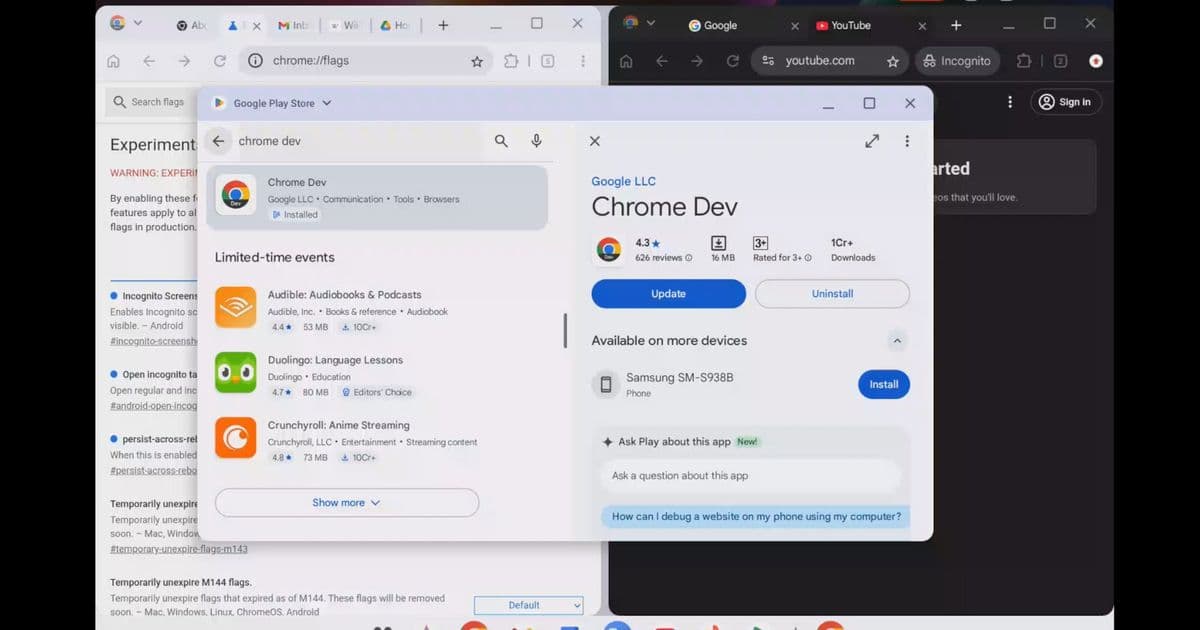
Google accidentally revealed Aluminium OS, its Chrome OS replacement that merges Android and Chrome OS into a unified desktop platform, showing split-screen multitasking and Android 16 integration.
Google just gave us an accidental first look at Android's PC future. A bug report on the Chromium Issue Tracker contained two screen recordings of Aluminium OS running on an HP Elite Dragonfly 13.5 Chromebook, showing off what appears to be Google's vision for the future of computing on large screens.
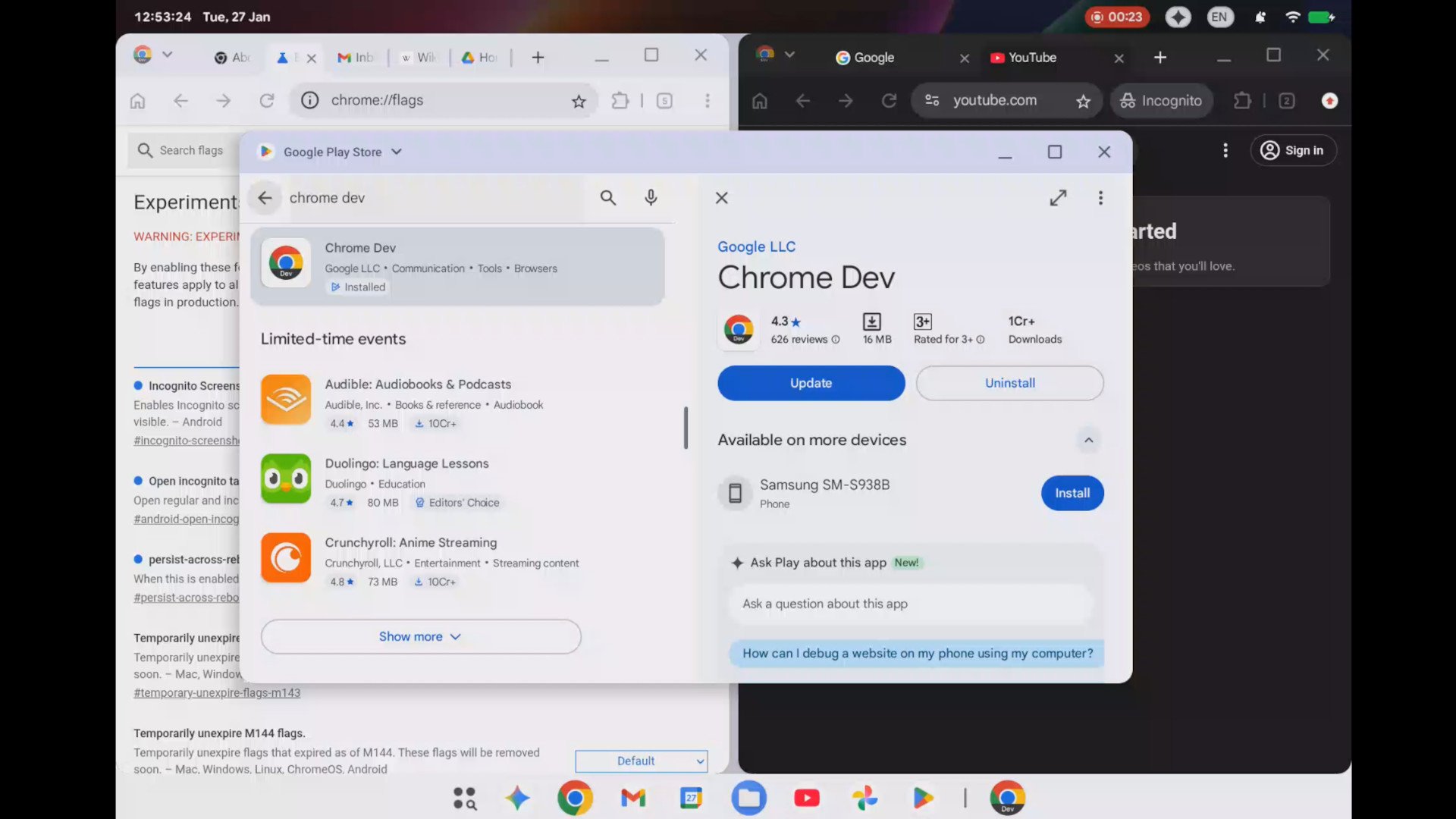
Aluminium OS represents Google's ambitious plan to merge Chrome OS and Android into a single computer-focused platform. The recordings show split-screen multitasking with two Chrome Dev windows arranged in a 50:50 split, complete with tabbed browsing and extension icons. This multitasking approach feels familiar to both Chrome OS users and those who've experienced Android's desktop mode on tablets.
The build number in the recordings is listed as ALOS (Aluminium OS), while the Chrome window on the left specifically identifies itself as running on Android 16. This confirms the deep integration between the two operating systems that Google has been working toward.
One of the most interesting details is the status bar, which includes a screen recording indicator, Gemini icon, and the recent Android 16 Wi-Fi and battery icons. The taskbar design shows Google's evolution of the interface - the start button is now positioned closer to the center, similar to Android 16's desktop mode, rather than the bottom-left corner placement typical of Chrome OS.
The recordings also give us a peek at the Play Store app running on the device, suggesting that Android apps will continue to play a central role in this new platform. One particularly notable feature shows the process of updating Chrome via the Play Store. When you tap "update" while Chrome is still open, the browser displays an "updating" screen instead of simply closing without warning and reopening after the update - a significant improvement over Chrome OS's current behavior.
This accidental leak comes at an interesting time for Google's computing strategy. The company has been gradually improving Android's tablet and large-screen experience, but as contributor Karandeep Singh pointed out, there's still work to be done on Android for big screens before pushing ahead with Aluminium OS.
What makes this leak particularly significant is that it confirms Google is actively developing this unified platform and that it's far enough along to be running on actual hardware. The integration of Android 16 features, the refined multitasking interface, and the improved update experience all suggest this isn't just a concept but an actual product in development.
The timing also aligns with Google's broader strategy of creating a more unified ecosystem across devices. Just as Apple has been working to make iPadOS and macOS more cohesive, Google appears to be taking a similar approach with Android and Chrome OS.
While Google has since restricted access to the bug report, the recordings provide valuable insight into what users can expect from the future of Google's computing platforms. The combination of Chrome's desktop browsing experience with Android's app ecosystem and modern multitasking features could create a compelling alternative to traditional desktop operating systems.
What's particularly interesting is how Google is handling the transition between the two operating systems. Rather than simply layering Android features onto Chrome OS or vice versa, Aluminium OS appears to be a thoughtful integration that takes the best elements of both platforms while addressing some of their individual limitations.
The accidental nature of this leak also raises questions about Google's development process and how much more we might see before the official announcement. Given that this appears to be running on actual hardware with functional features, Aluminium OS could be closer to release than many expected.
For now, we can only speculate about the final feature set and release timeline, but this leak provides concrete evidence that Google's vision for a unified computing platform is progressing and may arrive sooner than anticipated.
Comments
Please log in or register to join the discussion