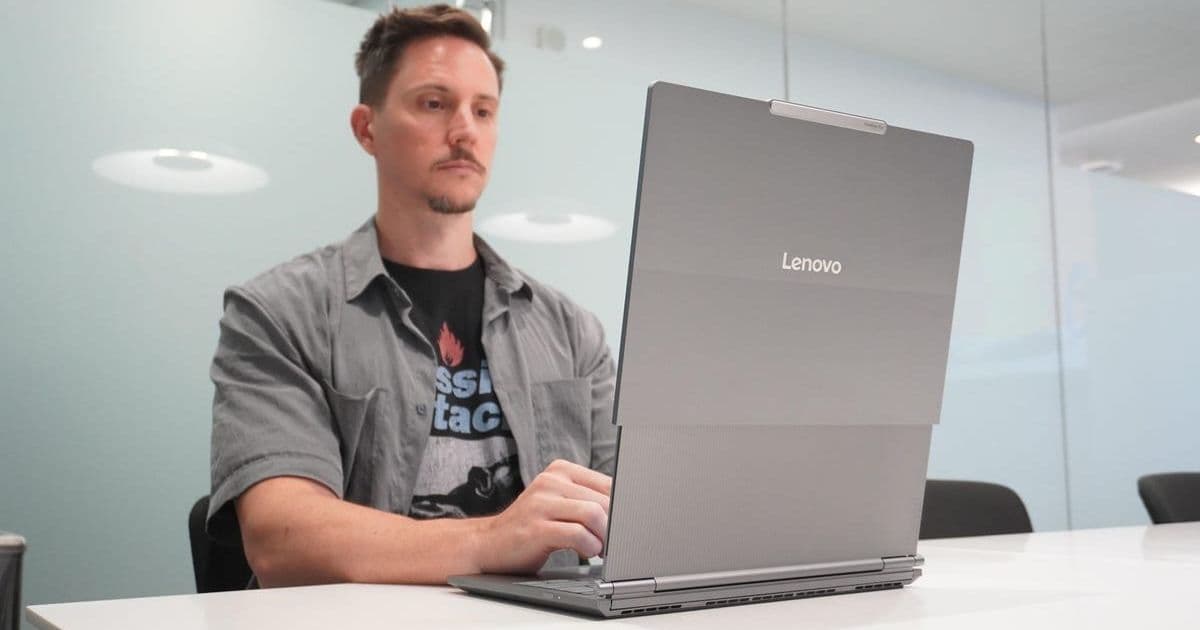
Lenovo's ThinkBook Plus Gen 6 Rollable, now available for $3,300, transforms from a standard laptop into a 16.7-inch OLED powerhouse at the push of a button. After a week of testing, its expansive screen redefines productivity for developers and content creators, despite visible creasing and a premium price point.
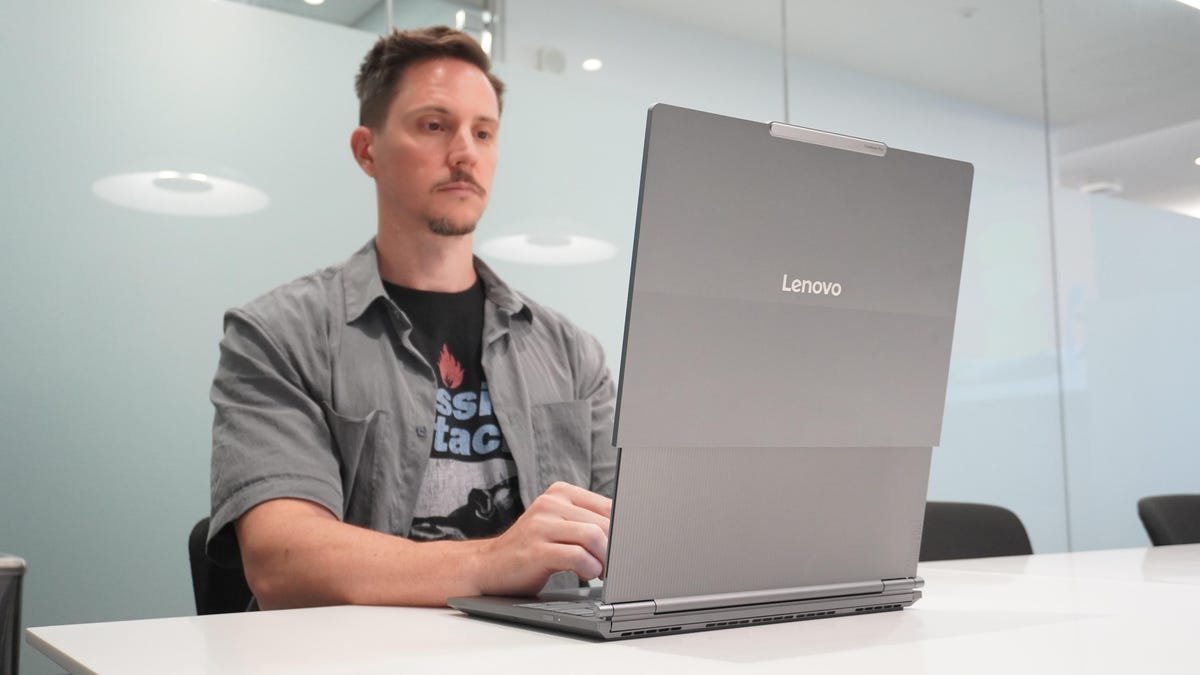
When Lenovo first teased its rollable laptop concept at CES two years ago, it sparked curiosity but also skepticism: Could a screen that physically extends upward truly enhance daily computing? Fast forward to today, and the ThinkBook Plus Gen 6 Rollable isn't just a prototype—it's a $3,300 reality. As a senior tech journalist, I spent a week with this device, and it’s clear that Lenovo is pushing boundaries, even if the execution comes with first-gen compromises.
Engineering Meets Innovation: The Rollable Display in Action
At first glance, the ThinkBook Plus Gen 6 resembles a sturdy business laptop, complete with a metallic, two-tone chassis that resists fingerprints. But the magic lies in its display: a 120Hz OLED panel that starts at a conventional size and, with a button press or gesture, unfurls vertically to 16.7 inches. This portrait-oriented screen delivers an unprecedented workspace, ideal for coding, document editing, or multitasking. As Kyle Kucharski notes in his ZDNET review, "The extra room is a breath of fresh air," allowing for full-screen immersion or split windows without the claustrophobia of traditional laptops.
However, innovation isn't flawless. Visible creasing—reminiscent of early foldable phones—appears under certain lighting, a trade-off for the mechanical design. Yet, in daily use, this fades into the background. The glossy OLED panel itself is stunning, with vibrant colors and smooth motion, though thick bezels remind us this is still gen-one hardware.
Performance and Practicality: A Developer’s Dream or Dilemma?
Under the hood, the ThinkBook packs an Intel Core Ultra 7 "Lunar Lake" CPU, 32GB of RAM, and 1TB of storage, paired with an integrated Intel Arc 140V GPU. Benchmarks show solid performance for office workloads:
Cinebench 24 Multi-Core: 563
Geekbench 6.2.2 Single-Core: 2,732
Geekbench 6.2.2 Multi-Core: 10,701
Comparatively, it lags behind rivals like the Dell 14 Premium in multi-core tasks but holds its own for everyday productivity. The haptic touchpad is a standout—responsive and uniform—though it struggles in cooler temperatures. For developers, the extended screen shines: imagine more code visible at once or sprawling documentation without constant scrolling. But the form factor imposes limits, including just two Thunderbolt 4 ports and a headphone jack, all cramped on the left side.
Battery life is adequate but not stellar. The 66Whr cell lasts a full workday with moderate use but dips during video calls. Charging is swift (80% in an hour), and the Lunar Lake chip aids efficiency. As Kucharski observed, "You can get a full work day... but it's cutting it close."
The Bigger Picture: Why This Matters for Tech’s Future
Lenovo isn’t targeting the masses here—this is a statement piece. At $3,300, alternatives like the MacBook Pro M4 or Dell 14 Premium offer better value and polish. But the ThinkBook Plus Gen 6 proves rollable displays aren’t gimmicks; they’re a viable path to flexible, space-efficient computing. For engineers and creatives, the screen’s scalability could redefine mobile workspaces, though widespread adoption hinges on reducing creases and cost in future iterations. As the industry eyes foldables and dual-screens, Lenovo’s bold experiment reminds us that sometimes, the future rolls in unexpectedly—ready or not.
Source: Based on hands-on testing and analysis from Kyle Kucharski's review for ZDNET.
Comments
Please log in or register to join the discussion