Hatchet's co-founder details how Claude Code and Charm libraries enabled rapid development of a performant terminal interface for their workflow engine.
When Hatchet co-founder Alexander Belanger first experimented with Claude Code in mid-2025, he dismissed it as a novelty. Within 30 minutes, his perspective shifted dramatically. The terminal-based coding agent demonstrated such potential that Hatchet briefly considered building an entire product line around the technology. Though they ultimately didn't pursue that path, the experience inspired Belanger to leverage Claude Code for a different purpose: building Hatchet's terminal user interface (TUI). The result? A functional TUI built and shipped in just two days.
Why Terminal Interfaces Matter for Developer Tools
Hatchet users responded immediately to the TUI release, with one noting: "It feels so much more performant than the UI." This highlights a key advantage of terminal interfaces: they eliminate context switching between code editors and browser-based dashboards. For developers working with workflow engines like Hatchet—which handles task orchestration and durable workflows—having an inline visualization tool reduces friction during development cycles. Unlike modern web interfaces that prioritize visual design, TUIs emphasize information density and keyboard navigation, aligning with developer workflows where terminals are already central.
The Charm Stack: TUI Development Accelerated
Hatchet's TUI leverages libraries from Charm, whose tools provide a cohesive development environment for terminal applications:
- Bubble Tea: A TUI framework inspired by The Elm Architecture
- Lip Gloss: Style definitions for consistent terminal theming
- Huh: Form building with validation
"Don't let the cutesy names fool you," Belanger notes. "These are production-grade tools with extensive documentation." The stack enabled rapid styling consistency across Hatchet's CLI, with interactive forms inheriting the same visual language as the TUI. While custom components proved challenging outside Bubble Tea's paradigms, the overall development velocity outweighed these limitations.
AI-Assisted Testing Workflow
The breakthrough came in testing methodology. Claude Code proved exceptionally capable at driving terminal-based applications through tmux sessions. Using tmux's capture-pane command, the AI agent could:
- Render TUI views in a controlled environment
- Capture ASCII output
- Verify rendering correctness
- Iterate on components
This created an unusually tight feedback loop. "LLMs are built to iterate in ASCII-based environments," Belanger explains. After Claude Code handled initial testing, manual verification and unit tests covered edge cases. This hybrid approach resulted in what Belanger describes as "convergent rather than divergent" iterations—a stark contrast to previous frontend efforts that collapsed under complexity.
Solving the DAG Visualization Challenge
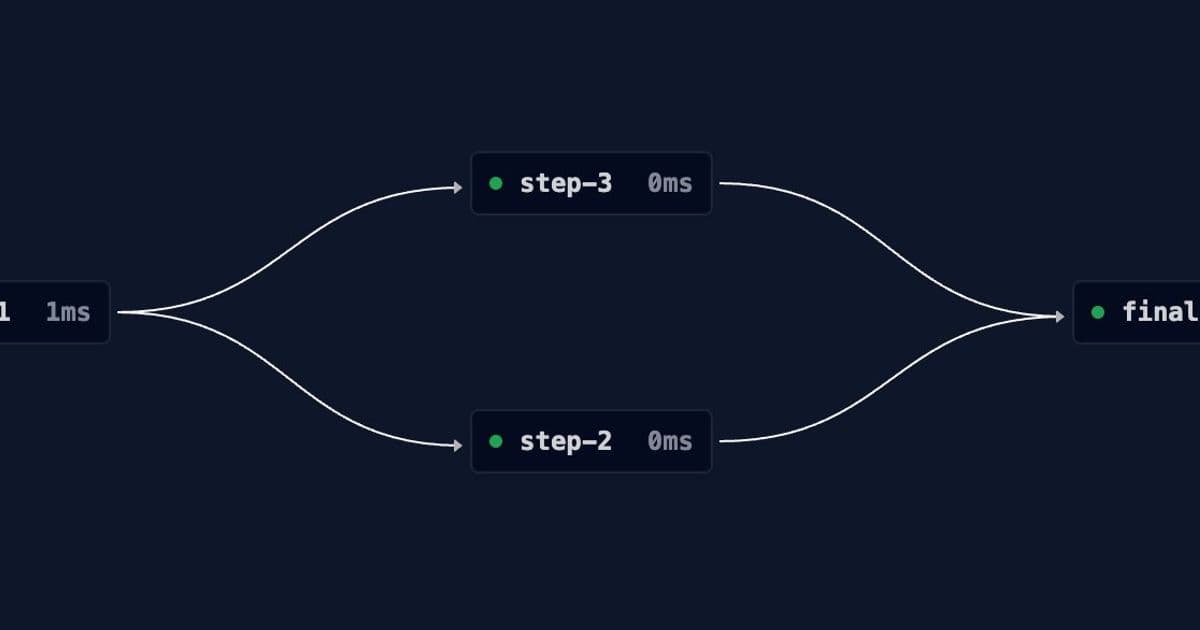
Rendering directed acyclic graphs (DAGs)—essential for visualizing workflows—presented the toughest challenge. Hatchet's browser UI uses React Flow for this purpose, but porting it to terminal constraints seemed impossible. After failed prompting attempts with Claude Code, Belanger discovered mermaid-ascii, an open-source ASCII renderer for Mermaid.js diagrams. By directing Claude Code to adapt this library, they achieved a functional terminal DAG renderer on the first attempt.
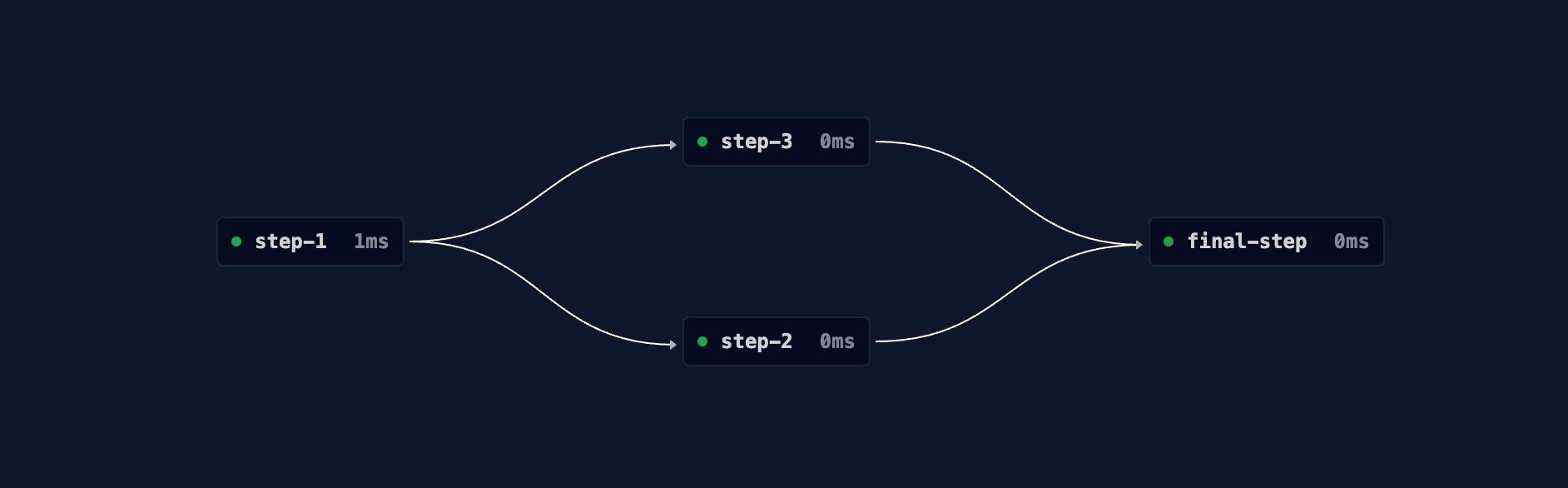
DAG visualization in Hatchet's TUI using adapted mermaid-ascii rendering
Limitations and Lessons
The approach isn't without constraints:
- The DAG renderer lacks pixel-perfect precision
- Charm's ecosystems impose design constraints
- AI-assisted development works best with clear boundaries (OpenAPI specs helped significantly)
Belanger contrasts this success with a previous failed frontend rewrite: "That bore all the hallmarks of agentic antipattern—promising prototypes collapsing under subtle bugs." The TUI project succeeded through modular design, continuous testing, and targeting non-critical paths (a crashed TUI doesn't affect production workflows).
Conclusion
Hatchet's experiment demonstrates that terminal interfaces—once considered niche—can deliver superior developer experiences for specific use cases. The combination of mature TUI libraries and AI-assisted coding creates a viable path for teams to build supplementary terminal tools. As Belanger concludes: "It's much easier than I expected."
Explore the live demo at https://tui.hatchet.run.
Comments
Please log in or register to join the discussion