
New leaks suggest Intel's upcoming Nova Lake CPUs could reach extreme power consumption levels, with PL4 peaks hitting 854W. While contested by other sources, these figures highlight ongoing challenges balancing performance and efficiency in high-core-count processors.

The ongoing stream of leaks surrounding Intel's next-generation Nova Lake desktop processors has taken a dramatic turn with newly surfaced power consumption figures that, if accurate, could redefine desktop cooling and power supply requirements. According to leaker HXL, dual-compute-tile variants of these CPUs—specifically K-series SKUs topping out at 52 cores—could demand unprecedented power levels under load.
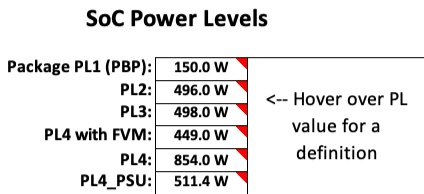
The leaked specifications outline four power states:
- PL1 (Base Power): 150W
- PL2 (Boost Power): 496W
- PL3: 498W
- PL4 (Peak/Max Power): 854W
These numbers dwarf current-generation hardware. For perspective, Intel's recently released Arrow Lake Core Ultra 9 285K operates at a PL1 of 125W and PL2 of 250W—roughly half the leaked Nova Lake PL2 figure. Even the notoriously power-hungry Core i9-14900K shares identical PL1/PL2 ratings with Arrow Lake despite its thermal challenges.
Understanding these metrics matters for system builders:
- PL1 reflects sustained power during typical workloads
- PL2 represents short-term turbo boost limits
- PL4 is an absolute maximum threshold rarely triggered outside extreme scenarios
Such figures imply significant infrastructure demands:
- Cooling: 850W+ heat output would require industrial-grade liquid cooling solutions
- Power Supplies: ATX 3.1 specs support spikes up to 235% of PSU rating, but sustained 850W CPU draw alone necessitates 1200W+ units
- Motherboards: VRM designs would need substantial reinforcement
However, context is crucial. Industry sources like Jaykihn and UNIKO's Hardware contest these figures, calling them "outdated" and clarifying they apply to a 42-core Core Ultra 7 configuration (14P+24E+4LP cores), not the flagship 52-core model. Intel likely refined power curves since these initial specifications.
For potential buyers, this leak signals important considerations:
- Enthusiasts eyeing extreme multi-threaded performance must budget for premium cooling
- Efficiency-focused builders might prefer alternatives like AMD's Zen 5 or Intel's own Arrow Lake
- System integrators should monitor ATX 3.1 PSU compatibility
While alarming, these leaks represent early engineering samples. Intel typically optimizes power delivery closer to launch—Arrow Lake's final TDP dropped 30% from initial leaks. Nova Lake remains 6+ months from release, leaving time for refinement. Until Intel's official announcements, treat all leaks as provisional data points rather than final specifications.
For reference, current-gen alternatives:
Comments
Please log in or register to join the discussion