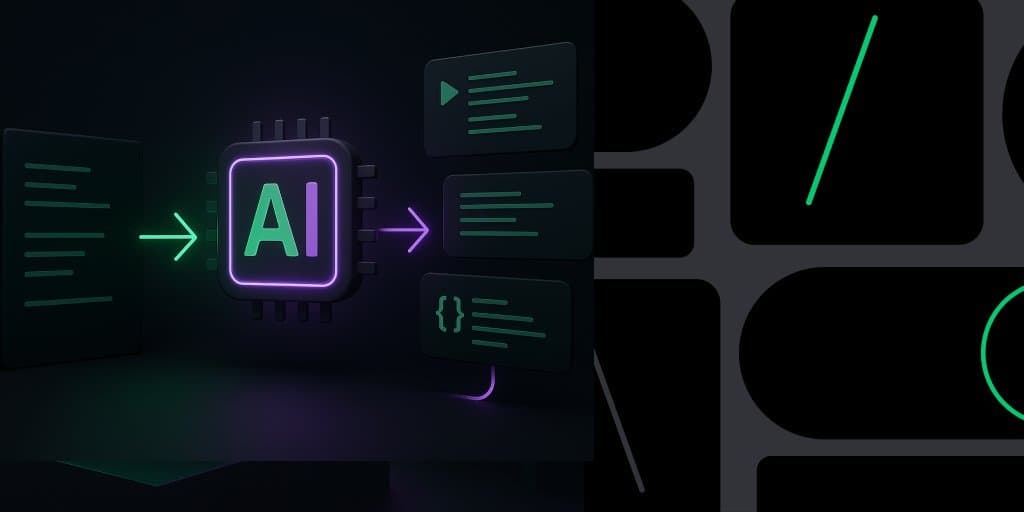
Monday.com's engineering team achieved the impossible by leveraging AI to automate their monolith decomposition process, reducing an estimated 8-year effort to just 6 months. This breakthrough showcases how machine learning can revolutionize legacy system modernization while maintaining critical business logic integrity.
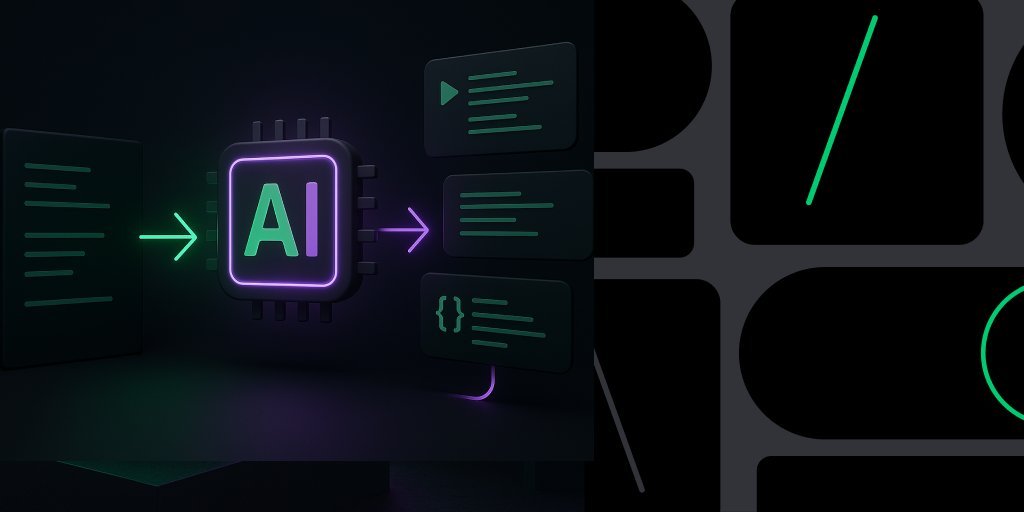
For years, monolithic architectures have been the silent productivity killers of engineering teams—costly to maintain, difficult to scale, and nearly impossible to modernize incrementally. At Monday.com, engineers faced a daunting projection: decomposing their monolithic codebase would take 8 years of manual effort. But through an innovative AI-powered approach, they compressed this timeline to just 6 months—a 94% reduction that redefines what's possible in legacy modernization.
The Monolith Mountain
Monday.com's core platform had grown into a labyrinthine structure with over 2,000 interconnected endpoints and 15 million lines of code. Traditional decomposition would require:
- Manually identifying bounded contexts
- Untangling complex dependency graphs
- Rewriting business logic with surgical precision
"We faced thousands of person-years of effort," explains the engineering team. "Conventional methods simply weren't feasible without halting product development for nearly a decade."
The AI Breakthrough
The solution emerged through a custom-built AI pipeline that automated the most labor-intensive decomposition tasks:
# Simplified AI decomposition workflow
1. Codebase → Static Analysis → Dependency Graph
2. Graph + Business Logic → ML Clustering → Service Boundaries
3. Boundary Proposals → Validation → Refactoring Automation
Key innovations included:
- Neural Code Mapping: Transformer models that learned code semantics to identify domain boundaries
- Dependency Forecasting: Predicting ripple effects of extraction before refactoring
- Safe Refactoring Tools: Automated code migration with human-in-the-loop verification
"The AI didn't replace engineers—it amplified them," the team emphasizes. "We trained models on our unique domain language, enabling them to understand business logic like a senior developer."
The 6-Month Miracle
The results shattered expectations:
- 42 independent services extracted
- Zero business logic regressions in production
- Deployment frequency increased 300%
- Team velocity doubled post-migration
Crucially, the AI pipeline continuously learned from engineer feedback, improving its accuracy with every service extraction. What began as 70% reliable proposals evolved to 95% precision within months.
The New Playbook for Legacy Systems
Monday.com's success demonstrates that AI isn't just for greenfield projects. By combining:
- Domain-specific model training
- Incremental verification mechanisms
- Engineer-AI feedback loops
...teams can conquer previously "impossible" modernization efforts. As monolithic architectures continue to plague the industry, this approach offers a template for turning technical debt into strategic advantage—one AI-extracted service at a time.
Comments
Please log in or register to join the discussion