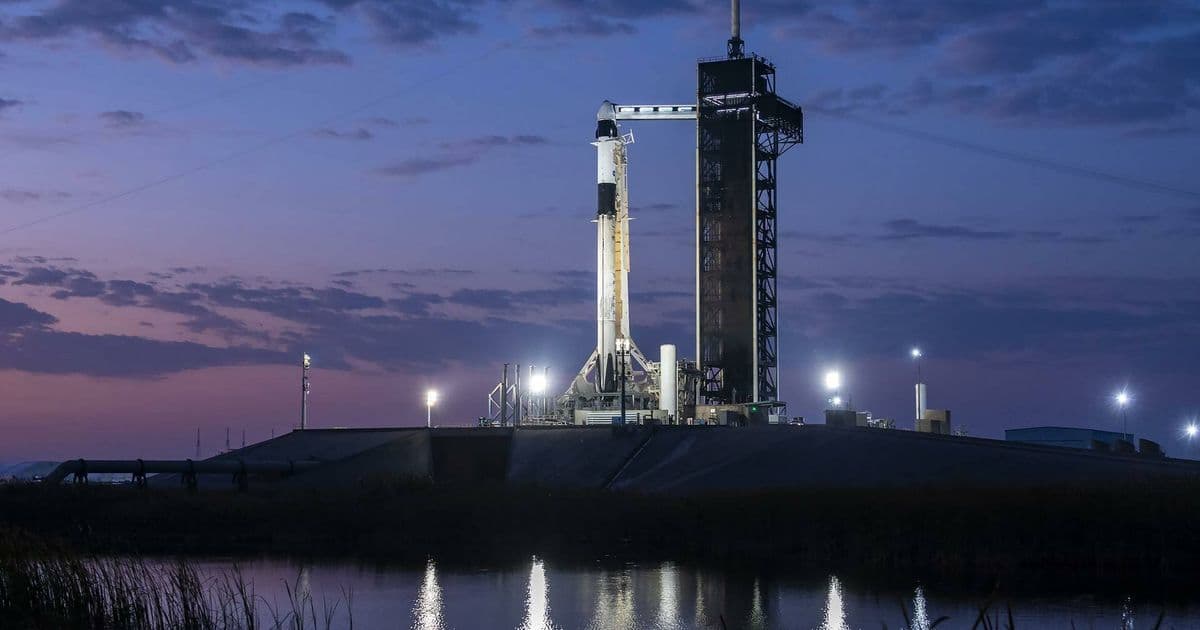
SpaceX received FAA approval to resume Falcon 9 launches after investigating a second-stage anomaly, while CEO Elon Musk announced the company's shift in focus from Mars to building a self-sustaining lunar city within a decade.
SpaceX has received the green light from the US Federal Aviation Administration to resume Falcon 9 launches following a second-stage anomaly that grounded the workhorse rocket for over a week. The incident, which occurred during a Starlink satellite deployment mission, involved a failed deorbit burn that resulted in the rocket stage reentering Earth's atmosphere over the Southern Indian Ocean.
Investigation and FAA Approval
The FAA oversaw SpaceX's investigation into the mishap, which was ultimately attributed to "an off-nominal condition caused by a failed ignition due to a gas bubble in the transfer tube ahead of the planned deorbit burn." The regulatory body confirmed that it "will oversee every step of the investigation, approve the final report and any corrective actions" before granting permission for the rocket's return to flight.
SpaceX identified both technical and organizational preventative measures to avoid a recurrence of the event. The company's corrective actions were accepted by the FAA, which stated: "The Falcon 9 vehicle is authorized to return to flight."
Return to Flight
Demonstrating the swift resolution, SpaceX successfully launched another 25 Starlink satellites from Vandenberg Space Force Base on February 7 at 2058 UTC. This mission not only validated the corrective measures but also cleared the path for upcoming crewed missions, including the Crew-12 mission to the International Space Station.
Musk's Lunar Ambitions
While the technical issues were being resolved, CEO Elon Musk took to X (formerly Twitter) to announce a significant strategic shift for the company. Musk declared that SpaceX has "already shifted focus to building a self-growing city on the Moon, as we can potentially achieve that in less than 10 years, whereas Mars would take 20+ years."
This announcement represents a notable pivot in SpaceX's long-term goals. The company had previously positioned Mars colonization as its primary objective, with Musk repeatedly stating his ambition to establish a self-sustaining city on the Red Planet. The shift to lunar development suggests a more incremental approach to space settlement, potentially driven by the Moon's relative proximity and the current geopolitical interest in lunar exploration.
The Technical Reality
Musk's ambitious timeline faces significant technical hurdles. SpaceX has yet to successfully place a Starship vehicle into orbit, despite multiple test flights of the massive rocket system designed for deep space missions. The company's Starship program has experienced several setbacks, including a recent ground test mishap that resulted in the loss of a V3 Super Heavy booster.
Furthermore, SpaceX's lunar ambitions are complicated by its relationship with NASA. In 2021, the company was awarded a contract to develop a lunar lander variant of Starship for the Artemis program. However, NASA recently acknowledged that SpaceX was behind schedule and reopened competition for the landing contract, with the goal of returning humans to the Moon's surface by the end of 2029.
Competitive Landscape
The lunar focus comes amid increasing competition in the commercial space sector. Blue Origin, led by Jeff Bezos, recently announced it would pause its New Shepard suborbital flights to accelerate development of its lunar capabilities. The company unveiled a cargo version mock-up of its Blue Moon lunar lander in 2023, with a human-rated model likely in development.
This competitive dynamic may be influencing SpaceX's strategic shift. The prospect of Blue Origin accelerating its lunar program could be motivating SpaceX to prioritize Moon development over its Mars ambitions.
Industry Context
SpaceX's return to flight and lunar ambitions occur against a backdrop of rapid expansion in the commercial space industry. The company is simultaneously pursuing multiple ambitious projects, including plans to deploy a constellation of up to one million satellite-based datacenters in Earth orbit.
However, the recent second-stage anomaly serves as a reminder that even routine operations with proven vehicles like Falcon 9 can encounter unexpected issues. The incident underscores the importance of thorough investigation and regulatory oversight in maintaining the safety and reliability of commercial spaceflight operations.
As SpaceX resumes its launch cadence and pursues its lunar city vision, the company faces the challenge of balancing ambitious long-term goals with the practical realities of engineering, regulation, and competition in the evolving space industry.
Comments
Please log in or register to join the discussion