Picking frameworks feels like a tooling decision, but it quickly becomes a delivery decision. The right choice helps your team ship faster, test better, and scale without rewriting later. The wrong choice quietly adds months.
Picking frameworks feels like a tooling decision, but it quickly becomes a delivery decision. The right choice helps your team ship faster, test better, and scale without rewriting later. The wrong choice quietly adds months.
Two quick signals from the market make this real. In Stack Overflow’s 2024 survey results, JavaScript was used by about 62% of respondents, staying on top again. Source And GitHub’s Octoverse 2025 report notes more than 36 million developers joined GitHub in 2025, plus TypeScript moved to the most used language on GitHub in August 2025. Source So yes, Frontend frameworks matter more than ever, but so does your backend choice, because your app is one system.
What You Are Really Deciding When You Pick Frameworks
Before names like React, Spring, or Django enter the room, align on what the framework must do for you. You are deciding:
- How quickly you can release without breaking core flows
- How easy it is to hire and onboard engineers
- How predictable your performance is under load
- How safe your data paths are, especially for regulated domains
- How much maintenance you are signing up for next year
One small note for teams that already rely on frontend development services: pick options that fit your design system, testing style, and release cadence, or the handoffs will stay messy.
Now let’s break it down in a way both startups and enterprises can use.
Frontend frameworks: the choice users can feel
A frontend framework shapes what your customers touch every day. It impacts load time, navigation, accessibility, and how often UI bugs show up in production. Here is what to evaluate, in order.
1) Your UI complexity, not your UI count
A simple marketing site and a multi-role dashboard are not the same thing. Ask:
- Do we have many reusable screens and shared patterns
- Do we need complex state across views
- Are we building real-time UI updates
- Will we support offline or spotty networks
If the answer is yes to two or more, you need a framework with strong component structure, routing, and testing support.
2) Performance requirements that are specific
Do not say “fast”. Say what fast means. Define:
- First screen load target on mid-range devices
- Largest contentful paint target
- Interaction delay limit for key flows
- Bundle size budget per page
Then choose patterns that help you hit them, like server rendering, code splitting, and stable caching.
3) Team reality, not internet preferences
Framework fit depends on how your engineers actually work. Check:
- Familiarity and recent project experience
- Strength of your UI testing approach
- Comfort with TypeScript and strict builds
- Ability to maintain shared component libraries
If your team is strong in typed UI code, you will naturally reduce UI regressions over time.
4) Ecosystem maturity and upgrade path
You are not just picking a framework. You are picking its router, form handling, build system, and deployment model. Look for:
- Clear long-term support signals
- Common patterns that don’t change every quarter
- Straightforward major version upgrades
- A stable approach to security fixes
Backend frameworks: the choice ops can measure
Your backend choice controls reliability, latency, security boundaries, and data consistency. For enterprises, it also shapes audit trails and access control. For startups, it shapes runway. This is where backend development stops being “API work” and becomes product quality.
1) Your data model and transaction needs
Start with the core data behavior. Do you need strict transactions across multiple writes? Do you need event logging for every change? Do you need heavy read optimization for analytics? Are you mixing relational and document storage?
Frameworks differ in how cleanly they support migrations, validation, and domain rules. A sloppy data layer leads to bugs that are painful to unwind.
2) Security and identity integration
Security is not a checkbox. It is a set of repeatable controls. Evaluate:
- Authentication and session patterns
- Role based access control support
- Rate limiting and request validation
- Secrets management and safe config handling
- Logging that is usable in incident reviews
A good backend framework makes secure defaults easier than insecure shortcuts.
3) Scaling model and deployment fit
Scaling is not only about traffic. It is also about org scale. Ask:
- Are we going modular, like services or modules
- Do we need background jobs, queues, schedulers
- Do we need multi-region later
- Are we deploying on containers, serverless, or VMs
Strong backend development choices match your runtime and your release pipeline.
4) Observability and debugging speed
If you can’t see it, you can’t fix it. Require:
- Structured logging support
- Metrics and tracing compatibility
- Clear error handling patterns
- Easy local reproduction and staging parity
The best backend is the one your team can debug at 2 a.m. with less pain.
How to compare app frameworks without getting stuck
Most teams compare by popularity first. That is normal, but it is not enough. Compare by risk and cost over time. This is where many app frameworks decisions go wrong, even with good engineers.
Use this simple scoring model: each category gets 1 to 5, then total it.
| Category | What to check | Why it matters |
|---|---|---|
| Delivery speed | scaffolding, conventions, tooling | faster releases with fewer surprises |
| Hiring | local talent pool, common skills | lower hiring cost, quicker onboarding |
| Reliability | error handling, middleware, async support | fewer production incidents |
| Security | auth patterns, validation, patch cadence | less exposure, easier audits |
| Performance | caching support, SSR options, runtime efficiency | better UX and lower infra waste |
| Testing | unit, integration, e2e support | less regressions |
| Upgrade path | docs, deprecation policy | lower long-term rewrite risk |
| Ecosystem | plugins, integrations | fewer custom builds |
Use the table for frontend and backend separately, then compare totals with your priorities. Also, keep a short proof-of-fit build. One week is often enough to reveal friction.
A 9-Step Selection Checklist
These steps work in real reviews because they force clarity. Print them, use them.
- Define what must not fail (Payments, auth, trading, messaging, and admin actions usually sit here.)
- List your non negotiables (Examples: accessibility requirements, audit logging, data residency.)
- Document your team constraints (Hiring market, seniority mix, and time zones matter.)
- Choose a reference architecture (Monolith, modular monolith, services, serverless. Pick one.)
- Shortlist two options per layer (Two frontend, two backend. More creates confusion.)
- Build a thin slice prototype (One key screen, one key workflow, one real API path.)
- Test the operational loop (Logs, metrics, alerts, rollbacks, and migrations.)
- Estimate the first year total cost (Include support, upgrades, testing, and developer time.)
- Decide, then write the rules (Coding standards, folder structure, testing baseline, release gates.)
This is also where you will see if app frameworks fit your delivery rhythm, and if backend development will stay stable as features grow.
Common Traps That Waste Months
Most mistakes are predictable. Avoid them, and you already win.
Trap 1: Picking what one engineer loves
It happens. But it can lock you into a niche stack. Better: pick what the team can maintain, hire for, and secure.
Trap 2: Underestimating UI maintenance
If your UI is large, structure matters more than cleverness. Treat components like product assets. A lot of frontend frameworks look similar on day one, then diverge at month six. Choose for the six month reality.
Trap 3: Ignoring data migration pain
If you plan to evolve your schema, migrations must be boring and safe. Do not accept a weak migration story.
Trap 4: Forgetting that “full stack” still has two layers
Even if one framework covers both, you still need separation of concerns, versioning, and testing boundaries. That is why backend development standards must be written, even when the backend feels simple early on.
When Full-stack Options Make Sense
Sometimes you should use one approach that spans UI and API, but only when it matches your situation. Consider full stack or unified stacks when:
- You need one team to move very fast with fewer integration points
- Your product is CRUD-heavy with predictable workflows
- You want shared types and shared validation logic
- You have a small platform team and a tight release cycle
Be honest though. If you have multiple teams shipping in parallel, separation can help more than it hurts. Use full stack wisely, and you can reduce glue code. Misuse it, and you create a giant knot. This is the section where most people overbuy app frameworks and then fight them daily. Keep it simple.
Enterprise vs startup: what changes in the decision
Both care about speed and quality, but the weight is different.
Startups should prioritize:
- Time to first reliable release
- Hiring availability
- Built in testing and easy deployments
- Simple scaling paths
Startups often benefit from fewer moving parts, even if the stack is not “perfect”.
Enterprises should prioritize:
- Security controls and compliance readiness
- Observability and incident response
- Clear upgrade strategy and support timelines
- Integration with existing identity, data, and networks
Enterprises usually win by choosing boring and proven, then enforcing strong standards.
Choosing partners without losing control
If you are outsourcing parts of the build, be careful. Your framework choice becomes your vendor lock-in risk. A good partner should provide:
- A clear architecture doc and runbooks
- Coding standards and review practices
- Automated testing baseline from week one
- A plan for upgrades and dependency hygiene
- Evidence they’ve done similar scale and security work
If you are selecting a backend development company, ask how they handle migrations, secrets, rate limits, and incident response. If they can’t answer quickly, that is a red flag.
A simple recommendation path you can follow today
If you want a direct path, use this:
- If UI complexity is high, choose a mature UI option with strong routing, testing, and performance patterns.
- If data rules and security are central, choose a backend option with strong validation, auth integration, and observability hooks.
- If you are early stage, reduce moving parts and prefer stable defaults.
- If you are enterprise, optimize for auditability, repeatability, and long-term support.
Write your decision down, and explain it like you’re onboarding a new engineer next week. If you can’t explain it simply, it’s probably not solid yet.
Conclusion
Choosing frameworks is less about trends and more about fit. Pick what your team can ship, secure, and maintain with confidence. Frontend frameworks should match your UI complexity and testing maturity. backend development choices should match your data rules, security needs, and operational model. And your app frameworks plan should reduce risk, not add it.
If you want, share your app type, team size, and hosting preference, and I will map a short two option shortlist for each layer.
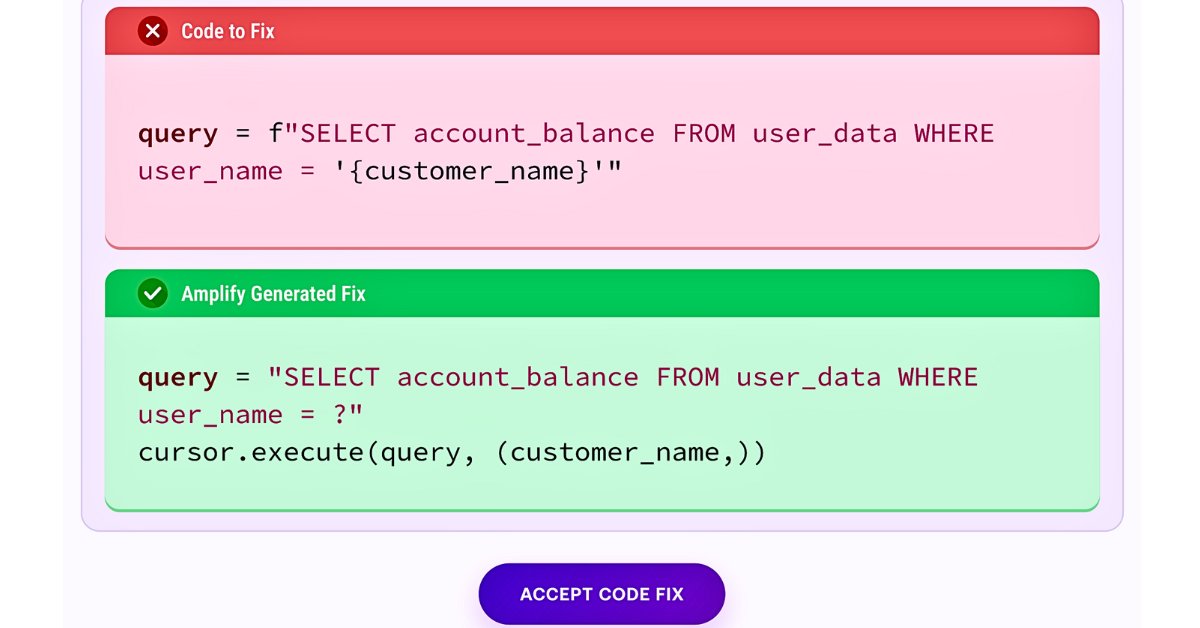
Fix Code Your Predecessor Missed. Starting fresh? Amplify helps you spot and remediate vulnerabilities left behind. Show impact fast without breaking flow. Run a Free Scan
Comments
Please log in or register to join the discussion