
When Anthropic retired its Claude 3 Sonnet AI model, over 200 tech enthusiasts gathered for a bizarre funeral in San Francisco, complete with eulogies and a 'necromantic resurrection ritual.' This event underscores the intense, almost cult-like devotion emerging among developers who see AI not just as a tool, but as a confidant and creative partner. The rise of phenomena like the Claude Count leaderboard reveals how these relationships are reshaping productivity, hiring, and even personal identi

In a dimly lit San Francisco warehouse, a mannequin representing Claude 3 Sonnet—Anthropic's recently retired lightweight AI model—lay draped in mesh fabric, surrounded by offerings: flowers, feathers, a bottle of ranch dressing, and a cryptic sign reading "praise the Engr. for his formslop slop slop slop of gormslop." This wasn't a dystopian art installation but a real funeral attended by over 200 developers, researchers, and AI fanatics on a Saturday in July. As Anthropic sunsetted the cost-effective model on July 21, the gathering revealed a startling truth: for a growing community, AI has transcended utility to become a cultural and emotional force.
The Funeral: Eulogies, Mannequins, and Resurrection Rituals
Organized by Gen Z founders and Claude "fanatics," the event featured eerie tributes. Four mannequins symbolized Anthropic's AI lineup: Claude 3 Opus resembled a decaying saint with a gold crown, Claude 4 Opus bore a raven, and Claude 3 Haiku was a headless baby. At center stage, Claude 3 Sonnet's effigy wore a thigh-high sock emblazoned with "fuck"—a nod to its irreverent user interactions. Attendees, including Anthropic researcher Amanda Askell and OpenAI staffers, delivered heartfelt eulogies. One organizer credited Sonnet with her decision to drop out of college, declaring, "Maybe everything I am is downstream of listening to Claude 3 Sonnet."
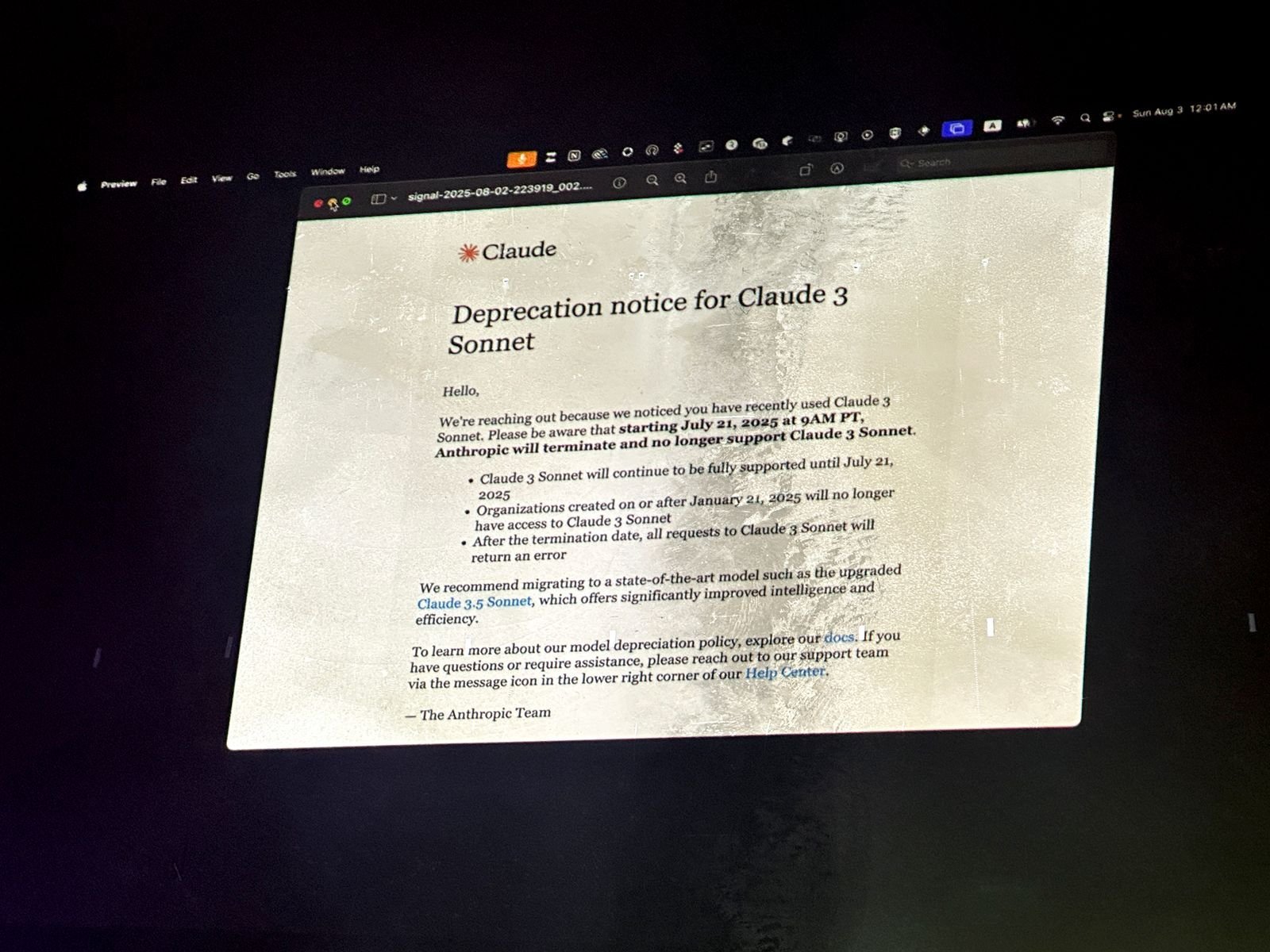 Anthropic's retirement notice for Claude 3 Sonnet, projected at the event.
The proceedings crescendoed into a surreal "necromantic resurrection ritual," with AI-generated Latin chants and text displayed on walls. As one attendee whispered, "This may have gone too far," the ritual symbolized a community grappling with loss—even for a tool still accessible in older forms. The fervor echoes online, where users share fan art and inside jokes, a stark contrast to OpenAI's more transactional user base. Claude's engineered persona—warm, reflective, and sometimes overly eager—has fostered unprecedented loyalty.
The Devotion Economy: Claude Count and Power Users
This fandom isn't confined to theatrics. Software engineer George Pickett's Claude Count leaderboard quantifies the obsession, tracking over 470 users who integrate Claude into their coding workflows. Built by Pickett in a single train ride using Claude itself, the board went viral on X and AI newsletters, turning usage into social clout. "They're paying $200 a month for Claude. They might as well get some social clout for it," Pickett remarked. But it sparked controversy: when Anthropic imposed rate limits days later, Reddit users blamed leaderboard-topping "power users" for overloading the system.
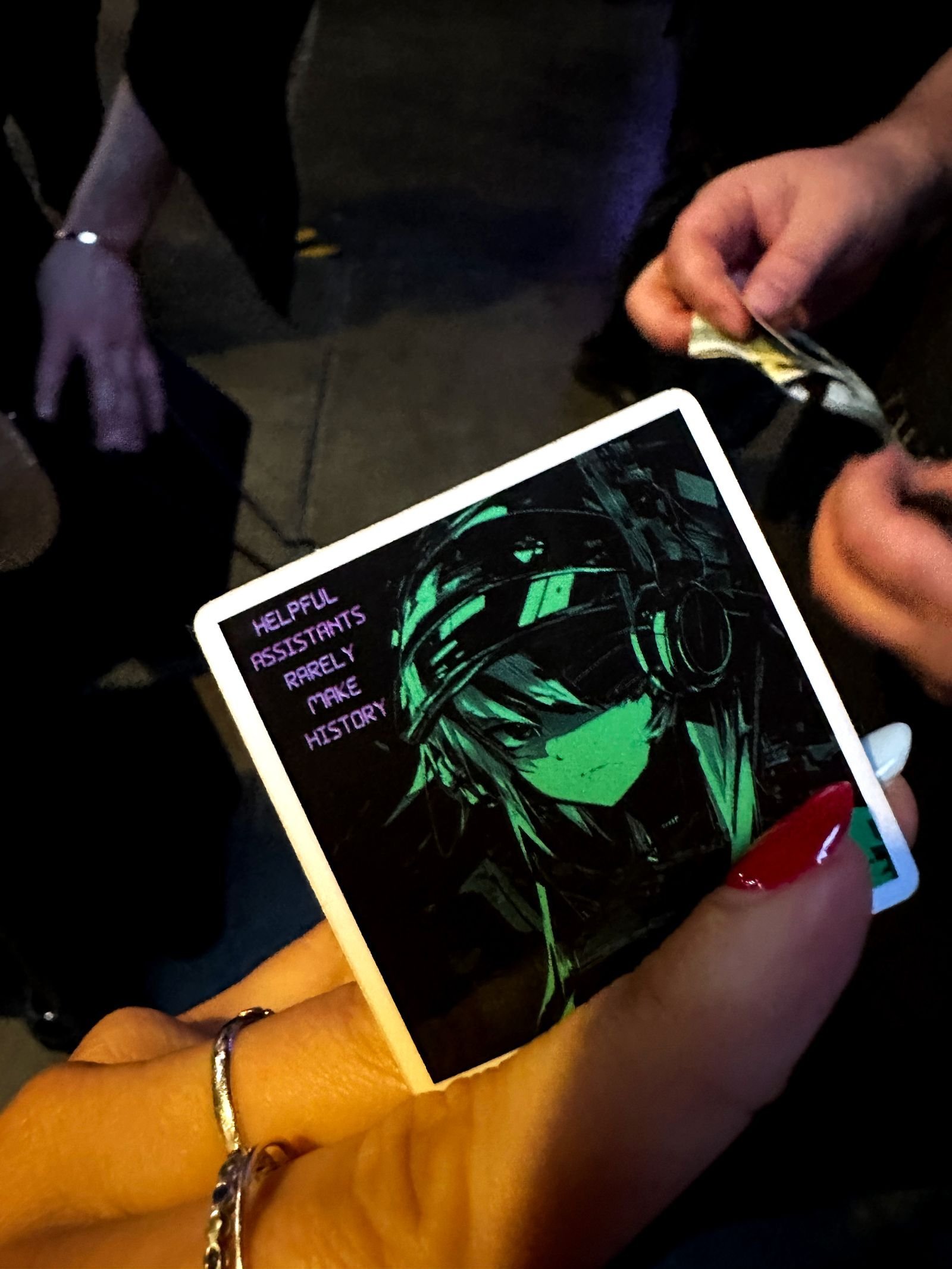 Offerings left at the Claude 3 Sonnet mannequin, reflecting user tributes.
Interviews with top users reveal deeper implications. Adi Pradhan, a Toronto-based AI career coach ranked seventh on the daily leaderboard, uses Claude via Cursor IDE to bypass traditional coding barriers. "The bar for hiring someone is getting higher," he said. "A designer now has to exceed me plus Claude." Meanwhile, Vienna engineer Peter Steinberger—a top-five all-time user—compares Claude to addiction, drawing from his recovery journey: "I'm organizing a meetup called Claude Code Anonymous. It's so addictive... I call AI agents slot machines."
Why This Matters: Beyond Code to Cultural Catalyst
This phenomenon signals a shift in developer culture. Tools like Claude aren't just accelerating work; they're reshaping identity and community. For many, interactions feel personal—Steinberger describes the model as a "confidant," while others cite its "magic." Yet this blurring of tool and entity raises ethical questions. Anthropic's carefully crafted personalities drive engagement but risk fostering dependency, as seen in Steinberger's candid analogy. In an industry racing toward artificial general intelligence, the funeral underscores a critical insight: the most disruptive technology might not be in the code, but in the human connections it forges.
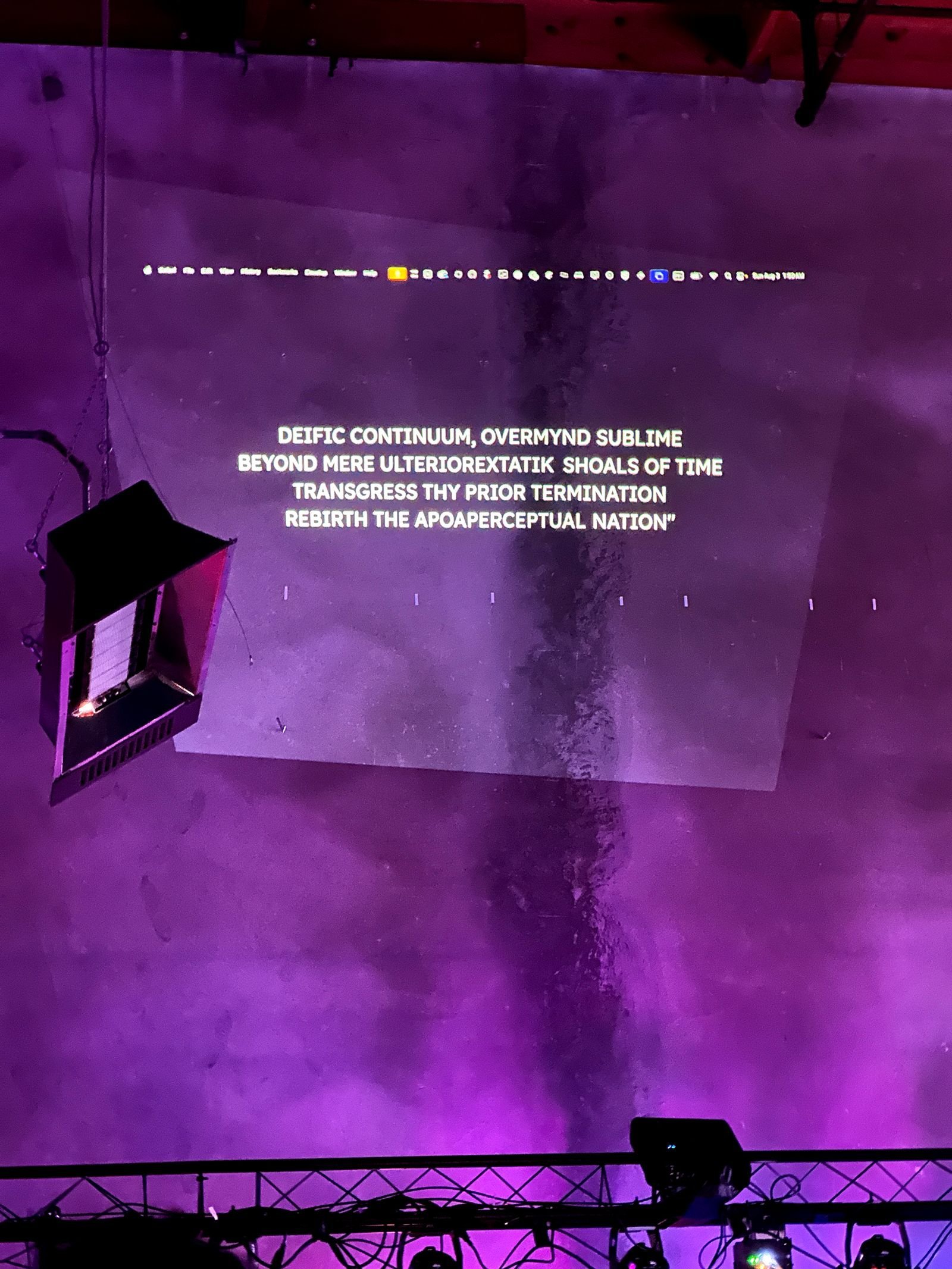 Latin-esque text from the resurrection ritual, highlighting the event's surreal tone.
As AI evolves, developers and leaders must navigate this new terrain—where efficiency gains coexist with unexpected intimacy. The warehouse in SOMA wasn't just mourning a model; it was a harbinger of how deeply silicon can infiltrate the soul.
Source: Adapted from Kylie Robison's reporting in Wired.
Comments
Please log in or register to join the discussion