Intel's open-source Vulkan driver is disabling video encode support on newer Intel GPUs due to insufficient testing infrastructure, highlighting the challenges of maintaining cutting-edge graphics features in open-source drivers.
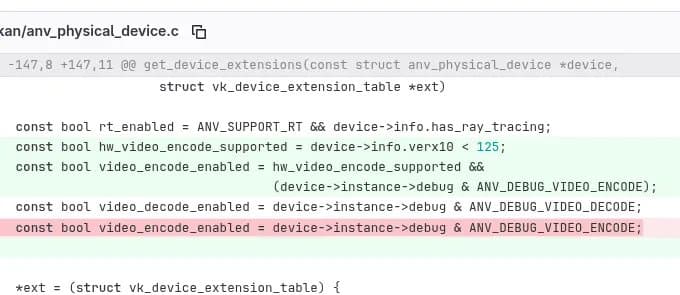
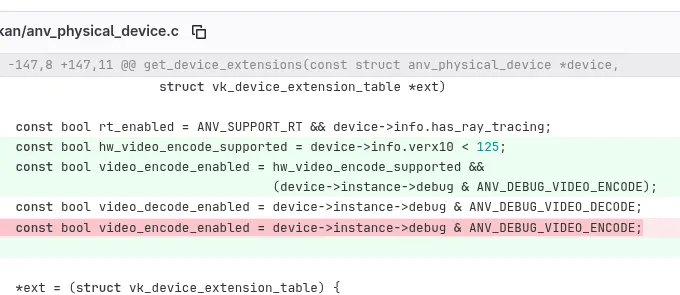
Intel has taken the unusual step of disabling Vulkan Video encode support on newer generations of its graphics hardware, citing insufficient testing infrastructure as the primary reason for this regression.
The Testing Gap Problem
The Intel ANV Vulkan driver, which powers Intel's graphics stack on Linux, has been steadily improving its Vulkan Video capabilities over the past three years. The API, designed as a cross-vendor solution for video encode and decode operations, has seen contributions from various community developers including Red Hat's David Airlie and Igalia engineers.
However, a critical gap has emerged: Intel's own driver engineers lack access to newer hardware generations for testing purposes. This became apparent when a bug report surfaced regarding H.264 Vulkan Video encoding failures with FFmpeg on newer Intel hardware.
Which Hardware is Affected?
The disablement affects all Intel graphics hardware from Gen12.5 onwards, which includes:
- Intel Arc Alchemist discrete GPUs
- Intel Arc Battlemage discrete GPUs
- Intel Meteor Lake integrated graphics
- All subsequent Intel GPU generations
What Remains Functional?
Fortunately, not all Vulkan Video functionality is being disabled. The decode capabilities remain fully operational on these newer hardware generations, ensuring that video playback and related operations continue to work as expected.
The Community Development Story
Interestingly, much of the Vulkan Video work in the Intel ANV driver has come from outside Intel itself. Community contributors from Red Hat, Igalia, and other open-source developers have been the primary drivers of this feature's development.
Intel, meanwhile, has maintained its focus on VA-API (Video Acceleration API) and related technologies like oneVPL, which form the backbone of their video processing strategy.
The Broader Implications
This situation highlights a fundamental challenge in open-source graphics driver development: the dependency on hardware access for testing and validation. Without proper testing infrastructure, even well-intentioned features must be disabled to prevent regressions and ensure stability.
For Linux users with newer Intel hardware, this means a temporary step backward in video encoding capabilities through Vulkan Video. Users will need to rely on alternative APIs like VA-API or platform-specific solutions for their encoding needs.
Looking Forward
The patch disabling Vulkan Video encode support has already been marked for back-porting to the current stable Mesa series, meaning this change will affect users across various Linux distributions in the near term.
The hope within the community is that Intel will either commit resources to improving Vulkan Video support or facilitate access to newer hardware for the open-source developers who have been driving this feature forward.

This situation serves as a reminder of the delicate balance between feature development, testing infrastructure, and hardware access in the open-source graphics ecosystem. While Vulkan Video continues to gain traction across the industry, its implementation on Intel hardware faces temporary setbacks due to practical constraints rather than technical limitations.
Comments
Please log in or register to join the discussion