
Apple’s standalone Siri app marks a fundamental shift in how we interact with AI assistants on mobile devices.
Apple announced iOS 27 at WWDC this week, and one of the most significant changes isn't a feature buried in settings or a minor UI tweak. It's a brand-new app appearing right on your Home Screen: Siri, as a standalone application for the first time.
This is a meaningful departure from how Siri has functioned since its introduction in 2011. For over a decade, Siri existed only as an overlay, a voice-activated layer that appeared on top of whatever you were doing and then disappeared. You couldn't browse past conversations, couldn't see a history of your interactions, and couldn't interact with Siri through a persistent interface. That changes with iOS 27.
What the Siri App Actually Does
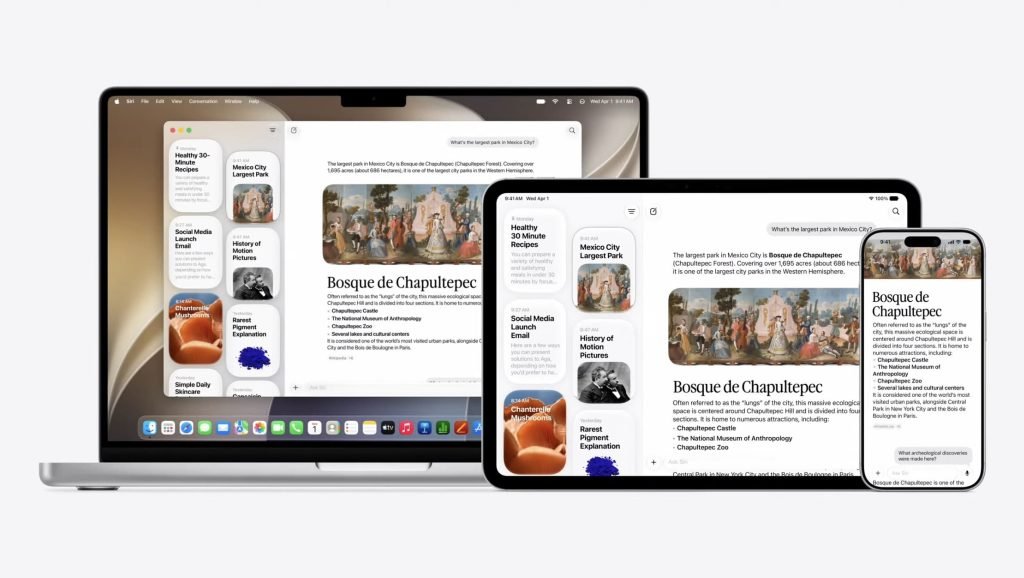
The new Siri app in iOS 27 functions as a chat-style interface, similar to what you'd find in messaging apps or other AI assistants. You can scroll through a stream of your previous conversations, revisit topics you've discussed, and easily start new ones. Think of it as a persistent memory of your relationship with Siri.
One of the practical benefits here is continuity. If you ask Siri about flight options in the morning and then want to follow up in the evening with questions about hotel availability near the airport, that context carries forward naturally. No more repeating yourself or re-establishing context from scratch.
The app also supports file and photo uploads, allowing you to send images and documents directly to Siri for analysis. This moves Siri beyond voice commands and into territory that feels more like a collaborative assistant, one you can share materials with and get detailed responses.
iCloud Sync Across Devices
The Siri app syncs via iCloud, which means your conversation history follows you everywhere. Start a conversation on your iPhone, continue it on your Mac, and reference it on your iPad. This cross-device continuity is one of Apple's strongest ecosystem plays, and applying it to Siri conversations makes the assistant feel more like a cohesive service rather than a collection of separate implementations on each device.
The app is coming to all of Apple's platforms: iPhone with iOS 27, Mac with macOS 27, Vision Pro with visionOS 27, iPad with iPadOS 27, and Apple Watch with watchOS 27. The experience should be largely consistent across devices, though the form factors will obviously shape how you interact with it.
The AI Capabilities Powering It
The Siri app isn't just a visual wrapper around the old Siri. It's built on top of the new Apple Intelligence and Siri AI capabilities that Apple introduced alongside iOS 27. These include access to broader world knowledge, personal context from your device, and on-screen awareness.
Personal context is particularly significant. Siri AI can now reference your messages, emails, photos, and other data on your iPhone to answer questions with specificity. Instead of generic responses, you get answers informed by your actual life. Ask about your upcoming trip, and Siri can pull details from your email confirmations, calendar entries, and even photos from previous visits to the same destination.
On-screen awareness adds another layer. Siri can recognize what's currently displayed on your screen and respond to questions about it. Looking at a restaurant listing in Maps? Ask Siri about its hours or menu. Reading an article? Ask for a summary. This contextual understanding reduces the friction of switching between apps to get information.
Compatibility: The Apple Intelligence Requirement
Here's where things get restrictive. The Siri app won't be available on every iPhone. It requires Apple Intelligence support, which limits it to the iPhone 15 Pro and newer models:
- iPhone 15 Pro
- iPhone 15 Pro Max
- iPhone 16
- iPhone 16 Plus
- iPhone 16 Pro
- iPhone 16 Pro Max
- iPhone 17
- iPhone 17e
- iPhone Air
- iPhone 17 Pro
- iPhone 17 Pro Max
This compatibility wall reflects the hardware requirements of Apple Intelligence. The on-device processing needed for personal context, screen awareness, and the enhanced language models requires the neural engine and memory capabilities found in the A17 Pro chip and newer. Older devices simply don't have the computational headroom to run these features locally while maintaining the performance and privacy standards Apple expects.
For users with iPhone 14 or earlier, Siri will continue to function as it always has, through voice activation and the existing overlay interface. But the standalone app experience, with its conversation history, file uploads, and AI-powered personal context, will remain out of reach.
Why This Matters for the Ecosystem
Apple has been adding new default iPhone apps at a steady pace recently. Image Playground arrived with iOS 18.2 in December 2024, and iOS 26 introduced Preview and Games apps. Each addition expands what comes pre-installed on the iPhone and reduces reliance on third-party alternatives.
The Siri app fits this pattern, but with higher stakes. Apple isn't just adding a utility app. It's establishing Siri as a visible, persistent presence on the Home Screen, giving it the same visual weight as Messages or Mail. This signals a long-term commitment to AI as a core part of the iPhone experience, not just a behind-the-scenes feature.
For the broader mobile industry, this move puts pressure on competitors. Google Assistant and Samsung's Galaxy AI don't have equivalent standalone apps with persistent conversation histories and cross-device sync. Apple is betting that making AI assistants more visible and more persistent will drive engagement and deepen ecosystem loyalty.
The ecosystem lock-in consideration here is real. Once your Siri conversations, personal context, and cross-device history are built up within Apple's ecosystem, migrating to a different platform means losing all of that accumulated context. It's a subtle but powerful retention mechanism.

What to Expect at Launch
iOS 27 is expected to arrive this fall alongside the iPhone 17 lineup. The Siri app will be part of the default app set on supported devices, appearing on the Home Screen after the update. No setup or download required.
For users with compatible devices, this represents a tangible improvement in how you'll interact with Siri daily. The shift from a transient voice overlay to a persistent, searchable, and context-aware assistant is the kind of change that reshapes habits over time. It's not flashy, but it's substantial.
Comments
Please log in or register to join the discussion