Discover how Nix transformed a developer's chaotic workflow into a reproducible, version-controlled ecosystem across Pixelbook and MacBook. From AI-assisted hardware fixes to declarative development environments, this journey showcases Nix's power to tame system complexity.
From Digital Chaos to Declarative Order: A Nix Transformation Story
Jimmy FF, a self-described disorganized developer, faced a familiar cycle: chaotic workspaces littered with scattered configs and tools, followed by painful system resets. That changed when he discovered Nix—a declarative package manager that evolved into an operating system philosophy. His 12-month journey reveals how Nix delivers reproducible environments across devices, turning technical debt into version-controlled precision.
Resurrecting Hardware: The Pixelbook’s Second Life
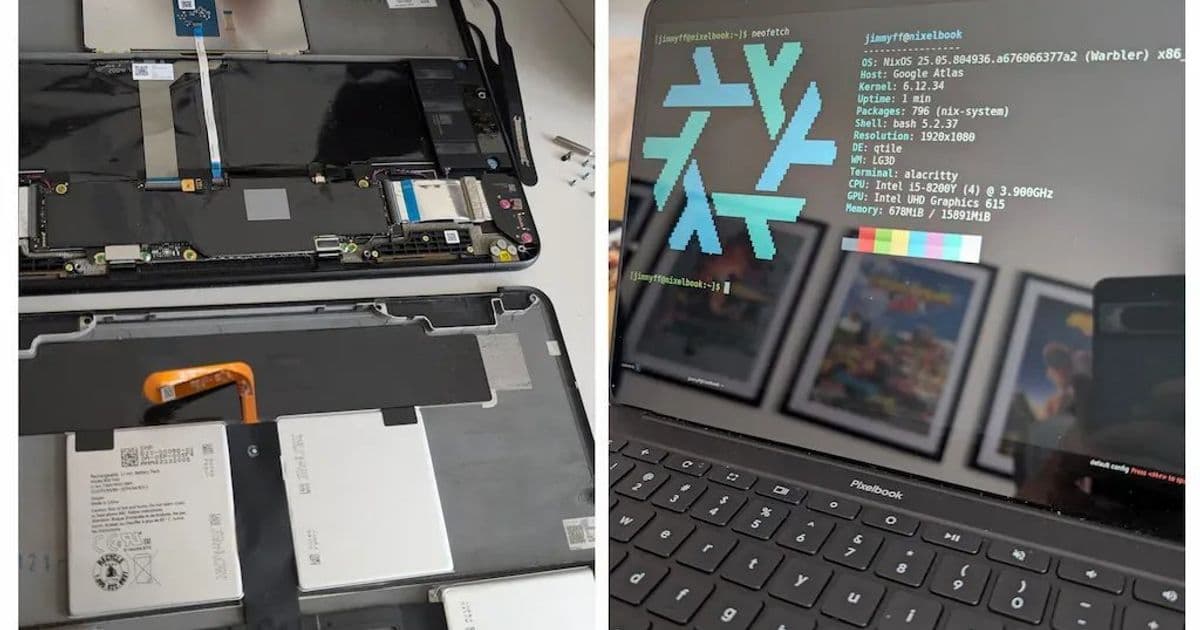
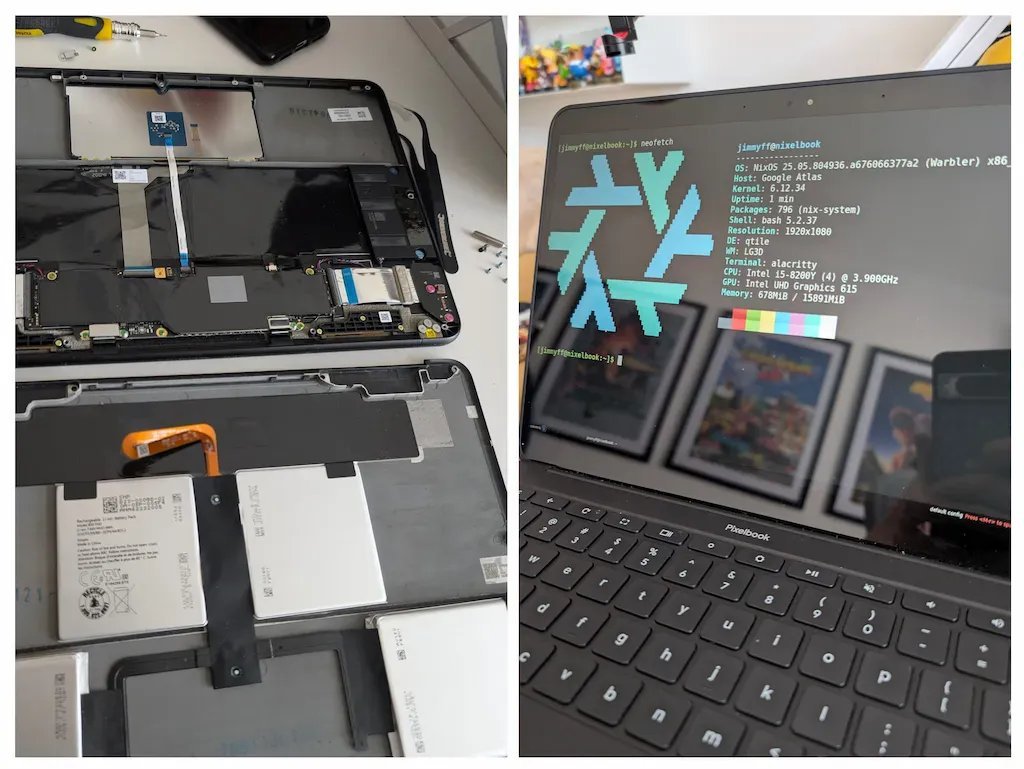
Jimmy’s first breakthrough came with a sluggish Pixelbook Go. After disabling BIOS write protection (requiring a physical battery disconnect!) and installing Coreboot, he deployed NixOS. The result? A "Nixelbook" that outperformed its ChromeOS origins. "The Pixelbook had never felt so snappy," he reports. Hardware quirks—like the AI button and speakers—remained challenging until an unconventional solution emerged later.
{{IMAGE:2}}
Conquering macOS with nix-darwin
Emboldened, Jimmy targeted his primary M1 MacBook Pro—a "mess" of global installs and lingering dependencies. Using nix-darwin, he applied NixOS principles to macOS, navigating BSD/Linux differences and aarch64-darwin builds. The win? Shared configurations across architectures: "Every aspect is deliberate, considered and under version control."
Flakes & direnv: The Dev Environment Revolution
Nix Flakes became Jimmy’s secret weapon for project-specific environments. By pinning SDK versions and toolchains in declarative configurations, combined with direnv, environments materialize upon entering project directories—vanishing cleanly afterward. This reproducibility empowered him to adopt nushell and build custom scripts (gm.nu, dartboard.nu) for monorepo management. "I’m seeing qualitative improvements to my developer experience," he notes, sharing his flake examples on GitHub.
The AI Pivot: Solving "Impossible" Hardware Issues
The Nixelbook’s audio drivers stumped Jimmy—until he partnered with Claude Code. Supervising the AI, they iterated through kernel logs and configuration errors, ultimately discovering a missing ChromeOS topology file. The fix, now open-sourced, exemplifies Nix’s configurability: "It literally brought music to my ears."
The Future: Pocket-Sized Nix and Beyond
Jimmy’s next frontier? Configuring his Pixel phone via Google’s Linux Terminal for Android. Cloud infrastructure orchestration with Nix also beckons. For developers drowning in toolchain sprawl, his experience proves Nix is more than package management—it’s an architectural paradigm shift. As Jimmy concludes: "It’s refactored my chaotic digital life into something structured, reproducible, and dependable."
Source: Beyond package management: How Nix refactored my digital life by Jimmy FF.
Comments
Please log in or register to join the discussion