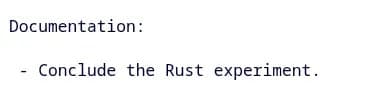
Linux kernel 7.0 officially transitions Rust from experimental to permanent status, signaling broad industry acceptance after years of development and deployment across millions of Android devices.
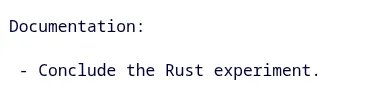
The Linux kernel community has reached a pivotal milestone with the upcoming 7.0 release, formally concluding Rust's experimental status and cementing its position as a permanent component of the operating system's core infrastructure. This decision follows extensive real-world validation across production environments, including widespread deployment in Android devices and multiple Linux distributions.
From Experiment to Core Component
Miguel Ojeda, lead developer for Rust in Linux, submitted the official patch removing the "experimental" designation from kernel documentation. In his announcement, Ojeda emphasized this transition reflects concrete commitment: "The experiment is done, i.e. Rust is here to stay. This signals commitment from the kernel to companies and other entities to invest more into it." The change appears in the Rust pull request for Linux 7.0.
Performance and Stability Implications
While benchmark data remains scarce due to Rust's selective implementation in drivers and filesystems, early adopters report tangible benefits:
- Memory Safety: Rust's ownership model prevents entire classes of memory-corruption vulnerabilities prevalent in C code, reducing kernel panic incidents
- Concurrency Handling: Built-in concurrency safeguards decrease race condition risks in multi-threaded operations
- Build Optimization: The new
__rust_helperannotation enables finer control over Link Time Optimization (LTO), potentially improving binary density
Deployment Footprint and Compatibility
Rust's production credentials are well-established:
- Android: Over 300 million devices utilize Rust-based kernel components
- Distributions: Fedora, Arch Linux, and Gentoo ship Rust-enabled kernels
- Hardware Support: NVMe drivers and ASUS laptop firmware leverage Rust for hardware interaction Compatibility remains prioritized through maintained C bindings, allowing gradual adoption without breaking existing modules.
Developer Recommendations
For homelab builders and kernel developers:
- Enable CONFIG_RUST in kernel configurations when compiling 7.0+ kernels
- Prioritize Rust for new driver development, especially security-critical components
- Utilize rustc_codegen_gcc for non-LLVM toolchain compatibility
- Reference the updated Kernel Rust Documentation for coding standards
The Rust Working Group continues expanding subsystem coverage, with network stack and scheduler integrations under active development. This official endorsement accelerates Rust's trajectory toward becoming a foundational kernel language alongside C.
Comments
Please log in or register to join the discussion