A long-neglected bug affecting AMD's aging Hainan GPUs finally gets resolved in Linux 7.0 with a simple shader clock adjustment.
After languishing for five years, a bug affecting AMD's aging Hainan GPUs has finally been resolved in Linux 7.0. The fix addresses GPU hangs that plagued certain Radeon graphics cards since Linux 5.4, closing a bug report that dates back to 2021.

The issue specifically impacted the Radeon R5 M430 mobile discrete GPU when operating at high performance levels. Users had reported that their systems would hang or freeze when the GPU attempted to ramp up its clock speeds, but the problem mysteriously disappeared when using older Linux 4.xx kernel releases.
Understanding the Hainan GPU
Hainan was part of AMD's GCN 1.0 architecture, which launched alongside other "Southern Islands" GPUs including Oland, Cape Verde, Pitcairn, and Tahiti. These graphics processors represented AMD's transition to the Graphics Core Next architecture and were widely used in both desktop and mobile systems from the early 2010s.
The affected GPUs, identified by device IDs 0x6660 and 0x666F, were particularly common in budget laptops and entry-level discrete graphics configurations. For users still relying on these aging systems, the GPU hang issue had become an increasingly frustrating limitation as they upgraded their Linux distributions.
The Simple Fix That Took Years
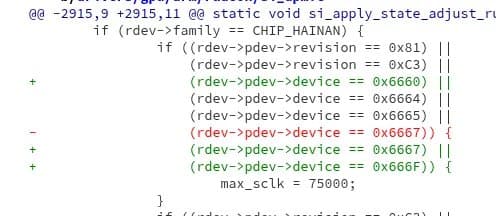
What makes this story remarkable is how straightforward the solution turned out to be. The fix required only minor adjustments to both the legacy Radeon kernel graphics driver and the modern AMDGPU kernel graphics driver. Developers needed to add the affected device IDs to existing shader clock workarounds that already existed for other GPU models.
Specifically, the patch adjusted rules around maximum shader clock speeds for the 0x6660 and 0x666F device IDs. This small change was sufficient to prevent the GPU hangs that had frustrated users for years.
Cross-Driver Compatibility
Since AMD GCN 1.0 GPUs are supported by both the legacy Radeon driver and the modern AMDGPU driver, developers applied the same fix to both codebases. This dual approach ensures that users running either driver stack will benefit from the fix once they update to Linux 7.0 or receive the backported patch.
What This Means for Users
The fix has been merged into Linux 7.0 and marked for backporting to stable kernel versions. This means users with affected Hainan GPUs should see the fix arrive in their systems within days or weeks, depending on their distribution's update policies.
For those still using systems with these aging GPUs, this fix could significantly improve system stability, particularly when running graphics-intensive applications or when the GPU attempts to boost its performance. While these graphics cards are now quite old by technology standards, they remain in use in many budget systems and older laptops.
The Broader Context
This resolution highlights an interesting aspect of open-source development: sometimes bugs can persist for years despite having relatively simple solutions. The Hainan GPU issue sat dormant from 2021 until this week's resolution, demonstrating how certain hardware configurations can fall through the cracks when developer attention shifts to newer technologies.
For Linux users with aging hardware, this fix serves as a reminder that the open-source community continues to support even relatively old components, ensuring that systems can remain functional and stable long after their initial release.
Comments
Please log in or register to join the discussion