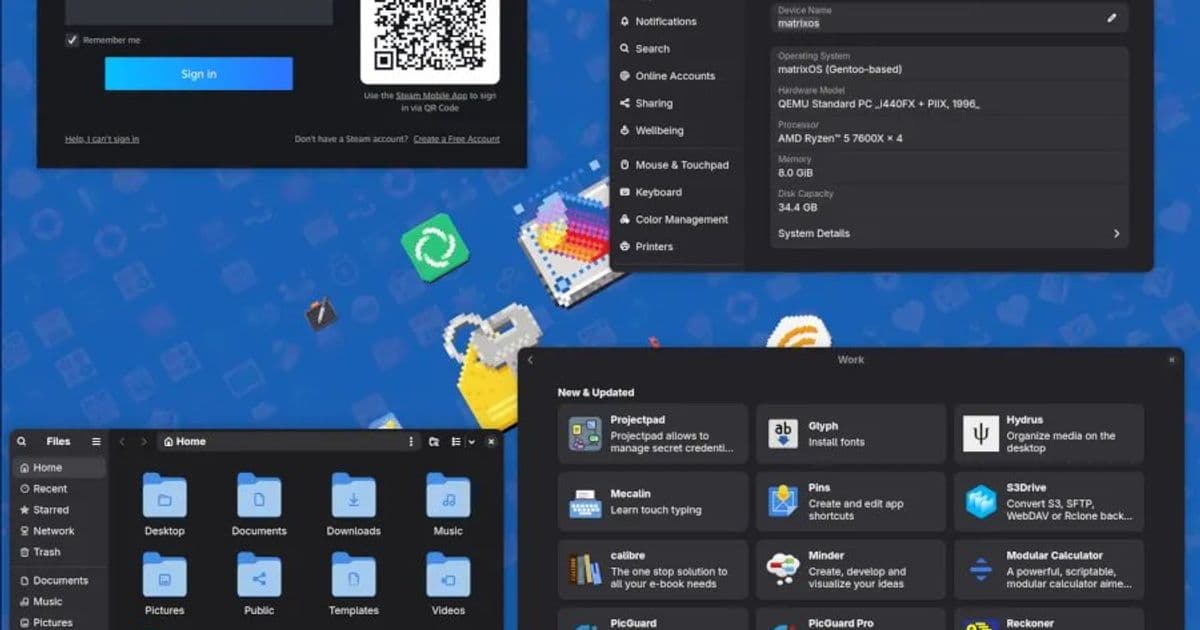
Former Sabayon Linux creator Fabio Erculiani unveils matrixOS, an immutable Gentoo-based distribution with atomic upgrades, gaming optimizations, and modern Linux technologies.
Longtime Linux users may recall the Sabayon Linux distribution that was Gentoo-based and focused on a nice out-of-the-box experience from the mid 2000s through 2019 before fading away after 2018. Sabayon Linux creator Fabio Erculiani has now announced he's begun working on a new Linux distribution called matrixOS.
Like Sabayon Linux, matrixOS is also based on Gentoo Linux but this "gaming ready" distribution takes a different approach by being an immutable, atomic distribution. matrixOS describes itself as:
matrixOS is a Gentoo-based Linux distribution that blends the power and customizability of Gentoo with the reliability of OSTree atomic upgrades (yes bootc will come). It comes with Flatpak, Snap and Docker ready to go out of the box. Our two main goals are:
- Reliability: Providing a stable, immutable base system through OSTree, which allows for atomic upgrades and rollbacks.
- Gaming-Friendly: Shipping with the Steam loader, Lutris and optimizations to get you gaming on both NVIDIA and AMD GPUs with minimal fuss.
The matrixOS distribution aims to always ship with the latest Mesa and NVIDIA drivers, is already shipping the "NTFS Plus" modern NTFS driver, Steam is ready to go, Google Antigravity is included as part of their AI push, the Btrfs file-system is being used by default with Zstd compression, and there is support for x86-64-v3 compiler flags.
The Return of a Linux Pioneer
Fabio Erculiani's return to Linux distribution development is significant for several reasons. Sabayon Linux, which he created, was known for its user-friendly approach to Gentoo, making the notoriously complex Gentoo experience more accessible to average users. The distribution gained popularity in the mid-2000s for its "SpinBase" edition that provided a minimal Gentoo experience, and its "KDE" and "GNOME" editions that offered polished desktop environments.
Sabayon's decline after 2018 coincided with broader shifts in the Linux ecosystem, including the rise of immutable distributions like Fedora Silverblue and the increasing popularity of Arch-based distributions. Now, with matrixOS, Erculiani is embracing the immutable trend while maintaining Gentoo's core philosophy of user control and customization.
What Makes matrixOS Different
Immutable Architecture with Gentoo Flexibility
The combination of Gentoo's source-based package management with an immutable base is particularly interesting. While most immutable distributions use pre-compiled binaries, matrixOS aims to maintain Gentoo's famous USE flags and customization options. This could potentially offer the best of both worlds: the reliability of atomic updates with the performance optimizations that Gentoo users expect.
Gaming-First Approach
matrixOS's gaming focus is evident in its feature set:
- Latest Mesa drivers for optimal AMD GPU performance
- Latest NVIDIA drivers with proprietary support
- Steam integration out of the box
- Lutris for easy game management
- Flatpak and Snap support for containerized applications
- Docker for containerized gaming services
The inclusion of Google Antigravity suggests AI/ML gaming optimizations may be part of the distribution's future roadmap.
Modern Filesystem and Compression
Btrfs with Zstd compression is a smart choice for a gaming distribution. Btrfs offers features like snapshots and subvolumes that complement the immutable design, while Zstd provides excellent compression ratios with fast decompression speeds - crucial for gaming performance.
Technical Implementation
OSTree and Atomic Updates
The use of OSTree for atomic upgrades and rollbacks is becoming increasingly common in modern Linux distributions. This approach ensures that system updates can be applied safely and rolled back if issues occur - particularly important for gaming systems where stability is crucial.
The mention of "bootc will come" suggests future integration with the Linux Boot Container project, which would further enhance the distribution's container-based approach to system management.
x86-64-v3 Support
Support for x86-64-v3 compiler flags indicates that matrixOS is targeting modern hardware with advanced instruction set extensions. This can provide significant performance benefits for both gaming and general computing tasks.
How Does It Compare?
matrixOS enters a crowded field of gaming-focused Linux distributions. Here's how it compares to some popular alternatives:
| Distribution | Base | Immutable | Package Manager | Gaming Features |
|---|---|---|---|---|
| matrixOS | Gentoo | Yes | Portage/OSTree | Steam, Lutris, latest drivers |
| CachyOS | Arch | No | Pacman | Gaming repositories, optimized packages |
| Garuda Linux | Arch | No | Pacman | Gaming performance tweaks |
| Fedora Gaming | Fedora | Yes | Flatpak/OSTree | Gaming repositories |
| Pop!_OS | Ubuntu | No | APT | NVIDIA optimizations |
Availability and Future Development
Those wanting to learn more about matrixOS can download it and find out all the details over on GitHub. The project appears to be in active development, with regular commits and community engagement.
The Linux community will be watching closely to see how matrixOS evolves, particularly given Erculiani's track record with Sabayon. The combination of Gentoo's flexibility with modern immutable architecture principles could potentially create a compelling option for Linux gamers who want both performance and reliability.
Looking Ahead
As someone who has followed Linux gaming developments for years, I'm particularly interested in how matrixOS will handle the tension between Gentoo's source-based nature and the immutable model. Will users be able to customize their USE flags while maintaining the benefits of atomic updates? How will the distribution balance the desire for cutting-edge packages with system stability?
I'll be running some matrixOS benchmarks soon to see how this Gentoo-based Linux distribution is competing with the likes of Arch Linux based CachyOS and others. The results should provide interesting insights into the performance trade-offs of this unique approach to Linux gaming.
The development of matrixOS represents an interesting evolution in the Linux distribution landscape. By combining the customization potential of Gentoo with the reliability of immutable systems, Erculiani may have found a sweet spot that appeals to both power users and those seeking a stable gaming platform. Whether matrixOS can gain significant traction in the competitive Linux gaming space remains to be seen, but it's certainly a project worth watching.
Comments
Please log in or register to join the discussion