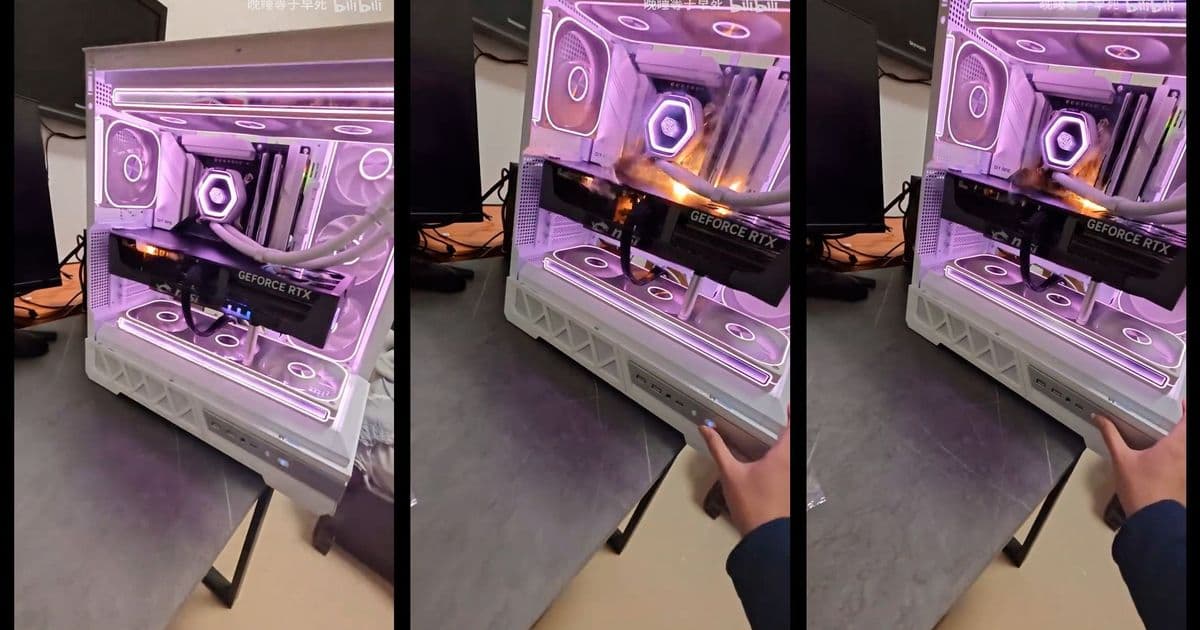
A $3,299 GeForce RTX 5090 caught fire during boot-up in China, highlighting the dangers of unsanctioned GPU imports and the challenges of warranty coverage under US export restrictions.
A dramatic incident involving a high-end graphics card has sparked concerns about the risks of importing restricted hardware into China. A Bilibili user's brand-new MSI GeForce RTX 5090 32G Gaming Trio OC reportedly caught fire during its first boot-up, turning what should have been a premium gaming upgrade into a charred paperweight worth approximately $3,299.
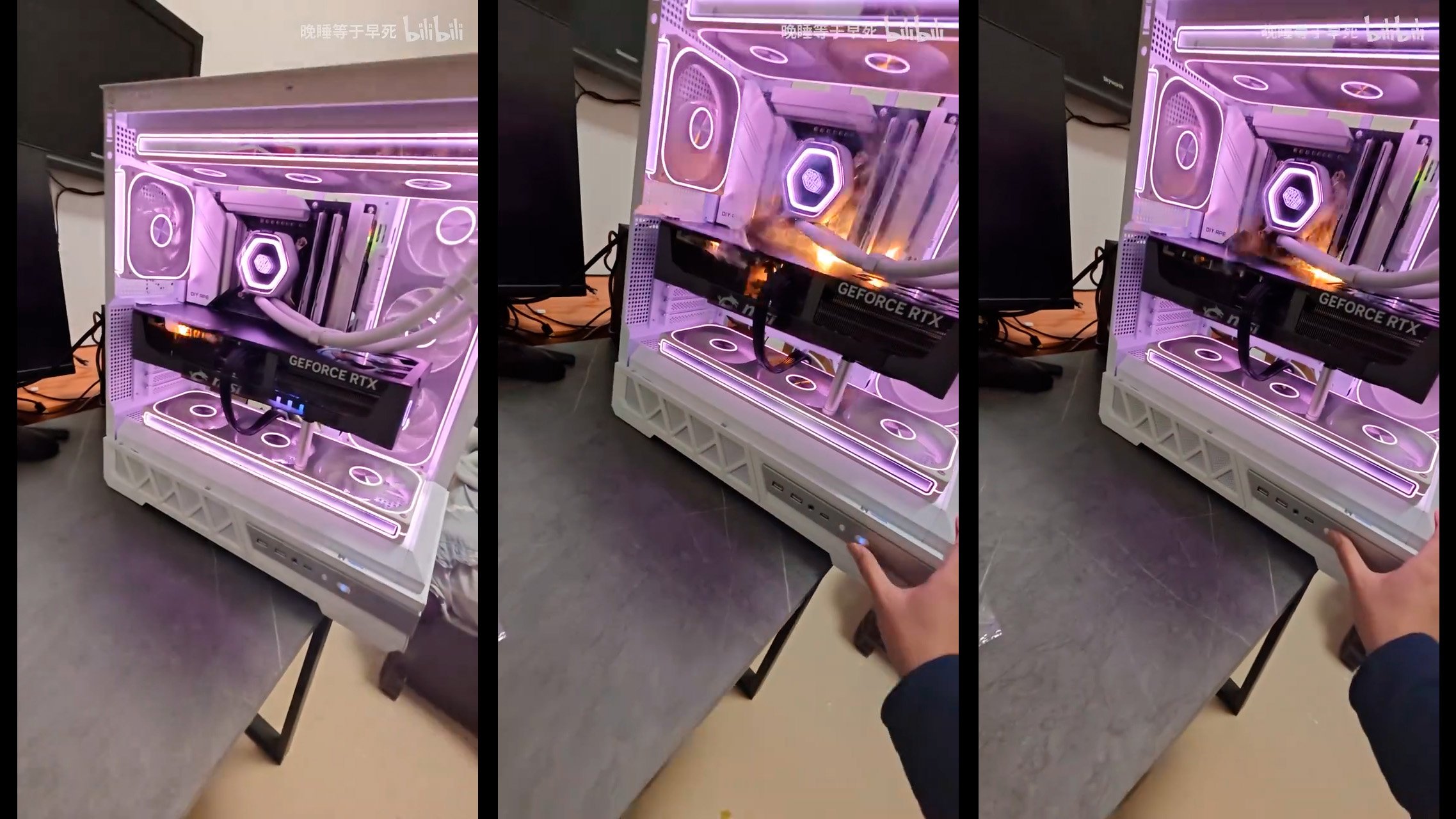
The incident, captured in a five-second viral video, shows the graphics card emitting sparks and smoke as the user desperately attempts to power down the system. The fire appears to have originated from multiple points simultaneously rather than a single failure location, leaving burn marks on the motherboard's chipset.
Several factors complicate this unfortunate situation. The GeForce RTX 5090 is subject to US export restrictions, making it unavailable through authorized channels in China. Nvidia offers a special GeForce RTX 5090D and 5090D V2 specifically for the Chinese market, but these sanctioned models come with official warranty coverage that the imported version lacks.
The user's power supply situation remains unclear. While the 16-pin power connector survived without melting - a notable improvement over some earlier RTX 50-series incidents - the power supply specifications were not disclosed. The user mentioned the same unit worked fine with a GeForce RTX 5060, but that card's significantly lower power requirements make direct comparisons difficult.
This incident highlights the broader challenges facing Chinese PC enthusiasts seeking cutting-edge hardware. The street price for the MSI model hovers around $3,299 in the US market, but Chinese buyers typically pay $4,000 to $5,000 due to import costs and market dynamics. Without official warranty coverage for unsanctioned imports, the user faces limited repair options during the Chinese New Year holiday period when many repair shops are closed.
The fire's origin from multiple points suggests potential issues beyond simple power delivery problems. If the damage is limited to the PCB, skilled technicians might be able to transplant the GB202 GPU die and GDDR7 memory chips to a new board. However, if these core components were damaged, the card would likely be beyond economical repair.
This incident serves as a cautionary tale about the risks of black market hardware imports, particularly for expensive components where warranty and support are crucial. For Chinese gamers, the GeForce RTX 5090D V2 offers nearly identical gaming performance to the standard 5090 while providing official support and warranty coverage - making it a more prudent choice despite the initial appeal of importing the full-power version.
The broader context includes ongoing US export restrictions that have created a parallel market for high-end gaming hardware in China. These restrictions, intended to limit China's access to advanced computing technology, have instead driven up prices and created situations where consumers take risks with unsupported hardware to access the latest technology.
As the PC hardware community watches this situation unfold, it raises important questions about the balance between technological access, regulatory compliance, and consumer protection in an increasingly complex global market for high-performance computing components.
Comments
Please log in or register to join the discussion