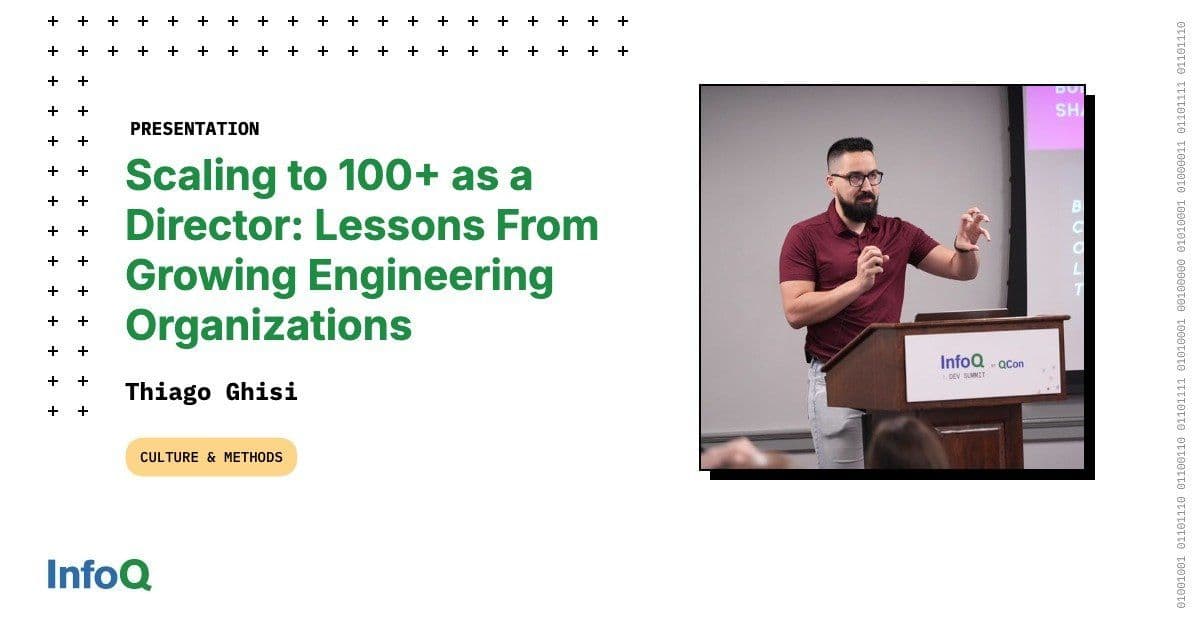
Engineering Director Thiago Ghisi shares hard-won lessons from scaling organizations at Nubank, Apple, and Amex, revealing how leaders must evolve their approach through three distinct phases of growth.
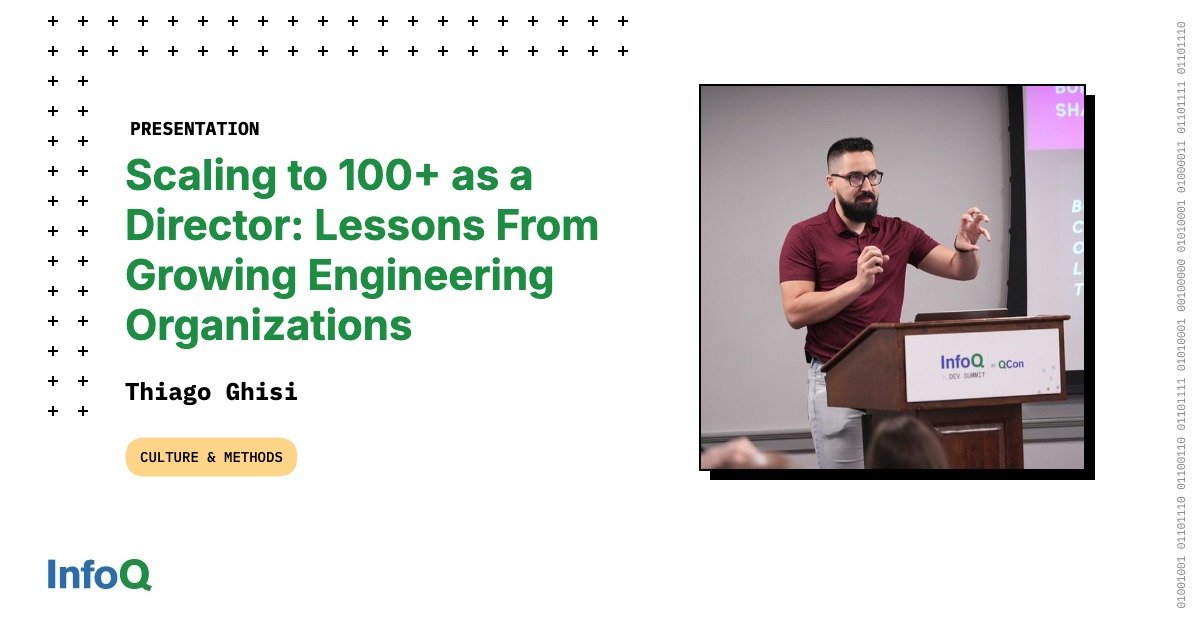
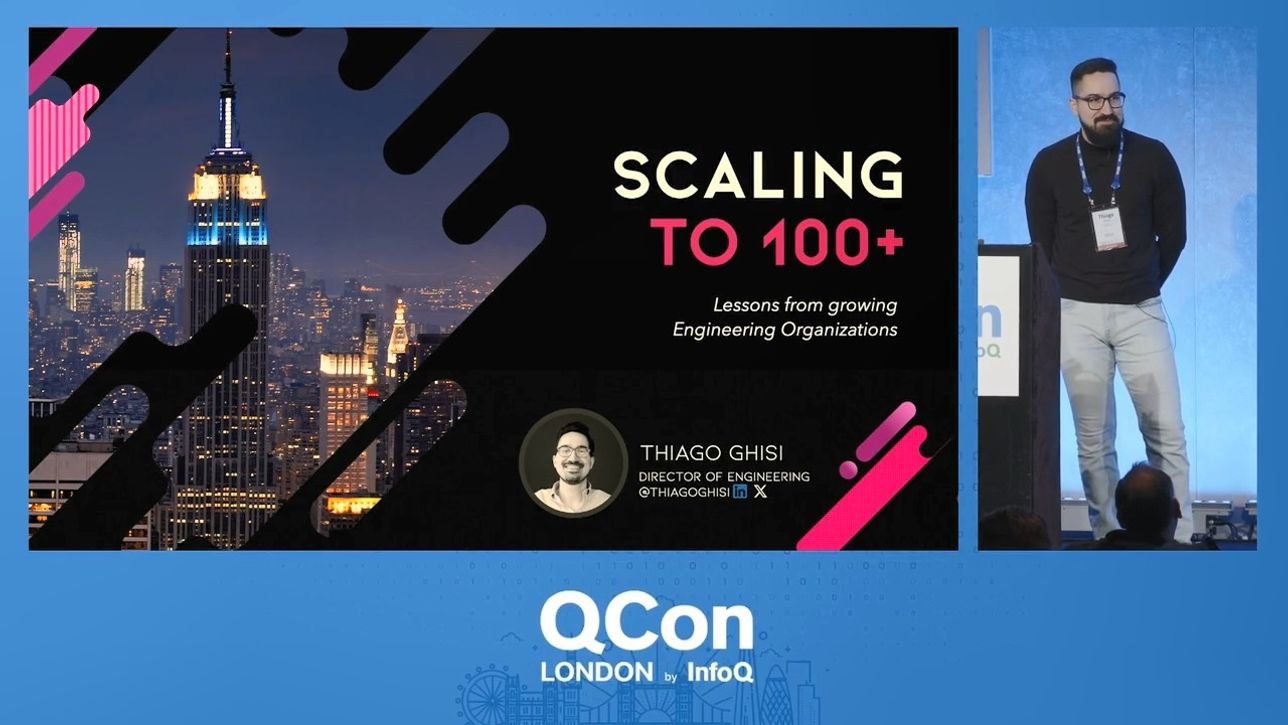
Engineering leadership undergoes fundamental transformations as organizations scale from 30 to 100+ engineers. In his QCon London talk, Thiago Ghisi, Director of Engineering at Nubank, detailed the structural shifts required at each growth phase based on his experience scaling teams at Apple, American Express, and Nubank.
The Three Critical Growth Phases
Phase 1: Establishing Foundations (30-50 Engineers)
- Operational Cadence: Create consistent rhythms for 1:1s, standups, planning, and knowledge sharing. "Cadence is the operating system of your organization," Ghisi emphasizes. Without this foundation, scaling falters.
- Performance Management: Proactively manage both low and high performers. "It's almost never too early to start a performance improvement plan," Ghisi notes, citing recurring patterns in underperformance that emerge across organizations.
- Decision Velocity: Prioritize progress over perfection. "A bad decision is better than no decision at all. Being wrong is better than being vague."
Phase 2: Building Leadership Infrastructure (50+ Engineers)
- Form Cohesive Leadership Teams: Create opinionated leadership teams with comparable experience levels. "This was the highest leverage move enabling scaling from 50 to 100+," Ghisi states.
- Shape Long-Term Culture: Address systemic problems through rituals like book clubs (e.g., observability deep dives) and explicit cultural modeling. "Nothing speaks louder than who you fire or promote."
- Peer-First Mentality: Treat peer managers as your primary team. This enables resource sharing across teams when company priorities shift.
Phase 3: Strategic Optimization (100+ Engineers)
- Level Up Systems: Continuously calibrate expectations across teams and roles. Balance seniority distribution to avoid capability gaps.
- Strategic Reorgs: Treat organizational structure as a living artifact. "Dry run changes first, then roll out in waves," Ghisi advises, comparing it to continuous deployment.
- Become a Driving Bar Raiser: Shift from authority to influence by modeling desired behaviors and sponsoring high-impact initiatives.
The Three Levels of Impact Framework
Ghisi's core framework helps leaders allocate effort across organizational boundaries:
Org Level (Direct control):
- Establish performance standards
- Optimize team structures
- Maintain delivery cadence
Skip-Level (Influence through relationships):
- Align with adjacent departments
- Share successful patterns from your org
- Help peers' leadership teams improve
Company Level (Indirect influence):
- Contribute to engineering-wide initiatives
- Partner with HR on performance systems
- Shape technology vision through blogs/talks
"You must understand the outside-in context—customer needs, investor expectations—before acting inside-out from your team outward," Ghisi explains. 
Career Advancement at Scale
For leaders targeting executive levels, Ghisi shares promotion-critical practices:
- Build Goodwill: "At senior levels, impact alone isn't enough. Relationships determine promotions."
- 10-30-50 Rule: Be top 10% in one core skill, top 30% in another, and never below top 50% in any critical competency.
- Write Expectations: Document promotion criteria tied to specific measurable outcomes.
- Evolve Your Role: Transition from implementer → solver → finder → driver who executes company-critical initiatives.
Key Takeaways
- Managerial overhead is real: Teams smaller than 5 engineers often underperform
- Reorgs aren't inherently bad: Continuous micro-adjustments prevent traumatic large-scale restructures
- Documentation is non-negotiable: "Write down decisions to combat organizational telephone game distortion"
- Treat executives like humans: Build genuine connections beyond transactional updates
Ghisi's presentation materials are available on InfoQ. For ongoing insights, follow his podcast Engineering Advice You Didn't Ask For and Nubank's engineering blog.
Thiago Ghisi is Director of Engineering at Nubank, where he leads mobile platform development for over 100 engineers. With nearly 20 years at companies including Apple and American Express, he writes extensively about engineering leadership on LinkedIn and Twitter.
Comments
Please log in or register to join the discussion