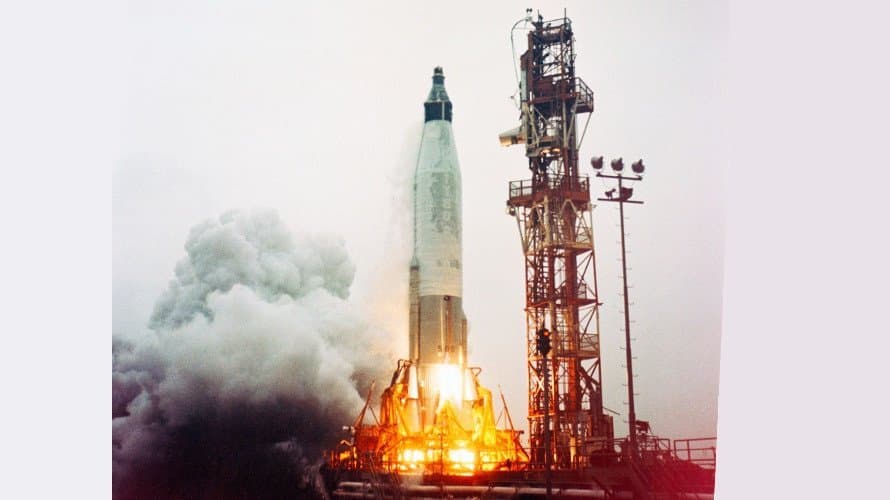
NASA's 1960 Mercury-Atlas 1 mission ended in catastrophic failure just 58 seconds after liftoff, revealing critical flaws in the marriage of cutting-edge rocket engineering and spacecraft design. This pivotal disaster forced a radical redesign of launch vehicle interfaces and trajectory planning, underscoring the brutal realities of pioneering aerospace technology. Its lessons in structural integrity and risk management remain foundational for modern space systems engineering.
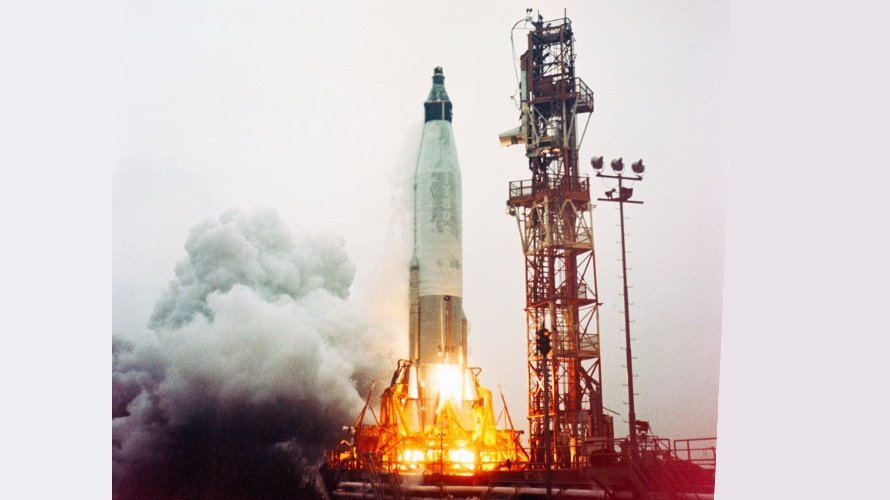
The gleaming stainless-steel Atlas rocket stood poised on Cape Canaveral’s LC-14 on July 29, 1960—a symbol of American ambition in the Cold War space race. Yet 58 seconds into its flight, Mercury-Atlas 1 (MA-1) disintegrated in a violent breakup that scattered debris into the Atlantic. This uncrewed test flight, meant to validate NASA’s Mercury capsule for human spaceflight, instead became a masterclass in how innovation demands humility. For today’s engineers building complex systems, MA-1’s story remains a stark reminder: failure isn’t just possible; it’s essential for progress.
Engineering on the Edge: The Atlas Rocket’s Radical Design
At the heart of MA-1 was Convair’s Atlas D ICBM—a marvel of mid-century engineering pushing material science to its limits. Unlike conventional rockets with internal fuel tanks, the Atlas used a pioneering balloon tank design: millimeter-thin stainless steel relied solely on internal pressure for structural rigidity, shedding mass to maximize payload capacity. Its propulsion system was equally audacious, featuring:
- Three Rocketdyne engines igniting simultaneously at liftoff: Two LR-89 boosters (687 kN thrust each) and one LR-105 sustainer (253 kN)
- A mid-flight staging sequence where boosters jettisoned after ascent, leaving the sustainer to propel the payload
- Vernier thrusters fed by RP-1 kerosene and liquid oxygen (LOX) for precision control
This weight-optimized architecture made the Atlas ideal for launching NASA’s 1,162-kilogram Mercury capsule—but it also introduced fragility. As Space Task Group engineers noted, early Atlas test flights had a 50% failure rate, foreshadowing the risks.
The Mission That Almost Was: MA-1’s Ambitions and Compromises
MA-1 aimed to test the Mercury spacecraft’s structural resilience during high-stress reentry, using a production-model capsule (Spacecraft No. 4) without crew systems. Critical compromises shaped its fate:
- No launch escape system: To meet deadlines, engineers omitted the escape tower, replacing it with a thermal fairing stub. This altered aerodynamics and removed abort options below 170 seconds.
- Simplified instrumentation: While 50 temperature sensors monitored heating, attitude controls were disabled to simulate total system failure.
- High-risk trajectory: The flight path simulated orbital reentry, subjecting the vehicle to 16.3 g-forces and max aerodynamic pressure (max q) at Mach 1.56.
58 Seconds to Disaster: The Flight and Failure
After weather and technical delays, MA-1 launched at 8:13 AM EST. Telemetry showed nominal performance until T+58.2 seconds, as the vehicle hit max q at 10.3 km altitude. Then:
- A 25 g-force spike rocked the capsule at T+58.5 seconds
- Atlas telemetry vanished instantly—radar tracked multiple debris pieces
- The Mercury capsule continued transmitting for 143 seconds, still attached to the crippled booster due to inhibited separation logic
- Impact occurred 10 km downrange, 198 seconds after liftoff
Recovery teams salvaged wreckage from 18-meter-deep waters, revealing a heartbreaking scene: the capsule crumpled, Atlas skin buckled, LOX tank breached.
The Hard Lessons That Reshaped Spaceflight
Forensic analysis pinpointed the failure: aerodynamic forces without the escape tower induced excessive bending loads, causing the thin Atlas skin to buckle near the capsule interface. NASA’s fixes were transformative:
- Redesigned Mercury-Atlas adapter ring with reinforced structural stiffeners
- Trajectory modifications to reduce bending moments during max q
- Accelerated integration of the full launch escape system for future flights
"MA-1 was a brutal teacher," reflects aerospace historian James Grimwood. "It proved that modular systems—rocket, spacecraft, escape mechanism—must be tested as an integrated whole. You can’t decouple safety from structural design."
Why MA-1 Still Matters for Modern Engineers
Today, as reusable rockets and crewed spacecraft push new boundaries, MA-1’s legacy endures. Its failure exemplifies:
- The peril of incremental testing: Omitting critical systems (like the escape tower) to accelerate schedules amplifies risk exponentially.
- Materials science limits: Lightweight designs (e.g., balloon tanks) demand rigorous modeling of fluid-structure interactions—a challenge still relevant in Starship and New Glenn development.
- Systems thinking: Complex integrations (rocket + capsule + software) require failure-mode analysis at every interface, a principle now embedded in aerospace standards like NASA’s NPR 8715.3.
In an era of rapid commercial spaceflight, where test failures are often livestreamed spectacles, MA-1 remains a sobering monument to the cost of progress. It wasn’t a setback—it was the forge in which NASA’s engineering discipline was tempered.
Source: The Disappointing Flight of NASA’s Mercury-Atlas 1 (Drew Ex Machina)
Comments
Please log in or register to join the discussion