
Meta's Connect 2025 event promises major leaps in wearable technology with display-enabled Hypernova smart glasses, neural interface wristbands, and Ray-Ban upgrades. These AI-driven innovations signal Meta's aggressive push into practical augmented reality and neural interfaces. The announcements could catalyze new developer opportunities in the XR ecosystem.
The Dawn of Display-Enabled Wearables: Meta's Connect 2025 Hardware Revolution

Meta's annual Connect conference returns on September 17-18, 2025, poised to accelerate the company's vision for accessible augmented reality. Building on last year's Ray-Ban smart glasses advancements—which brought multimodal AI, live translation, and natural language processing to eyewear—this year's event targets three transformative hardware categories that could reshape how developers approach wearable interfaces.
Hypernova: Meta's First Display-Enabled Smart Glasses
According to Bloomberg's Mark Gurman, Meta will unveil "Hypernova" (potentially branded as Meta Celeste)—its first smart glasses featuring an integrated display. Unlike previous audio-focused models, Hypernova includes a monocular panel in the bottom-right lens that projects navigation paths, messages, translations, and Meta AI interactions. Priced between $800-$1,400, the glasses require users to glance downward to view the interface—a deliberate design choice balancing functionality with social acceptance.
"The massive price premium reflects Meta's bet that consumers are ready for always-available visual overlays," notes ZDNET's Jason Howell. "This bridges the gap between voice-only assistants and full AR headsets."
Neural Interface Breakthrough: The Ceres Wristband
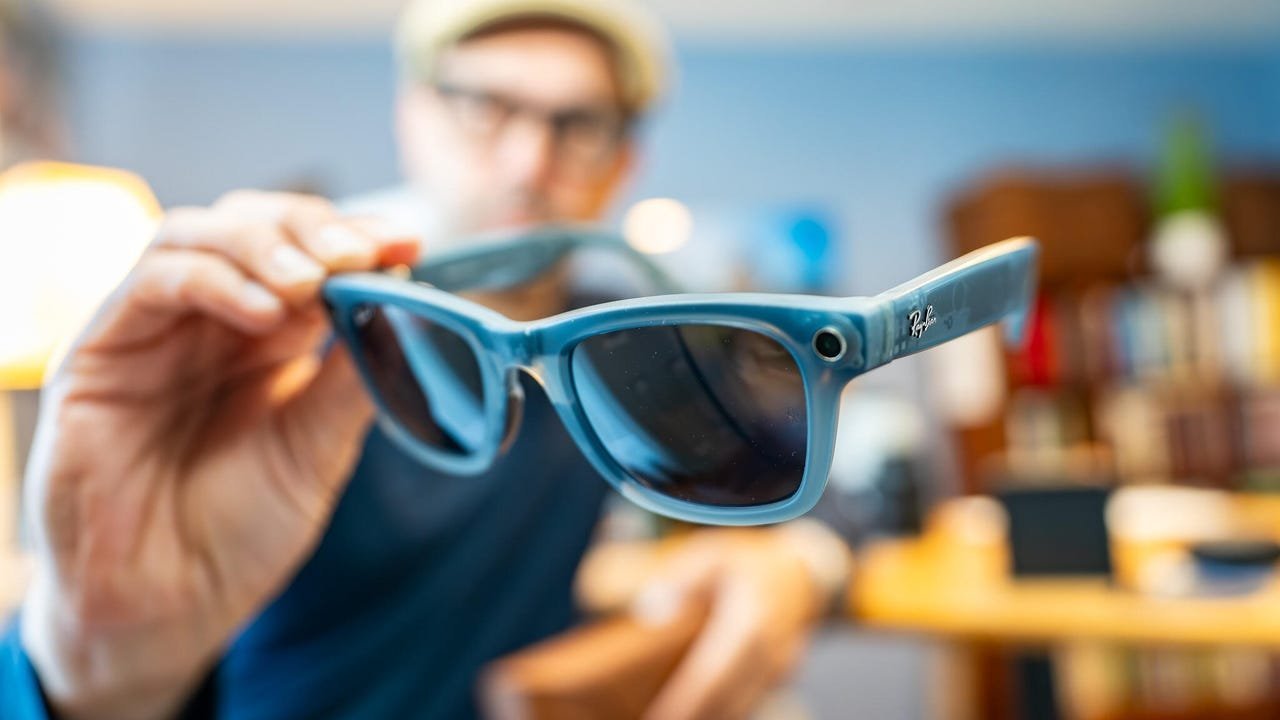 Caption: Current Meta Ray-Bans will see successors alongside new display-enabled models (Jason Hiner/ZDNET)
Perhaps the most radical announcement involves Ceres, a neural wristband that converts electrical muscle signals into gesture controls. Using high-performance EMG sensors, it detects wrist and finger movements—like rotations for scrolling or pinches for selections—then translates them into Hypernova inputs. With haptic feedback, Ceres represents Meta's first commercially available neural interface, potentially unlocking touchless interaction paradigms for developers.
Ray-Ban 3 & Oakley Sphaera: Evolutionary Upgrades
Beyond Hypernova, Meta will refresh its popular Ray-Ban line. Leaked teasers suggest "Ray-Ban Display" models with monocular HUDs for maps and messaging, plus collaborations with Oakley on the camera-centric "Sphaera" glasses. These iterations appear bulkier than current models but maintain the fashion-forward aesthetics crucial for mainstream adoption.
Horizon OS Goes Third-Party: The Asus ROG Tarius
Confirming Meta's open-XR strategy, gaming specialist Asus will debut the ROG Tarius—the first third-party VR headset running Horizon OS. Expected features include eye/face tracking and premium displays (micro-OLED or QD-LED), targeting gamers seeking high-contrast visuals. This move signals Meta's commitment to building an ecosystem beyond its Quest lineup, offering developers new hardware targets.
Why This Matters for Tech's Future
Meta Connect 2025 crystallizes three critical industry shifts:
- Practical AR adoption through display-enabled glasses that avoid the bulk of headsets
- Neural interfaces moving from labs to consumer products
- Open XR ecosystems inviting third-party hardware innovation
For developers, these announcements promise new SDKs for spatial computing and gesture-based controls. For users, they offer gradual immersion into augmented worlds—without isolating headsets. As Meta positions wearables as AI's physical layer, Connect 2025 could mark the moment when our glasses stopped just capturing the world and started enhancing it.
Source: ZDNET (Jason Howell & Cesar Cadenas)
Comments
Please log in or register to join the discussion