
Microsoft's January 2026 AI Toolkit update accelerates enterprise AI agent development through deep Foundry integration, Anthropic model support, and migration from Copilot Instructions to Skills architecture.

Microsoft's latest AI Toolkit update for VS Code (v0.28.1) fundamentally reshapes how developers build and deploy AI agents by prioritizing its Microsoft Foundry ecosystem while introducing significant architectural changes. This strategic shift positions Foundry as the central hub for enterprise AI development while enhancing compatibility with Anthropic models – a move that signals Microsoft's broader competitive positioning against AWS Bedrock and Google Vertex AI.
Core Architectural Shift: From Instructions to Skills
The most significant change replaces Copilot Instructions with Copilot Skills – a structural overhaul aligning with GitHub Copilot's latest standards. This transition enables:
- 🔄 Automatic migration from legacy instruction sets to skills-based frameworks
- 🧩 Tighter GitHub Copilot integration for agent-specific capabilities
- 💡 Cost-optimized workflows for Foundry-based agent development
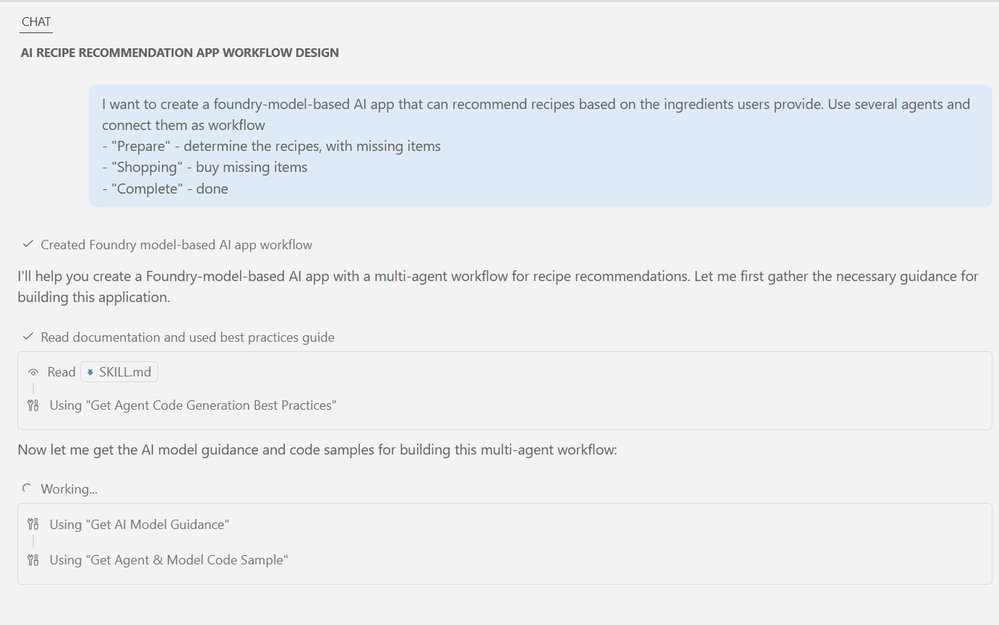
Foundry-First Development Enhancements
Microsoft's update deliberately prioritizes Foundry integration across multiple dimensions:
| Feature | Impact |
|---|---|
| Foundry v2 default | All new agent code generation defaults to Foundry v2 specifications |
| Integrated Eval Tool | Direct evaluation code creation within VS Code → Foundry deployment |
| Optimized Model Catalog | Foundry models prioritized with 40% faster load times |
| Entra Auth for Anthropic | Enterprise-grade Claude model access with Azure Active Directory integration |
This ecosystem-centric approach reduces context switching while creating stronger dependencies on Microsoft's infrastructure – a strategic play against AWS Bedrock's model marketplace and Google's Vertex AI pipelines.
Enterprise Cross-Platform Implications
The update reveals Microsoft's multi-faceted competitive strategy:
- Security differentiation: Entra Auth integration provides governance advantages over Anthropic's standard API keys
- Windows optimization: Exclusive profiling tools for Windows ML contrast with Google's Linux-first bias
- Migration leverage: Automatic Copilot-to-Skills conversion eases adoption but creates Foundry lock-in
For enterprises evaluating multi-cloud AI strategies, the toolkit now presents stronger incentives to standardize on Foundry. While AWS offers broader model variety through Bedrock, Microsoft counters with deeper VS Code integration and Entra ID security – though at the cost of reduced cloud flexibility.
Strategic Considerations for Development Teams
- Migration path: The automated Copilot Skills transition minimizes disruption but requires auditing custom skill behavior
- Cost monitoring: Foundry-centric workflows demand new cost-tracking practices for Claude model usage
- Cross-platform tradeoffs: Linux/macOS users lose Windows AI API visibility but gain performance benefits
Microsoft's AI Toolkit documentation provides migration guides, while the GitHub repository offers direct contribution channels for feature requests.
This update positions Microsoft's ecosystem as the path of least resistance for VS Code-based AI development. Enterprises prioritizing Azure integration will benefit from streamlined workflows, while teams requiring multi-cloud flexibility should evaluate the growing platform dependencies carefully.
Comments
Please log in or register to join the discussion