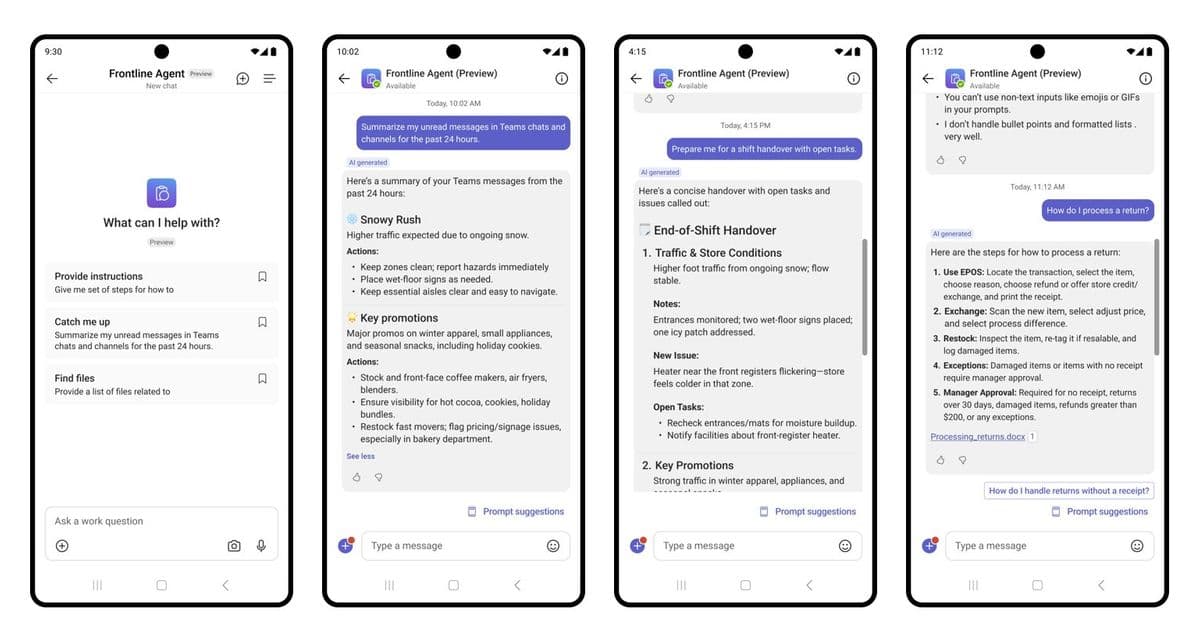
Microsoft launches integrated AI tools for retail frontline workers, including role-specific agents and deployment solutions designed to streamline operations and enhance customer experiences.
Retail organizations face accelerating operational demands that require new approaches to frontline productivity. Microsoft addresses this challenge with a suite of integrated AI solutions targeting pain points like information fragmentation, manual processes, and mobile workflow limitations. These tools aim to transform how retail associates communicate, access information, and execute tasks while maintaining enterprise security standards.
Core Components of Microsoft's Retail AI Suite
1. Frontline Agent (Public Preview)
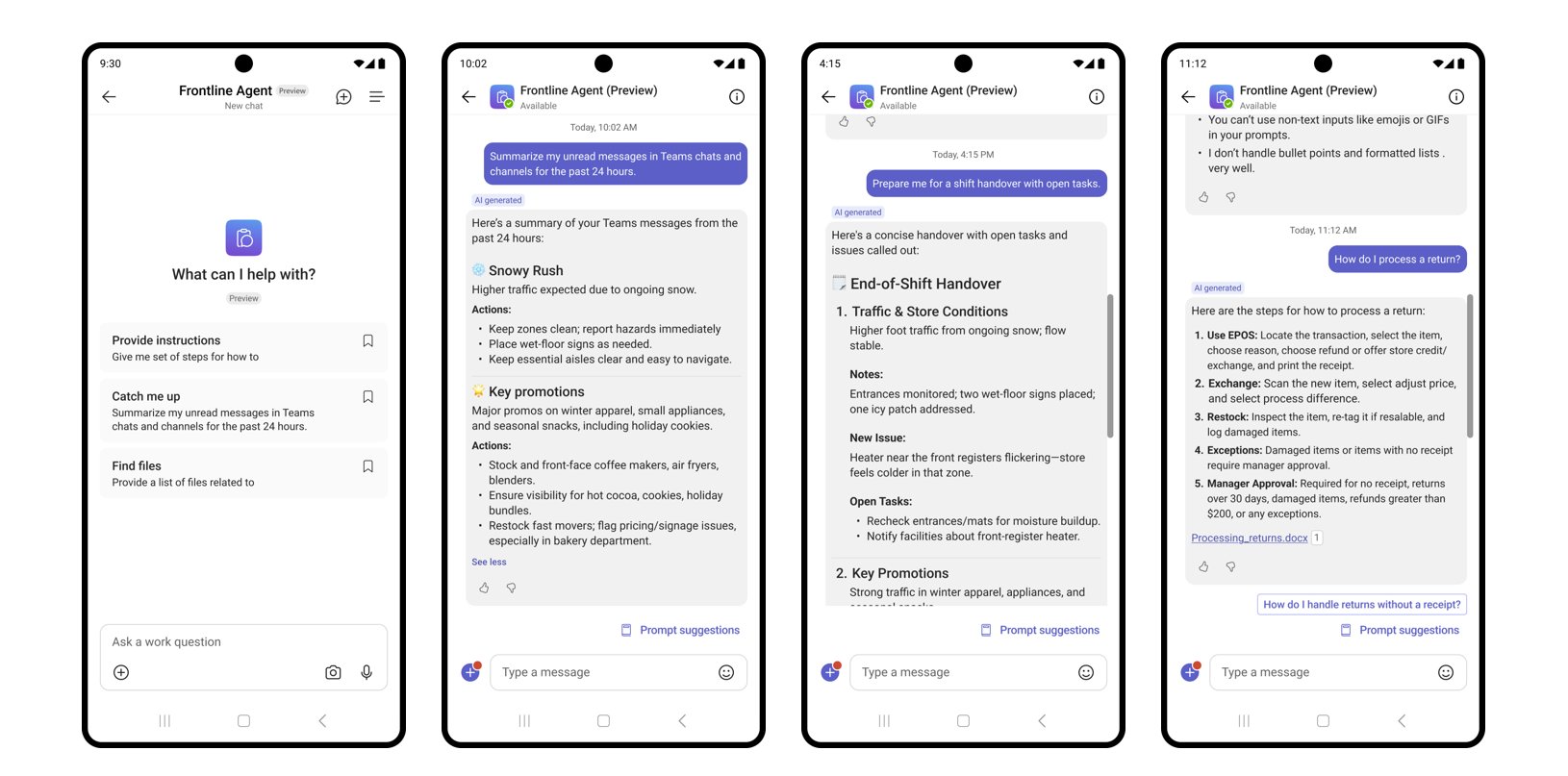
This persona-tuned AI assistant integrates with Microsoft Teams and SharePoint to deliver context-aware responses for store associates. Key capabilities include:
- Real-time policy/procedure lookups
- Shift transition reports summarizing customer feedback and task completion
- Prioritized action item generation
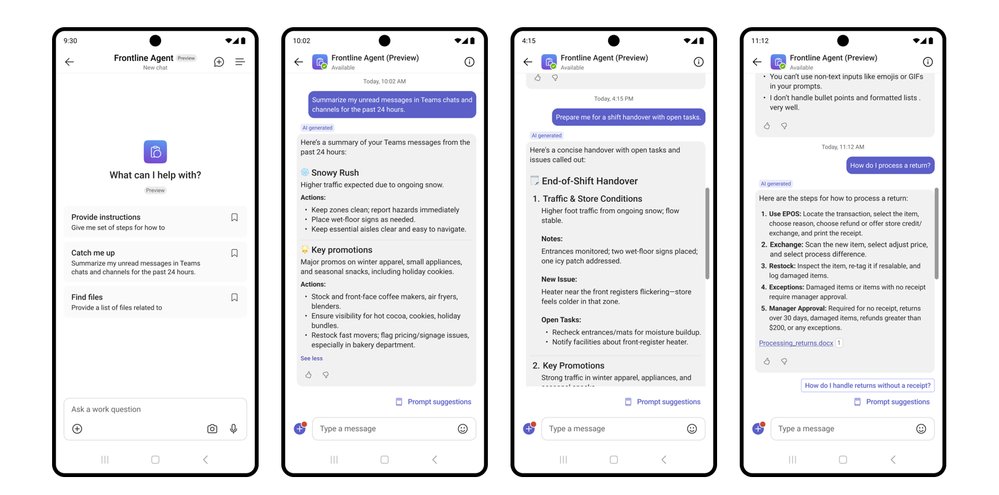
Japanese electronics retailer Bic Camera reported significant efficiency gains during trials, with associates using the "Catch up" feature to start shifts fully informed. Hisashi Tamura, Group Manager at Bic Camera, noted: "While most AI solutions target office workers, this agent specifically addresses frontline needs. It streamlines operations while elevating customer experiences."
2. Store Operations Agent Template (Public Preview)
For retailers requiring customized workflows, this extensible framework connects to internal systems like inventory databases. It autonomously analyzes sales trends, foot traffic, and external factors (weather, holidays) to recommend operational adjustments. Combined with the Frontline Agent, it creates an end-to-end intelligence layer spanning store operations.
3. Microsoft Copilot Chat and Agents
This multimodal interface enables hands-free interaction through voice commands and image recognition. Associates can photograph merchandise or shelf displays for instant inventory guidance, reducing keyboard dependency during customer interactions.
Deployment and Security Architecture
Scalable Implementation Tools
- Teams Pilot Deployment: Simplified admin controls enable selective capability testing with built-in analytics to track adoption metrics
- BYOD Onboarding Wizard: Self-service setup for personal devices enforces security compliance without IT intervention
Windows 365 Ecosystem
- Frontline Edition: Provides cost-optimized Cloud PC access for shared workstations
- Cloud Apps: Delivers app-only access for inventory management and reporting
- Link Devices: Affordable terminals enabling secure shift transitions via Cloud PC authentication
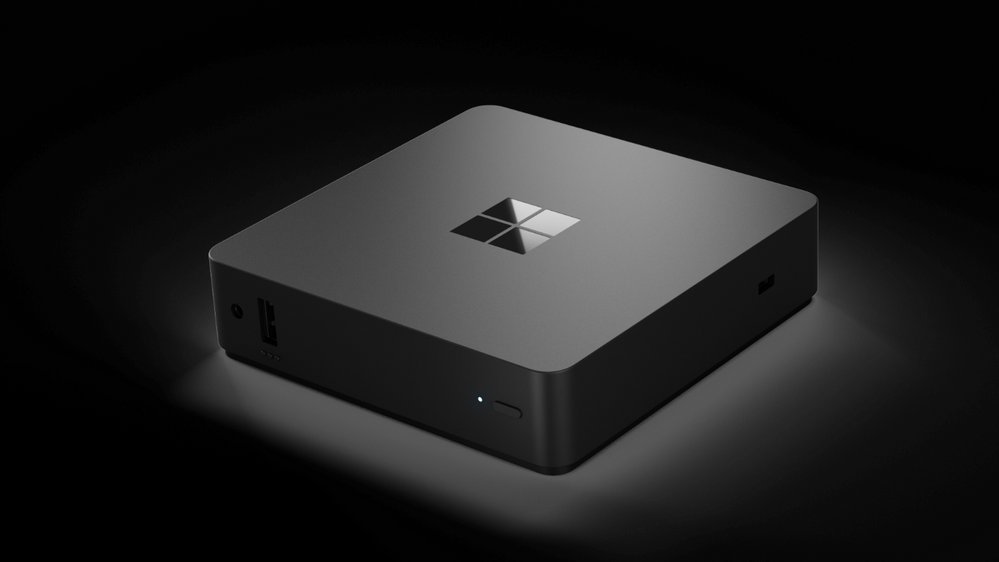
This infrastructure supports Microsoft's new Windows 365 for Agents (Public Preview), creating a secure execution environment for AI workflows that process data and automate tasks.
Strategic Implications
The suite represents Microsoft's vertically integrated approach to retail AI, contrasting with point solutions through:
- Role-Specific Design: Tools tuned for associate/manager workflows versus generic productivity aids
- Unified Security Model: Centralized compliance across BYOD, shared kiosks, and cloud resources
- Deployment Flexibility: Scalable from pilot programs to enterprise rollout with measurable KPIs
Retailers evaluating multi-vendor solutions should consider trade-offs between Microsoft's native integration and best-of-breed alternatives. The platform's strength lies in cohesive security and interoperability, though specialized retailers may require deeper third-party system integrations.
These innovations will be demonstrated at the National Retail Federation Expo (Jan 11-13, 2026). Explore technical details in the Microsoft 365 for Frontline documentation and Windows 365 specifications.
Image credits: Microsoft Community Hub
Comments
Please log in or register to join the discussion