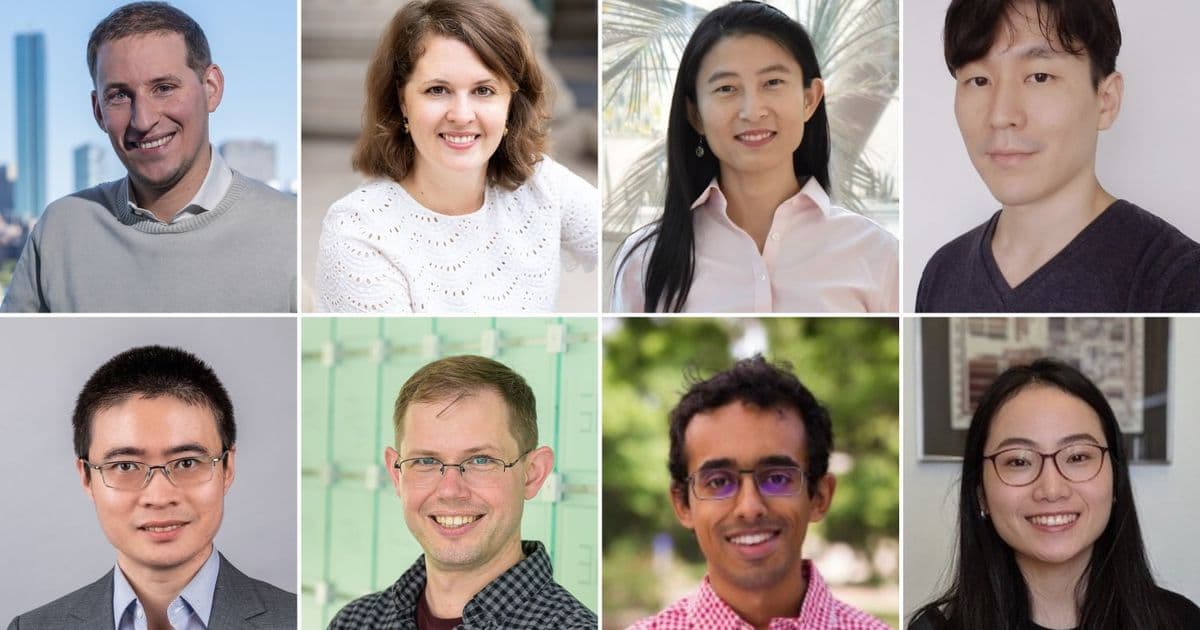
Eight MIT faculty and 22 alumni receive prestigious Sloan Research Fellowships recognizing early-career innovations in fields including astrophysics, optimization algorithms, hardware security, and quantum complexity.
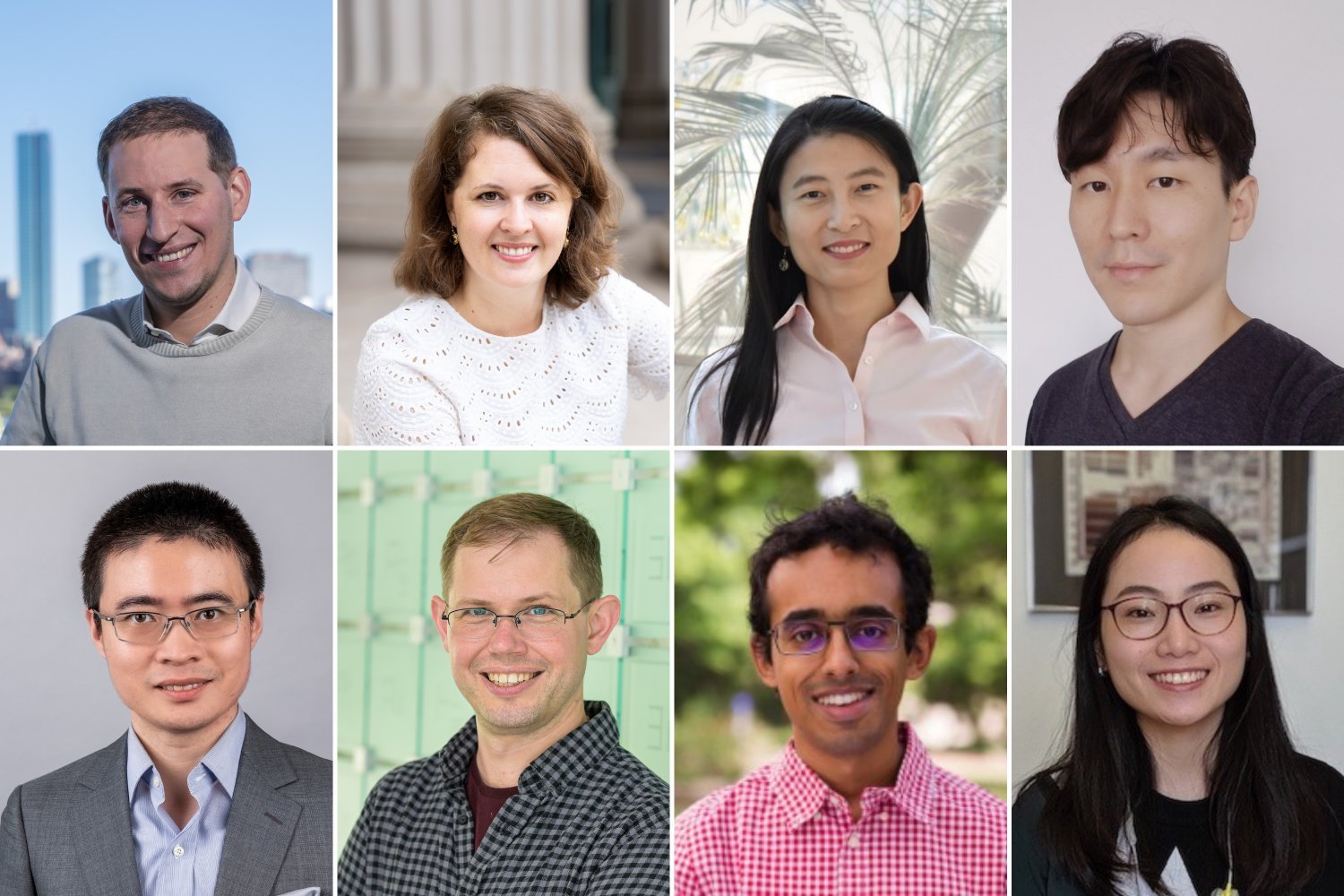
The Alfred P. Sloan Foundation has named eight MIT faculty members and 22 MIT alumni among its 2026 Sloan Research Fellows, recognizing exceptional promise in early-career researchers. The $75,000 fellowships support fundamental research across mathematics, physics, computer science, and chemistry, with MIT maintaining its historical leadership position—341 faculty fellows since the program's 1955 inception.
Interdisciplinary Research with Tangible Impact
Each fellow demonstrates how theoretical work bridges to practical applications:
Anna-Christina Eilers (Physics) combines multi-wavelength telescope data with computational modeling to study black hole formation during the Cosmic Dawn. Her work informs cosmological models by tracing how early quasars shaped galactic evolution, using observations from space-based telescopes including Hubble and JWST.
Haihao Lu (Operations Research) develops optimization algorithms solving billion-variable problems encountered at technology firms like Google. His first-order methods accelerate resource allocation decisions in cloud infrastructure, reducing computational costs by orders of magnitude while maintaining solution quality.
Mengjia Yan (EECS) pioneers hardware security architectures with formal verification frameworks. Her processor designs mitigate speculative execution attacks (like Spectre) through microarchitectural changes adopted by chipmakers, while her Secure Hardware Design course shapes curriculum at 50+ universities worldwide.
Anand Natarajan (EECS) advances quantum complexity theory to establish verifiable trust in quantum computations. His work defines the theoretical limits of quantum advantage and develops cryptographic protocols ensuring classical verifiers can authenticate quantum outputs—critical for future quantum cloud services.
Methodological Innovations
Linlin Fan (Brain and Cognitive Sciences) develops all-optical physiology tools mapping neural plasticity. Her high-speed techniques enable simultaneous recording and manipulation of membrane potentials in behaving mammals, revealing learning mechanisms at cellular resolution.
Brett McGuire (Chemistry) combines rotational spectroscopy with radio astronomy to detect prebiotic molecules in interstellar clouds. His group's molecular detections inform models of planetary system formation and chemical evolution toward life.
Jacopo Borga (Mathematics) analyzes large-scale patterns in random combinatorial structures using techniques from statistical physics. His work on random permutons and Liouville quantum gravity provides mathematical frameworks for modeling complex systems.
Yoon Kim (EECS) creates interpretable NLP models using sparse attention mechanisms, improving efficiency while maintaining performance. His methods enable real-time language processing on edge devices with constrained computational resources.
Alumni Recognition
Twenty-two MIT graduates also received fellowships, including:
- Fei Dai PhD '19 (Caltech, exoplanet formation)
- Christina Patterson PhD '19 (Chicago Booth, monetary policy modeling)
- Shriya Srinivasan PhD '20 (Harvard, neuroprosthetics)
- Full list: Ashok Ajoy PhD '16, Chibueze Amanchukwu PhD '17, Annie Bauer PhD '17, Kimberly Boddy '07, danah boyd SM '02, Yuan Cao SM '16 PhD '20, Aloni Cohen SM '15 PhD '19, Madison Douglas '16, Philip Engel '10, Benjamin Eysenbach '17, Tatsunori Hashimoto SM '14 PhD '16, Xin Jin '10, Isaac Kim '07, Katelin Schutz '14, Karthik Shekhar PhD '15, Jerzy Szablowski '09, Anna Wuttig PhD '18, Zoe Yan PhD '20, Lingfu Zhang '18
Foundation Perspective
'Sloan Fellows drive meaningful progress in their disciplines while unlocking new scientific advancements,' notes Alfred P. Sloan Foundation CEO Stacie Bloom. The flexible funding enables high-risk exploration of foundational questions—from quantum verification protocols to cosmic chemical evolution—that could redefine their fields over the next decade.
Comments
Please log in or register to join the discussion