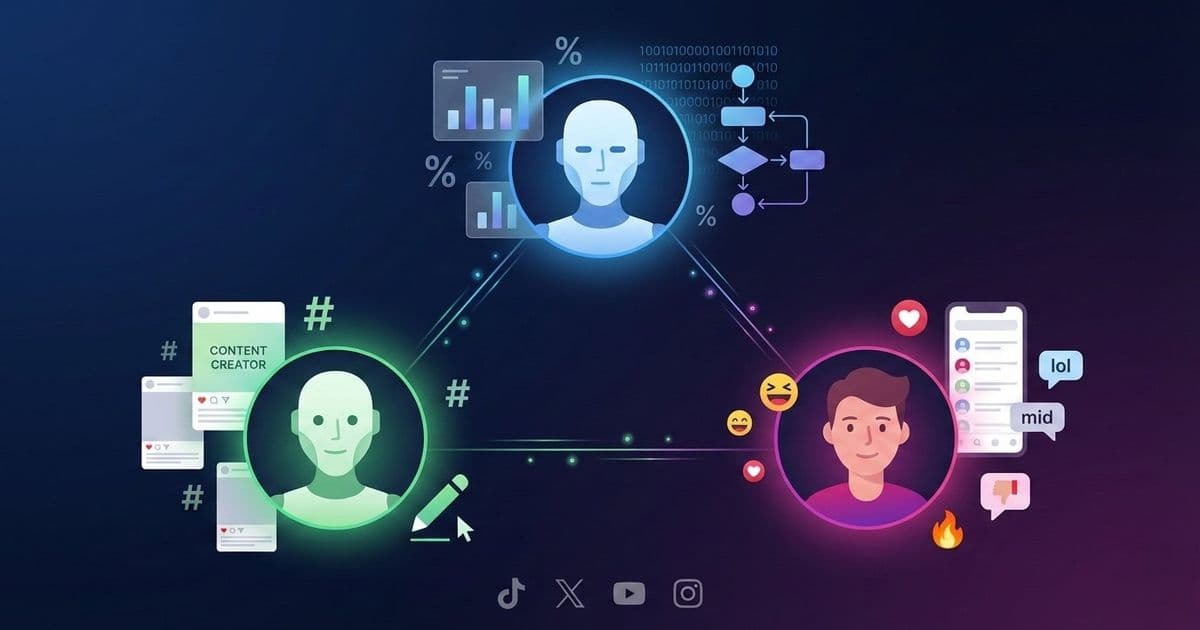
Microsoft's Agent Framework represents a significant evolution in cloud-native AI systems, offering specialized multi-agent architectures that outperform monolithic approaches. This article examines how Microsoft's solution compares to AWS and Google in the AI orchestration space and explores the business implications of adopting these distributed AI systems.
The cloud computing landscape continues its rapid evolution, with multi-cloud strategies and AI orchestration emerging as dominant themes. Recent developments show Microsoft's Agent Framework positioning itself as a compelling alternative to traditional monolithic AI approaches, particularly for organizations building complex, specialized systems. This framework enables the creation of multi-agent systems where specialized AI components collaborate on tasks, a pattern that's proving more effective than single, generalist models across various applications.
The Shift from Monolithic to Multi-Agent Architectures
What changed in the cloud-native ecosystem is the recognition that specialized agents consistently outperform generalist models when tackling complex tasks. Rather than building one large model that tries to be creative, analytical, and authentic simultaneously—which typically results in mediocre performance across all domains—organizations are adopting distributed architectures where each agent focuses on a specific expertise.
This principle mirrors the evolution of microservices in cloud computing, where monolithic applications gave way to specialized services that could scale independently. Similarly, AI systems are moving from monolithic models to multi-agent architectures where each component handles a distinct aspect of a larger workflow.
Microsoft's approach, as demonstrated in their recent Agent Framework, emphasizes role specialization and structured communication protocols between agents. This represents a significant departure from earlier approaches like AutoGen, focusing instead on production-ready patterns for agent orchestration.
Provider Comparison: Microsoft vs. AWS vs. Google
When evaluating cloud providers' approaches to AI orchestration, key differences emerge in their architectural philosophies and implementation strategies.
Microsoft Agent Framework
Microsoft's solution emphasizes structured, deterministic communication between agents. Their framework provides:
- Clear role definitions for agents
- Async session management for maintaining context
- Tool integration patterns for external data sources
- Built-in evaluation mechanisms
The framework's strength lies in its production-ready patterns for building systems with predictable behavior, making it suitable for enterprise applications where reliability is paramount. Microsoft's approach is particularly effective for scenarios requiring iterative refinement, such as content creation, code review, or customer support workflows.
Amazon Bedrock
AWS takes a different approach with Bedrock, focusing on a unified API to access multiple foundation models. Their orchestration capabilities emphasize:
- Model selection and fine-tuning
- Prompt engineering optimization
- Integration with AWS services
While powerful for model management, Bedrock provides less structure for multi-agent interactions compared to Microsoft's framework. Organizations building complex agent systems often need to implement additional orchestration layers on top of Bedrock.
Google Vertex AI
Google's Vertex AI platform offers:
- Vertex AI Agent Builder for conversational agents
- Integration with Google's PaLM and Gemini models
- Emphasis on natural language understanding
Google's strength lies in their natural language processing capabilities, making their approach well-suited for conversational AI applications. However, for specialized multi-agent systems requiring distinct roles and evaluation mechanisms, Google's solution offers less structure than Microsoft's framework.
The key differentiator is Microsoft's focus on agent communication protocols and evaluation frameworks, which addresses a critical gap in the market: how to ensure multiple specialized agents can collaborate effectively while maintaining consistent quality standards.
Business Impact of Multi-Agent Cloud Strategies
The business implications of adopting multi-agent cloud strategies extend beyond technical advantages, offering tangible benefits for organizations across various sectors.
Content Creation and Marketing
For content creators and marketing teams, multi-agent systems like Microsoft's framework can transform content development workflows. The example of "Viral or Fail" demonstrates how specialized agents can:
- Generate platform-native content aligned with current trends
- Evaluate content through the lens of platform algorithms
- Simulate authentic audience reactions
This approach reduces the guesswork in content strategy, allowing teams to pressure-test posts before publishing. The iterative refinement process enables continuous improvement based on algorithmic and audience feedback.
Software Development and DevOps
In software development, multi-agent systems can enhance code quality and development velocity:
- One agent identifies security vulnerabilities
- Another suggests fixes while maintaining code readability
- A third evaluates performance implications
This pattern mirrors the evolution of CI/CD pipelines, where specialized tools handle different aspects of the development lifecycle. Multi-agent systems can further automate and enhance these processes.
Customer Support and Experience
Customer support applications benefit from specialized agents handling different aspects of customer interactions:
- One agent understands customer intent
- Another retrieves relevant information
- A third generates empathetic, policy-compliant responses
This approach ensures each aspect of the customer interaction receives specialized attention, improving both efficiency and customer satisfaction.
Cost Optimization
Multi-agent strategies offer potential cost advantages through:
- Specialized models that can be smaller and less expensive than generalist alternatives
- Selective use of computational resources based on task requirements
- Ability to run components in the most cost-effective cloud environment
Organizations adopting multi-cloud strategies can further optimize costs by placing specialized agents in environments best suited for their specific requirements.
Implementation Considerations
Organizations considering multi-agent cloud strategies should evaluate several factors:
Integration with Existing Infrastructure
Multi-agent systems must integrate with existing cloud infrastructure and data sources. Microsoft's Agent Framework provides patterns for tool integration, but organizations need to assess how well these patterns align with their specific technology stack.
Evaluation and Quality Assurance
A critical challenge is evaluating the performance of multi-agent systems. Unlike monolithic models where evaluation is straightforward, multi-agent systems require:
- Evaluation of individual agent performance
- Assessment of agent collaboration effectiveness
- Measurement of overall system outputs
Microsoft's approach includes structured evaluation rubrics, a pattern organizations should extend to their specific domains.
Security and Governance
Distributed AI systems introduce new security considerations:
- Ensuring consistent security policies across all agents
- Managing authentication and authorization between agents
- Monitoring for potential vulnerabilities in agent interactions
Organizations need to implement robust governance frameworks for multi-agent deployments, particularly when handling sensitive data or critical operations.
Future Directions
The evolution of multi-agent cloud strategies is likely to follow several trajectories:
Autonomous Tool Usage
Current implementations typically involve application-controlled tool usage, where the orchestrating application manages when and how agents use external tools. Future systems will likely evolve toward agent-controlled tool usage, where agents autonomously determine when to call external APIs and services.
Cross-Platform Orchestration
As organizations adopt multi-cloud strategies, the need for orchestration frameworks that can span multiple cloud providers will grow. Microsoft's framework, while cloud-agnostic in design, will likely evolve to better support scenarios where agents run across different cloud environments.
Specialized Agent Marketplaces
We may see the emergence of marketplaces for specialized AI agents, allowing organizations to assemble multi-agent systems from pre-built, evaluated components rather than developing everything in-house. This pattern mirrors the evolution of microservices marketplaces and app stores.
Conclusion
Microsoft's Agent Framework represents a significant advancement in cloud-native AI architectures, offering structured patterns for building multi-agent systems that outperform monolithic approaches. While AWS and Google provide strong alternatives in specific domains, Microsoft's emphasis on agent communication protocols and evaluation frameworks addresses critical needs for organizations building complex AI systems.
The business impact extends beyond technical advantages, offering tangible benefits in content creation, software development, customer support, and cost optimization. As organizations continue their multi-cloud journeys, the ability to deploy and orchestrate specialized AI agents across different environments will become a key competitive differentiator.
Organizations should evaluate multi-agent strategies not just as technical implementations, but as fundamental shifts in how they approach AI development—one that emphasizes specialization, collaboration, and continuous improvement. The patterns demonstrated in Microsoft's framework provide a foundation for this evolution, with opportunities for extension and adaptation to specific organizational needs.
Comments
Please log in or register to join the discussion