Linux 7.0 gains multi-lane SPI support, enabling independent data streams across multiple lanes for advanced ADC/DAC devices.
The Linux 7.0 kernel is set to introduce a significant enhancement to its Serial Peripheral Interface (SPI) subsystem with the addition of multi-lane SPI support. This new feature, spearheaded by BayLibre's David Lechner, marks a departure from traditional SPI implementations and opens up new possibilities for high-performance peripheral communication.
Understanding Multi-Lane SPI
Traditional SPI implementations have relied on single data lanes, with some devices supporting dual or quad SPI modes to increase data throughput. However, these approaches essentially send the same data stream multiple times faster. Multi-lane SPI takes a fundamentally different approach.
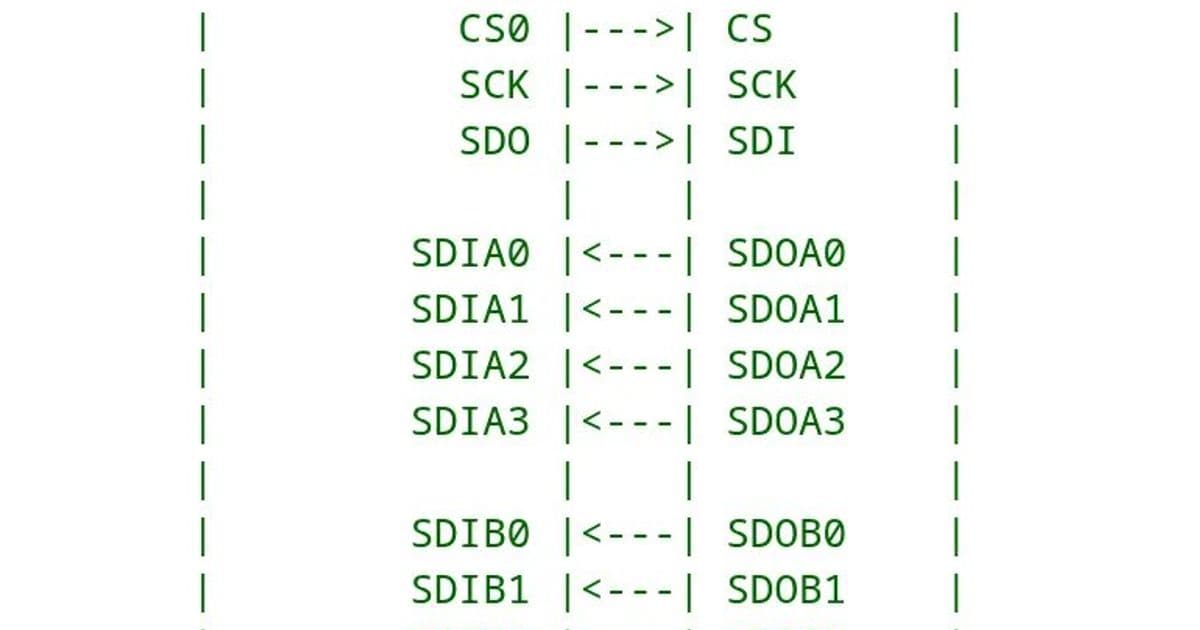
As the documentation explains, multi-lane SPI is designed for devices—typically Analog-to-Digital Converters (ADCs) and Digital-to-Analog Converters (DACs)—that support multiple independent data streams across separate data lanes. Each lane has its own set of SDI/SDO lines and dedicated serializer/deserializer hardware.
This architecture allows for simultaneous transfer of different data streams, rather than simply accelerating a single stream. It's conceptually similar to having multiple devices grouped together, but implemented as a single device that's visible to software.
Technical Implementation
The multi-lane SPI support introduces new abstractions in the kernel's SPI subsystem to handle these independent data streams. The implementation provides a clean interface for device drivers to leverage multiple lanes without needing to manage the low-level synchronization and data routing themselves.
Key aspects of the implementation include:
- Independent Lane Management: Each data lane operates independently with its own control and data paths
- Hardware Abstraction: The kernel handles the complexity of coordinating multiple serializer/deserializer units
- Backward Compatibility: Existing single-lane SPI drivers continue to function unchanged
- Performance Optimization: The framework is designed to minimize overhead when managing multiple concurrent data streams
Impact on Device Drivers
The multi-lane SPI support has already prompted updates to existing drivers and the creation of new ones. The kernel pull request notes "quite a bit of work on existing drivers, both cleanup and feature improvement, along with a reasonable collection of new drivers."
This suggests that hardware manufacturers are beginning to adopt multi-lane SPI in their designs, and the kernel community is responding with appropriate support. For developers working with ADCs and DACs that support this feature, the new kernel infrastructure should significantly simplify implementation.
Performance Implications
While specific benchmarks aren't yet available, the architectural advantages of multi-lane SPI are clear. By enabling true parallel data transfer rather than just faster serial transfer, devices can achieve:
- Reduced Latency: Independent lanes mean data can be processed simultaneously
- Higher Throughput: Multiple data streams can be active at once
- Better Resource Utilization: Hardware serializer/deserializer units can operate in parallel
These benefits will be particularly valuable in applications requiring high-speed data acquisition or generation, such as industrial control systems, scientific instrumentation, and high-performance audio equipment.
Looking Ahead
The inclusion of multi-lane SPI support in Linux 7.0 demonstrates the kernel's continued evolution to support emerging hardware capabilities. As more devices adopt this technology, we can expect to see further optimizations and broader driver support in subsequent kernel releases.
For embedded systems developers and hardware manufacturers, this feature provides a standardized way to leverage multi-lane SPI capabilities across the Linux ecosystem. The clean abstraction layer ensures that applications can benefit from these performance improvements without needing to be rewritten for each new hardware implementation.
The Linux 7.0 kernel, with its multi-lane SPI support, represents another step forward in the platform's ability to handle increasingly sophisticated peripheral devices while maintaining the stability and compatibility that Linux is known for.

For more technical details, you can review the multi-lane SPI documentation that was merged as part of this work.
Comments
Please log in or register to join the discussion