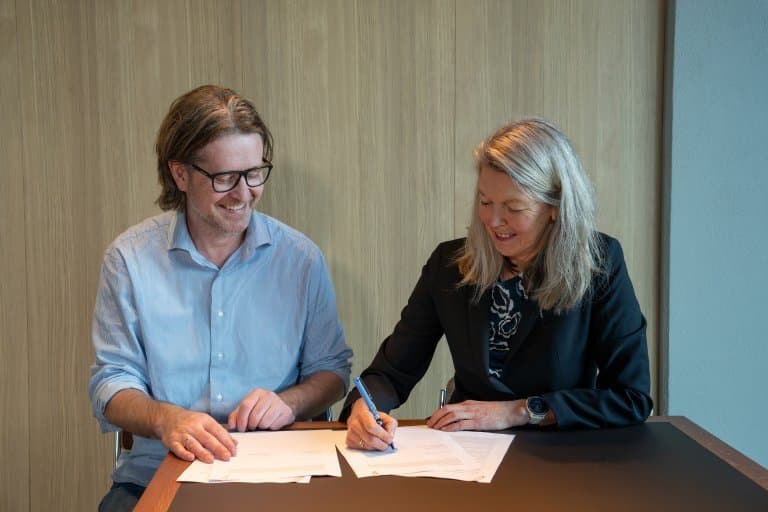
Norway has become the first country to establish a state-funded framework enabling AI training on newspaper content. The agreement between rights management group Kopinor and the National Library will develop open Norwegian and Sami language models for public and private use.
Norway has set a global precedent by becoming the first nation to establish a state-funded framework for training artificial intelligence models on newspaper content. In a landmark agreement signed December 19, 2025, collective rights management organization Kopinor and the National Library of Norway secured licensed access to a vast corpus of Norwegian news articles to develop open language models for Norwegian and indigenous Sami languages.
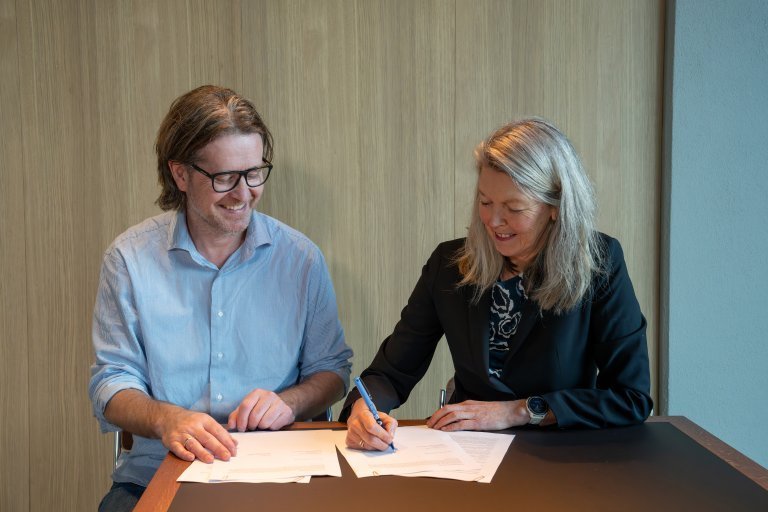 The signing ceremony for the historic agreement between Kopinor and the National Library of Norway (Credit: Gorm K. Gaare/Nasjonalbiblioteket)
Funded by NOK 45 million (approximately $4.2 million USD) in annual state investment, the initiative grants the National Library access to newspaper content older than one year. The resulting language models—scheduled for release in early 2026—will be freely available to both public institutions and private enterprises as foundational infrastructure for AI services. Kopinor negotiated the arrangement on behalf of Norway's Media Businesses’ Association and newspaper publishers, creating a compensated framework that respects copyright while enabling AI advancement.
This agreement addresses critical gaps in multilingual AI development. Norwegian and Sami lack the vast training datasets available for English, hindering localized AI applications. By leveraging newspapers' rich linguistic diversity—including formal reporting and colloquial expressions—the project aims to build more nuanced language understanding. The state-funded model also establishes a blueprint for balancing intellectual property rights with AI innovation, potentially inspiring similar frameworks globally.
The initiative represents a proactive response to ongoing debates about training data sourcing. Rather than relying on contentious web scraping or opt-out mechanisms, Norway's compensated approach creates sustainable collaboration between content creators and technologists. As language models increasingly underpin economic and cultural infrastructure, such frameworks may prove essential for preserving linguistic diversity while advancing AI capabilities.
For technical details, refer to Kopinor's official announcement.
Comments
Please log in or register to join the discussion