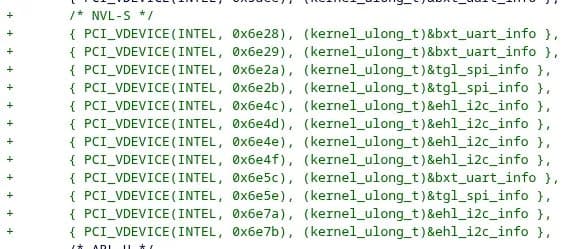
Intel's Low Power Subsystem driver gains Nova Lake S platform IDs in Linux 7.0, enabling SPI and HS-UART support for next-gen hardware.
Nova Lake S Support Added To Intel LPSS Driver In Linux 7.0
The Linux kernel's support for Intel's next-generation hardware continues to expand with the upcoming Linux 7.0 release. The latest addition is support for Nova Lake S platforms in the Intel Low Power Subsystem (LPSS) driver, which handles critical interfaces like SPI and HS-UART for low-power devices.
What Is Intel LPSS?
The Intel Low Power Subsystem driver is essential for managing power-efficient communication interfaces on Intel platforms. It's particularly important for embedded systems, IoT devices, and other hardware where power efficiency is paramount. The driver manages:
- SPI (Serial Peripheral Interface): For communication with sensors, flash memory, and other peripherals
- HS-UART (High-Speed Universal Asynchronous Receiver/Transmitter): For serial communication with external devices
- Other low-power peripherals: Including PWM controllers and GPIO expanders
Nova Lake S Platform Support
The Nova Lake S support implementation is straightforward but crucial. According to the commit logs, the changes required only adding the necessary device IDs to the driver's device table. No structural changes or new functionality were needed beyond recognizing the new hardware.
This approach indicates that Nova Lake S maintains compatibility with existing LPSS implementations while simply introducing new hardware identifiers. The driver will now properly enumerate and initialize Nova Lake S-specific LPSS components during system boot.
Multi-Function Device (MFD) Pull Request
The LPSS updates arrived as part of the broader MFD pull request for Linux 7.0. This pull request is particularly noteworthy because it includes several other significant additions:
Power Management IC Support
- ROHM BD72720 PMIC: A power management integrated circuit for mobile and embedded applications
- Rockchip RK801 PMIC: Rockchip's power management solution for their SoC lineup
- ROHM BD73900 PMIC: Another ROHM PMIC variant supporting advanced power management features
Networking Hardware
- Delta Networks TN48M: A networking component likely for embedded networking applications
MCU Support
- TS133 variant for QNAP MCU: Adds support for a specific microcontroller unit variant used in QNAP devices
Apple System Management Controller
Perhaps the most interesting addition in this pull request is the wiring up of RTC, HWMON, and input sub-devices for the Apple System Management Controller (MACSMC) driver. This represents growing Linux support for Apple hardware components, which could be valuable for users running Linux on Apple hardware or in mixed environments.
Technical Impact
The Nova Lake S LPSS support ensures that devices using this platform will have fully functional low-power communication interfaces out of the box with Linux 7.0. This is particularly important for:
- Embedded systems developers targeting Nova Lake S platforms
- Hardware manufacturers building devices around Nova Lake S
- Linux distributions preparing to support next-generation hardware
- System integrators working with low-power, high-efficiency computing solutions
Timeline and Availability
Linux 7.0 is currently in development, with these changes landing in the mainline kernel repository. The kernel will go through several release candidate phases before the final stable release, which typically occurs a few months after the merge window closes.
For developers and enthusiasts wanting to test Nova Lake S support early, the changes are available in the mainline git repository or can be backported to stable kernels if needed.
The addition of Nova Lake S support to the Intel LPSS driver demonstrates the Linux kernel's continued commitment to supporting new hardware platforms quickly and efficiently, ensuring that users have access to the latest hardware capabilities as soon as possible.
Comments
Please log in or register to join the discussion