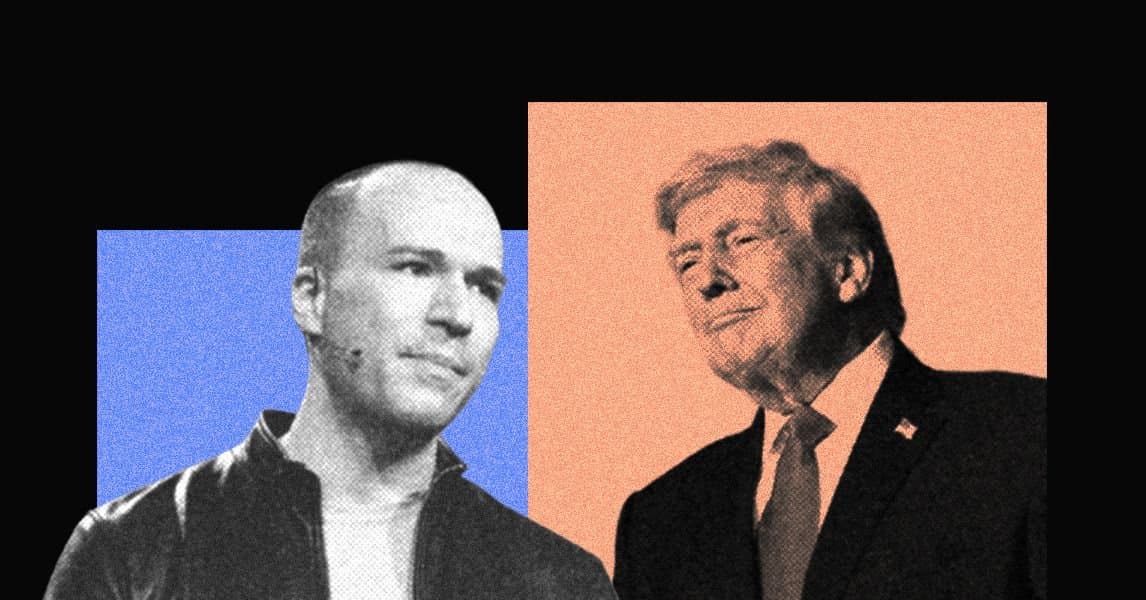
In a Wired interview, OpenAI president Greg Brockman explains why the company donated $50 million to AI-focused and pro-Trump super PACs, arguing that supporting politicians who back AI advancement serves a larger mission beyond partisan politics.
OpenAI president Greg Brockman has defended the company's controversial $50 million in donations to AI-focused and pro-Trump super PACs, arguing in a Wired interview that supporting politicians who advance artificial intelligence serves a larger mission that transcends partisan politics.
The donations, which Brockman says are "bigger than the people that I happen to be employed with," represent a significant political investment by one of the world's leading AI companies. The move comes as OpenAI faces increasing scrutiny over its political activities and the broader implications of AI development.
Brockman's comments highlight the growing intersection between AI development and political influence. As artificial intelligence becomes increasingly central to economic and national security concerns, tech companies are finding themselves drawn into the political arena to ensure favorable regulatory environments.
The Political Landscape for AI
The timing of OpenAI's political donations is particularly noteworthy given the current regulatory climate. With the US midterm elections approaching, Anthropic has also entered the political fray, donating $20 million to Public First, a super PAC pushing for AI guardrails and transparency in opposition to OpenAI-backed PACs.
This political arms race reflects the high stakes involved in AI regulation. Both OpenAI and Anthropic are now funding competing political groups that will square off over artificial intelligence safety and regulation, creating a new dimension to the tech policy debate.
AI Development Continues Amid Political Activity
While OpenAI engages in political giving, the company continues to push forward with AI development. Recent announcements include the launch of GPT-5.3-Codex-Spark, a smaller version of GPT-5.3-Codex that OpenAI claims generates code 15 times faster for Pro users.
The new model represents OpenAI's first AI model to run on chips from Nvidia rival Cerebras, signaling the company's efforts to diversify its hardware partnerships. With more than 1 million weekly active users, Codex has become a significant product for OpenAI's developer ecosystem.
Broader AI Industry Trends
The political activities of OpenAI and Anthropic are occurring against a backdrop of rapid AI advancement across the industry. Google has updated Gemini 3 Deep Think to better solve modern science, research, and engineering challenges, while expanding it via the Gemini API to some researchers.
Meanwhile, ByteDance's new AI video generation model Seedance 2.0 has gone viral in China, with one state-backed newspaper calling it bigger than DeepSeek's "Sputnik moment." The model has already impressed figures like Elon Musk and demonstrates China's continued investment in AI capabilities.
Market Implications
The political activities of major AI companies could have significant market implications. As these companies seek to influence regulation, they may be positioning themselves to capture greater market share in what many see as the defining technology of the coming decades.
Investors appear to be taking notice, with some of the biggest VC firms backing both OpenAI and Anthropic. This growing trend of backing rival startups, once taboo, shows how AI has scrambled traditional funding patterns as investors seek exposure to multiple potential winners in the space.
The Future of AI and Politics
As AI continues to advance and its societal impact becomes more pronounced, the intersection of technology and politics is likely to deepen. Companies like OpenAI are finding that political engagement is increasingly necessary to protect their interests and ensure favorable regulatory environments.
Brockman's defense of the donations suggests that OpenAI sees political engagement as integral to its mission of advancing AI for the benefit of humanity. Whether this approach will prove successful in navigating the complex regulatory landscape remains to be seen, but it represents a significant shift in how tech companies approach politics.
The coming months will likely see continued political activity from AI companies as they seek to shape the regulatory environment for this transformative technology. As Brockman noted, these efforts are ultimately about more than any single political figure or party—they're about ensuring that AI development can proceed in a way that benefits society as a whole.
Comments
Please log in or register to join the discussion